
Catalogue Search | MBRL


Are you sure you want to remove the book from the shelf?

{{itemTitle}}
433
result(s) for
"Ian W. Campbell"
Sort by:

Quantitative dose-response analysis untangles host bottlenecks to enteric infection
Host bottlenecks prevent many infections before the onset of disease by eliminating invading pathogens. By monitoring the diversity of a barcoded population of the diarrhea causing bacterium
Citrobacter rodentium
during colonization of its natural host, mice, we determine the number of cells that found the infection by establishing a replicative niche. In female mice the size of the pathogen’s founding population scales with dose and is controlled by a severe yet slow-acting bottleneck. Reducing stomach acid or changing host genotype modestly relaxes the bottleneck without breaking the fractional relationship between dose and founders. In contrast, disrupting the microbiota causes the founding population to no longer scale with the size of the inoculum and allows the pathogen to infect at almost any dose, indicating that the microbiota creates the dominant bottleneck. Further, in the absence of competition with the microbiota, the diversity of the pathogen population slowly contracts as the population is overtaken by bacteria having lost the critical virulence island, the locus of enterocyte effacement (LEE). Collectively, our findings reveal that the mechanisms of protection by colonization bottlenecks are reflected in and can be generally defined by the impact of dose on the pathogen’s founding population.
Here, using
Citrobacter rodentium
colonization of mice as a model, the authors characterize the impact of pathogen dose on the number of bacteria that initiate infection in the mouse gut, providing a framework for quantifying the host bottlenecks that eliminate pathogens to protect from infection.
Journal Article
Vibrio cholerae motility is associated with inter-animal transmission
Outbreaks of cholera are caused by the highly transmissive pathogen
Vibrio cholerae
. Infant mouse studies have elucidated many aspects of
V. cholerae
pathogenesis; however, the components of pathogenesis that feed-forward to promote transmission have remained enigmatic because animal models routinely bypass the mechanisms of inter-animal transmission by directly inoculating cultured bacteria into the stomach. Here, a transposon screen reveals that inactivation of the
V. cholerae
motility-linked gene
motV
increases infant mouse intestinal colonization. Compared to wild-type
V. cholerae
, a Δ
motV
mutant, which exhibits heightened motility in the form of constitutive straight swimming, localizes to the crypts earlier in infection and over a larger area of the small intestine. Aberrant localization of the mutant is associated with an increased number of
V. cholerae
initiating infection, and elevated pathogen burden, diarrhea, and lethality. Moreover, the deletion of
motV
causes
V. cholerae
to transmit from infected suckling mice to naïve littermates more efficiently. Even in the absence of cholera toxin, the Δ
motV
mutant continues to transmit between animals, although less than in the presence of toxin, indicating that phenotypes other than cholera toxin-driven diarrhea contribute to transmission. Collectively, this work provides experimental evidence linking intra-animal bottlenecks, colonization, and disease to inter-animal transmission.
Determinants of
Vibrio cholerae
transmission are incompletely understood. Here, the authors use an infant mouse model to show that events in the intestine govern inter-animal transmission and that bacterial motility along with cholera toxin-driven diarrhea are critical for pathogen spread.
Journal Article

Quantification of Salmonella enterica serovar Typhimurium population dynamics in murine infection using a highly diverse barcoded library
Murine models are often used to study the pathogenicity and dissemination of the enteric pathogen Salmonella enterica serovar Typhimurium. Here, we quantified S . Typhimurium population dynamics in mice using the STAMPR analytic pipeline and a highly diverse S . Typhimurium barcoded library containing ~55,000 unique strains distinguishable by genomic barcodes by enumerating S . Typhimurium founding populations and deciphering routes of spread in mice. We found that a severe bottleneck allowed only one in a million cells from an oral inoculum to establish a niche in the intestine. Furthermore, we observed compartmentalization of pathogen populations throughout the intestine, with few barcodes shared between intestinal segments and feces. This severe bottleneck widened and compartmentalization was reduced after streptomycin treatment, suggesting the microbiota plays a key role in restricting the pathogen’s colonization and movement within the intestine. Additionally, there was minimal sharing between the intestine and extraintestinal organ populations, indicating dissemination to extraintestinal sites occurs rapidly, before substantial pathogen expansion in the intestine. Bypassing the intestinal bottleneck by inoculating mice via intravenous or intraperitoneal injection revealed that Salmonella re-enters the intestine after establishing niches in extraintestinal sites by at least two distinct pathways. One pathway results in a diverse intestinal population. The other re-seeding pathway is through the bile, where the pathogen is often clonal, leading to clonal intestinal populations and correlates with gallbladder pathology. Together, these findings deepen our understanding of Salmonella population dynamics.
Journal Article
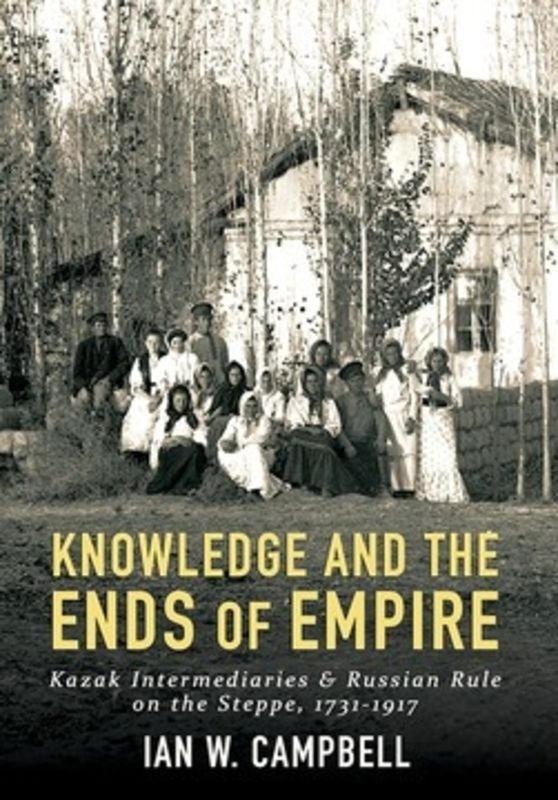
Knowledge and the Ends of Empire
In Knowledge and the Ends of Empire, Ian W. Campbell investigates the connections between knowledge production and policy formation on the Kazak steppes of the Russian Empire. Hoping to better govern the region, tsarist officials were desperate to obtain reliable information about an unfamiliar environment and population. This thirst for knowledge created opportunities for Kazak intermediaries to represent themselves and their landscape to the tsarist state. Because tsarist officials were uncertain of what the steppe was, and disagreed on what could be made of it, Kazaks were able to be part of these debates, at times influencing the policies that were pursued.Drawing on archival materials from Russia and Kazakhstan and a wide range of nineteenth-century periodicals in Russian and Kazak, Campbell tells a story that highlights the contingencies of and opportunities for cooperation with imperial rule. Kazak intermediaries were at first able to put forward their own idiosyncratic views on whether the steppe was to be Muslim or secular, whether it should be a center of stock-raising or of agriculture, and the extent to which local institutions needed to give way to imperial institutions. It was when the tsarist state was most confident in its knowledge of the steppe that it committed its gravest errors by alienating Kazak intermediaries and placing unbearable stresses on pastoral nomads. From the 1890s on, when the dominant visions in St. Petersburg were of large-scale peasant colonization of the steppe and its transformation into a hearth of sedentary agriculture, the same local knowledge that Kazaks had used to negotiate tsarist rule was transformed into a language of resistance.
eBook

John Punch, Scotist Holy War, and the Irish Catholic Revolutionary Tradition in the Seventeenth Century
During the 1640s, the Irish Franciscan theologian John Punch taught his theology students in Rome that war against Protestants was made just by their religion alone. Jesuits like Luis de Molina identified the holy war tradition in which Punch stood as a Scotist one, and insisted that the Scotists had confused the natural and supernatural spheres. Among Irishmen, Punch was unusual. The main Irish Catholic revolutionary tradition employed Jesuit and Thomist theory. They argued that the Stuarts had lost the right to rule Ireland for natural reasons, not supernatural ones; because the Stuarts were tyrants, not because they were Protestants.
Journal Article


Insights Into the Biochemical and Genetic Basis of Glucokinase Activation From Naturally Occurring Hypoglycemia Mutations
Insights Into the Biochemical and Genetic Basis of Glucokinase Activation From Naturally Occurring Hypoglycemia Mutations
Anna L. Gloyn 1 ,
Kees Noordam 2 ,
Michèl A.A.P. Willemsen 3 ,
Sian Ellard 1 ,
Wayne W.K. Lam 4 ,
Ian W. Campbell 5 ,
Paula Midgley 6 ,
Chyio Shiota 7 ,
Carol Buettger 8 ,
Mark A. Magnuson 7 ,
Franz M. Matschinsky 8 and
Andrew T. Hattersley 1
1 Department of Diabetes & Vascular Medicine, Peninsula Medical School, Exeter, U.K
2 Department of Paediatric Endocrinology, University Children’s Hospital, Nijmegen, the Netherlands
3 Department of Paediatric Neurology, University Medical Centre, Nijmegen, the Netherlands
4 Department of Clinical Genetics, Western General Hospital, Edinburgh, U.K
5 Department of Diabetes, Victoria Hospital, Kirkcaldy, U.K
6 Department of Neonatology, Royal Infirmary of Edinburgh, Edinburgh, U.K
7 Department of Molecular Physiology and Biophysics, Vanderbilt University School of Medicine, Nashville, Tennessee
8 Department of Biochemistry and Biophysics and Diabetes Research Center, University of Pennsylvania School of Medicine, Philadelphia,
Pennsylvania
Address correspondence and reprint requests to Professor Andrew T. Hattersley, Diabetes and Vascular Medicine, Peninsula Medical
School, Barrack Road, Exeter, EX2 5AX U.K. E-mail: a.t.hattersley{at}exeter.ac.uk
Abstract
Glucokinase (GCK) is a key regulatory enzyme in the pancreatic β-cell and catalyzes the rate-limiting step for β-cell glucose
metabolism. We report two novel GCK mutations (T65I and W99R) that have arisen de novo in two families with familial hypoglycemia. Insulin levels, although inappropriately
high for the degree of hypoglycemia, remain regulated by fluctuations in glycemia, and pancreatic histology was normal. These
mutations are within the recently identified heterotropic allosteric activator site in the theoretical model of human β-cell
glucokinase. Functional analysis of the purified recombinant glutathionyl S-transferase fusion proteins of T65I and W99R GCK
revealed that the kinetic changes result in a relative increased activity index (a measure of the enzyme’s phosphorylating
potential) of 9.81 and 6.36, respectively, compared with wild-type. The predicted thresholds for glucose-stimulated insulin
release using mathematical modeling were 3.1 (T65I) and 2.8 (W99R) mmol/l, which were in line with the patients’ fasting glucose.
In conclusion, we have identified two novel spontaneous GCK -activating mutations whose clinical phenotype clearly differs from mutations in ATP-sensitive K + channel genes. In vitro studies confirm the validity of structural and functional models of GCK and the putative allosteric
activator site, which is a potential drug target for the treatment of type 2 diabetes.
GCK, glucokinase
GSIR, glucose-stimulated insulin release
GST, glutathionyl S-transferase
KATP, ATP-sensitive K+
MODY, maturity-onset diabetes of the young
Footnotes
Accepted June 3, 2003.
Received April 8, 2003.
DIABETES
Journal Article

Inducible transposon mutagenesis identifies bacterial fitness determinants during infection in mice
Transposon insertion sequencing (Tn-seq) is a powerful method for genome-scale forward genetics in bacteria. However, inefficient transposon delivery or stochastic loss of mutants due to population bottlenecks can limit its effectiveness. Here we have developed ‘InducTn-seq’, where an arabinose-inducible Tn5 transposase enables temporal control of mini-Tn5 transposition. InducTn-seq generated up to 1.2 million transposon mutants from a single colony of enterotoxigenic
Escherichia coli
,
Salmonella typhimurium
,
Shigella flexneri
and
Citrobacter rodentium
. This mutant diversity enabled more sensitive detection of subtle fitness defects and measurement of quantitative fitness effects for essential and non-essential genes. Applying InducTn-seq to
C. rodentium
in a mouse model of infectious colitis bypassed a highly restrictive host bottleneck, generating a diverse population of >5 × 10
5
unique transposon mutants compared to 10–10
2
recovered by traditional Tn-seq. This in vivo screen revealed that the
C. rodentium
type I-E CRISPR system is required to suppress a toxin otherwise activated during gut colonization. Our findings highlight the potential of InducTn-seq for genome-scale forward genetic screens in bacteria.
InducTn-seq, a method for inducible mutagenesis followed by transposon insertion site sequencing, enables temporal control of transposition to bypass population bottlenecks and enable the quantification of gene fitness during in vivo
Citrobacter rodentium
infection.
Journal Article


Calvinist Absolutism: Archbishop James Ussher and Royal Power
Archbishop James Ussher's manuscript notebooks allow us to observe the making of a Calvinist absolutist and to orientate the archbishop's beliefs about royal power within European Reformed thought as a whole. By 1643, Ussher was preaching a polished and complete theory of absolute royal power, and it is possible to track the development of this political theory forward from his undergraduate days in the 1590s. Throughout his life Ussher engaged anxiously with Reformed theologians abroad, who generally favored limited rather than absolute monarchy. Nevertheless, Ussher shared with these Reformed colleagues both an antipathy to aspects of Aristotelian politics and a commitment to the divine institution of royal power. Finally, despite Ussher's hostility to Laudian innovations in the Irish Church, his heartfelt political beliefs made him a firm supporter of Stuart absolutism throughout the Three Kingdoms.
Journal Article