
Catalogue Search | MBRL


Are you sure you want to remove the book from the shelf?

{{itemTitle}}
2,294
result(s) for
"Joseph, Julie"
Sort by:

Social relationships : cognitive, affective and motivational processes
Our personal relationships are of immense interest to us and are a key factor in achieving happiness and well-being. However, modern industrialized societies present a challenging environment for sustaining rewarding personal relationships. This book examines recent thinking in relationship research.
Book

Type-I interferon signaling through ISGF3 complex is required for sustained Rip3 activation and necroptosis in macrophages
Although it has long been known that inflammatory immune responses are associated with death of cells through necrosis, the mechanisms controlling this process are not yet well understood. Recently a type of programmed inflammatory cell death, necroptosis, has been discovered. In this paper we reveal previously unidentified molecular mechanisms that operate to induce this form of cell death. Our results indicate that in order to undergo necroptosis, immune cells must produce and receive signals from the key immune regulator, interferon. Such interferon-dependent necroptosis of immune cells drives acute inflammatory pathology in a mouse model of sepsis. This work highlights the intimate connection between cell death and inflammation, and may lead to new understanding and treatment of inflammatory pathologies. Myeloid cells play a critical role in perpetuating inflammation during various chronic diseases. Recently the death of macrophages through programmed necrosis (necroptosis) has emerged as an important mechanism in inflammation and pathology. We evaluated the mechanisms that lead to the induction of necrotic cell death in macrophages. Our results indicate that type I IFN (IFN-I) signaling is a predominant mechanism of necroptosis, because macrophages deficient in IFN-α receptor type I (IFNAR1) are highly resistant to necroptosis after stimulation with LPS, polyinosinic-polycytidylic acid, TNF-α, or IFN-β in the presence of caspase inhibitors. IFN-I–induced necroptosis occurred through both mechanisms dependent on and independent of Toll/IL-1 receptor domain-containing adaptor inducing IFN-β (TRIF) and led to persistent phosphorylation of receptor-interacting protein 3 (Rip3) kinase, which resulted in potent necroptosis. Although various IFN-regulatory factors (IRFs) facilitated the induction of necroptosis in response to IFN−β, IRF-9–STAT1– or -STAT2–deficient macrophages were highly resistant to necroptosis. Our results indicate that IFN-β–induced necroptosis of macrophages proceeds through tonic IFN-stimulated gene factor 3 (ISGF3) signaling, which leads to persistent expression of STAT1, STAT2, and IRF9. Induction of IFNAR1/Rip3–dependent necroptosis also resulted in potent inflammatory pathology in vivo. These results reveal how IFN-I mediates acute inflammation through macrophage necroptosis.
Journal Article


Inhibition of ROS and upregulation of inflammatory cytokines by FoxO3a promotes survival against Salmonella typhimurium
Virulent intracellular pathogens, such as the
Salmonella
species, engage numerous virulence factors to subvert host defence mechanisms to induce a chronic infection that leads to typhoid or exacerbation of other chronic inflammatory conditions. Here we show the role of the forkhead transcription factor FoxO3a during infection of mice with
Salmonella
typhimurium (ST). Although FoxO3a signalling does not affect the development of CD8
+
T cell responses to ST, FoxO3a has an important protective role, particularly during the chronic stage of infection, by limiting the persistence of oxidative stress. Furthermore, FoxO3a signalling regulates ERK signalling in macrophages, which results in the maintenance of a proinflammatory state. FoxO3a signalling does not affect cell proliferation or cell death. Thus, these results reveal mechanisms by which FoxO3a promotes host survival during infection with chronic, virulent intracellular bacteria.
FoxO3a signalling has limited influence over acute bacterial infection. Here the authors show that FoxO3a promotes survival of mice in response to chronic
Salmonella
typhimurium infection by restraining oxidative stress and ERK signalling.
Journal Article

The power of positive coaching : the mindset and habits to inspire winning results and relationships
\"How to build up the habits and mindset necessary to effectively coach others\"-- Provided by publisher.
BOOK

Dendritic Cells Pulsed with HAM/TSP Exosomes Sensitize CD4 T Cells to Enhance HTLV-1 Infection, Induce Helper T-Cell Polarization, and Decrease Cytotoxic T-Cell Response
HTLV-1-associated myelopathy/tropical spastic paraparesis (HAM/TSP) is a progressive demyelinating disease of the spinal cord due to chronic inflammation. Hallmarks of disease pathology include dysfunctional anti-viral responses and the infiltration of HTLV-1-infected CD4+ T cells and HTLV-1-specific CD8+ T cells in the central nervous system. HAM/TSP individuals exhibit CD4+ and CD8+ T cells with elevated co-expression of multiple inhibitory immune checkpoint proteins (ICPs), but ICP blockade strategies can only partially restore CD8+ T-cell effector function. Exosomes, small extracellular vesicles, can enhance the spread of viral infections and blunt anti-viral responses. Here, we evaluated the impact of exosomes isolated from HTLV-1-infected cells and HAM/TSP patient sera on dendritic cell (DC) and T-cell phenotypes and function. We observed that exosomes derived from HTLV-infected cell lines (OSP2) elicit proinflammatory cytokine responses in DCs, promote helper CD4+ T-cell polarization, and suppress CD8+ T-cell effector function. Furthermore, exosomes from individuals with HAM/TSP stimulate CD4+ T-cell polarization, marked by increased Th1 and regulatory T-cell differentiation. We conclude that exosomes in the setting of HAM/TSP are detrimental to DC and T-cell function and may contribute to the progression of pathology with HTLV-1 infection.
Journal Article


Two-way transcriptome approach for the identification of common gene targets across four insect orders and its validation in Oxycarenus laetus
Cotton production is negatively impacted by many insect pests from multiple orders, resulting in significant agronomic and economic losses. This study utilized a comparative transcriptomic methodology to discover conserved gene targets with potential applications in pest management across four insect orders that infest cotton: Hemiptera, Lepidoptera, Orthoptera, and Thysanoptera. A total of 104 publicly available RNA-Seq datasets, representing 17 pest species were de novo assembled in two ways, first was classified by read length (PE100 and PE150) and secondly as species-specific transcriptomes, and their qualities were assessed (alignment ≥ 90%, BUSCO ≥ 80%). Functional annotation utilizing insect-specific databases and orthology-based filtering identified three highly conserved genes, namely Arginine kinase (ArgK), Ryanodine receptor (RyR), and Serine/Threonine Protein phosphatase (STPP). These genes are involved in critical physiological functions, including ATP regeneration, calcium ion homeostasis, and phosphorylation-dependent signaling, and were enriched in pathways associated with insect development and stress response, including as JAK/STAT signaling and chitin metabolism. The study aimed to find broad-spectrum targets across several taxa; however,
Oxycarenus laetus
, a prominent sap-sucking pest of cotton, was chosen for downstream validation because of its increasing importance and ease of access for experimental research. The expression of ArgK, RyR, and STPP in
O. laetus
was validated by qPCR, affirming the biological significance of these targets and their functional conservation. This integrated methodology, which includes cross-order comparative transcriptome analysis and species-specific validation, illustrates a scalable approach for discovering essential molecular targets with translational potential in pest control. The results establish a basis for the development of RNAi-based or chemical strategies designed for cotton pest control.
Journal Article
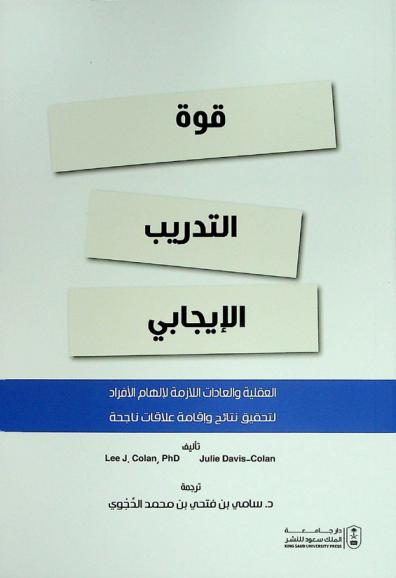
قوة التدريب الإيجابي : العقلية والعادات اللازمة لإلهام الأفراد لتحقيق نتائج وإقامة علاقات ناجحة
يعرض الكتاب نموذجا عمليا لتطوير الأداء القيادي من خلال عقلية تدريب إيجابية متكاملة مع عادات تدريب فعالة. يبدأ الجزء الأول بتعزيز العقلية الإيجابية عبر الوعي بالأفكار والقيم والمشاعر والغاية الشخصية. ثم، في الجزء الثاني، يعرف المؤلفان خمس عادات تدريبية أساسية: 1) شرح التوقعات لخلق توافق واتساق (Explain)، 2) طرح أسئلة موجهة لتعزيز التفاعل (Ask)، 3) إشراك الفريق لتكوين إلتزام شخصي (Involve)، 4) قياس الأداء باستخدام قواعد واضحة لتعزيز المساءلة (Measure)، و5) تقدير الأفراد لتعميق العلاقة والولاء هذا التكوين يهدف إلى خلق تأثير إيجابي دائري في الفرق والمؤسسات؛ من خلال نهج يركز على النمو الشخصي أولا ليولد القدرة على تطوير الآخرين، مع أدوات وتقنيات واضحة لتطبيق العادات، مثل أدوات تقويم الأداء، ودوائر العواقب، ولوحات الأداء \"scoreboards\" ينصح الكتاب كمرجع عملي للمديرين والقادة والمدربات، خاصة لمن يسعون إلى تحفيز فرقهم وتحقيق نتائج ملموسة وعلاقات إنسانية قوية مبنية على التقدير والتحفيز الإيجابي.
BOOK

Antibody and Cell-Based Therapies against Virus-Induced Cancers in the Context of HIV/AIDS
Infectious agents, notably viruses, can cause or increase the risk of cancer occurrences. These agents often disrupt normal cellular functions, promote uncontrolled proliferation and growth, and trigger chronic inflammation, leading to cancer. Approximately 20% of all cancer cases in humans are associated with an infectious pathogen. The International Agency for Research on Cancer (IARC) recognizes seven viruses as direct oncogenic agents, including Epstein–Barr Virus (EBV), Kaposi’s Sarcoma-associated herpesvirus (KSHV), human T-cell leukemia virus type-1 (HTLV-1), human papilloma virus (HPV), hepatitis C virus (HCV), hepatitis B virus (HBV), and human immunodeficiency virus type 1 (HIV-1). Most viruses linked to increased cancer risk are typically transmitted through contact with contaminated body fluids and high-risk behaviors. The risk of infection can be reduced through vaccinations and routine testing, as well as recognizing and addressing risky behaviors and staying informed about public health concerns. Numerous strategies are currently in pre-clinical phases or undergoing clinical trials for targeting cancers driven by viral infections. Herein, we provide an overview of risk factors associated with increased cancer incidence in people living with HIV (PLWH) as well as other chronic viral infections, and contributing factors such as aging, toxicity from ART, coinfections, and comorbidities. Furthermore, we highlight both antibody- and cell-based strategies directed against virus-induced cancers while also emphasizing approaches aimed at discovering cures or achieving complete remission for affected individuals.
Journal Article