
Catalogue Search | MBRL


Are you sure you want to remove the book from the shelf?

{{itemTitle}}
64
result(s) for
"Maini, Anil"
Sort by:


Handbook of Defence Electronics and Optronics
<p><b>First Complete Reference on Defence Electronics and Optronics</b> <p>This book provides a complete account of defence electronics and optronics. The content is broadly divided into three categories: topics <i>specific</i> to defence electronics; topics <i>relevant</i> to defence optronics; and topics that have <i>both</i> electronics and optronics counterparts. <p>The book covers each of the topics in their entirety from fundamentals to advanced concepts, military systems in use and related technologies, thereby leading the reader logically from the operational basics of military systems to involved technologies and battlefield deployment and applications. <p>Key features: <ul> <li>Covers fundamentals, operational aspects, involved technologies and application potential of a large cross-section of military systems.</li> <li>Discusses emerging technology trends and development and deployment status of next generation military systems wherever applicable in each category of military systems.</li> <li>Amply illustrated with approximately 1000 diagrams and photographs.</li> <li>Includes salient features, technologies and deployment aspects of hundreds of military systems, including: military radios; ground and surveillance radars; laser range finder and target designators; night visions devices; EW and EO jammers; laser guided munitions; and military communications equipment and satellites.</li> </ul> <p><i>Handbook of Defence Electronics and Optronics</i> is an essential guide for graduate students, R&D scientists, engineers engaged in manufacturing defence equipment and professionals handling the operation and maintenance of these systems in the Armed Forces.
eBook
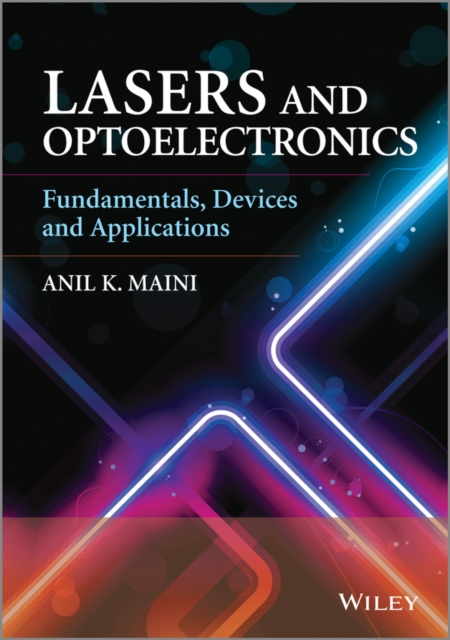
Lasers and optoelectronics : fundamentals, devices and applications
With emphasis on the physical and engineering principles, this book provides a comprehensive and highly accessible treatment of modern lasers and optoelectronics. Divided into four parts, it explains laser fundamentals, types of lasers, laser electronics & optoelectronics, and laser applications, covering each of the topics in their entirety, from basic fundamentals to advanced concepts.
Key features include:
* exploration of technological and application-related aspects of lasers and optoelectronics, detailing both existing and emerging applications in industry, medical diagnostics and therapeutics, scientific studies and Defence.
* simple explanation of the concepts and essential information on electronics and circuitry related to laser systems
* illustration of numerous solved and unsolved problems, practical examples, chapter summaries, self-evaluation exercises, and a comprehensive list of references for further reading
This volume is a valuable design guide for R&D engineers and scientists engaged in design and development of lasers and optoelectronics systems, and technicians in their operation and maintenance. The tutorial approach serves as a useful reference for under-graduate and graduate students of lasers and optoelectronics, also PhD students in electronics, optoelectronics and physics.
eBook

Investigation on physical properties of nanosized copper oxide (CuO) doped with cobalt (Co): A material for electronic device application
This study has reported about the preparation and characterization of Copper oxide (CuO) nanoparticles doped with Cobalt series at low temperature by Sol‐gel method. The characterization techniques like X‐ray diffraction (XRD), scanning electron microscope (SEM), Raman spectroscopy, defused reflectance spectroscopy (DRS), and DC measurement have been used to confirm its phase formation, that is, monoclinic, surface porous morphology, the redshift of Raman peaks confirms optical phonon confinement, whereas increasing bandgap signifies the quantum confinement effect. The semiconducting nature of samples has been observed by two probe method. Furthermore, the study has focused in detail on the effect of cobalt doping with varying concentrations by wt % on its structural, morphological, optical, and conductivity features. The paper describes the simple synthesis of CuO and doped CuO films for optoelectronic applications.
Journal Article

Optoelectronics for Low-Intensity Conflicts and Homeland Security
This authoritative new resource provides an overview of the deployment of various devices in systems in actual field conditions and efficacy established in warfare. The book covers laser and optronic technologies that have evolved over the years to build practical devices and systems for use in Homeland Security and low-intensity conflict scenarios. Readers will be able to assess combat and battle-worthiness of various available devices and systems.This book covers state-of-the-art and emerging trends in various optoelectronics technologies having applications in Homeland Security. It provides information on operational aspects, deployment scenarios, and actual usage of laser and optoelectronics based technologies for low intensity conflicts, offering insight into the utility of each technology/device for a given operational requirement.This book evaluates the merits of various laser and optoelectronic sensor based technologies intended for low intensity conflict operations, including counter-insurgency and anti-terrorist operations. It is a useful reference for those specializing in defense electronics and optronics and professionals in the defence industry involved in operation and maintenance of laser based security equipment. Packed with tables, photographs, and a comprehensive list of references in every chapter, this is the only book that covers all topics related to Laser and Optoelectronics devices intended for low intensity conflict operations in a single volume.
eBook

Satellite Technology
Filled with diagrams and illustrations, this concise resource provides a single-source reference on satellite technology and its applications, from remote sensing and military uses, to navigational and scientific applications. --
eBook
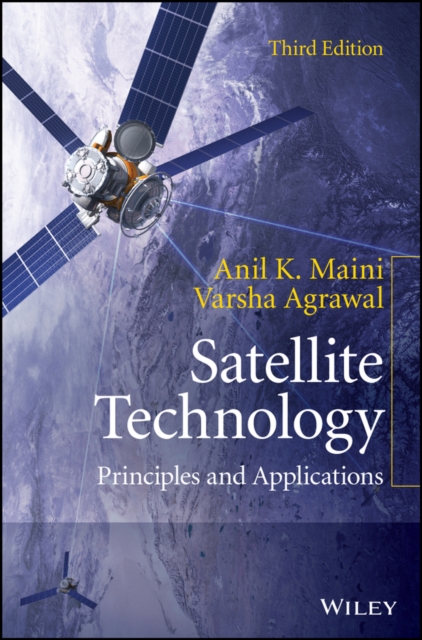
Satellite Technology
Fully updated edition of the comprehensive, single-source reference on satellite technology and its applications Covering both the technology and its applications, Satellite Technology is a comprehensive reference on satellites and their commercial, scientific and military applications. The book explains satellite technology fully, beginning with an introduction to the fundamentals, before covering other important topics including orbits and trajectories, launch and in-orbit operations, hardware, communication techniques, multiple access techniques, and link design. This new edition also includes two new chapters comprehensively covering networking concepts and emerging trends in satellite technology and its applications, including some unconventional related topics. Providing a complete survey of applications, from weather forecasting, remote sensing and military uses, to navigational and scientific applications, the authors also present an inclusive compendium on satellites and satellite launch vehicles. Filled with diagrams and illustrations, this book serves as an ideal introduction for those new to the topic, as well as a reference point for professionals. A companion website provides a revised and updated compendium on satellites and satellite launch vehicles. www.wiley.com/go/maini3
eBook

Battlefield Lasers and Opto-electronics Systems
During the last four decades or so, there has been an explosive growth in commercial, industrial, medical, scientific, technological, and above all, military usage of laser devices and systems. In fact, lasers have influenced every conceivable area of application during this period. While the expansion of non-military application spectrum of lasers is primarily driven by emergence of a large number of laser wavelengths followed by ever increasing power levels and reducing price tags at which those wavelengths could be generated, the military applications of lasers and related electro-optic devices have grown mainly because of technological maturity of the lasers that were born in the late 1960's and the early 1970's. Lasers have been used in various military applications since the early days of development that followed the invention of this magical device. There has been large scale proliferation of lasers and opto-electronic devices and systems for applications like range finding, target designation, target acquisition and tracking, precision guided munitions, etc. during 1970's and 1980's. These devices continue to improve in performance and find increased acceptance and usage in the contemporary battlefield scenario. Technological advances in optics, opto-electronics, and electronics, leading to more rugged, reliable, compact and efficient laser devices are largely responsible for making these indispensable in modern warfare. Past one decade or so has seen emergence of some new potential areas of usage. Some of these areas include rapid growth in the usage of lasers and opto-electronics devices and systems for electrooptic countermeasure (EOCM) applications, test and evaluation systems that can perform online functionality checks on military opto-electronics systems and also their interoperability. In this paper, an overview of the current and emerging military applications of lasers and opto-electronics systems has been given with an outline on the likely trends leading to performance enhancement of the existing systems and emergence of new application areas. Also, a brief on the developmental activity in the field of laser and opto-electronics devices and systems at Laser Science and Technology Centre (LASTEC), Delhi has been given.
Journal Article
Design and Development of Intracavity Optical Parametric Oscillator-based Eye Safe Laser Operating at 20 Hz without Forced Air Cooling
In this paper we report the design and development of an electro-optically Q-switched diode pumped Nd:YAG laser with intracavity optical parametric oscillator, generating ~ 5 ns laser pulses of ~8 mJ energy at eye safe wavelength of 1534 nm. A Z-shaped laser resonator has been designed with porro prism end reflector in Q-switch arm containing RTP Q-Switch and a suitably oriented waveplate. The gain arm consists of a Oe3 x 72 mm Nd: YAG laser rod, pumped from one side by 3 x 5 bar laser diode array stack emitting total optical peak power of 740 W at 804 nm at 38 degree C. Thermoelectric coolers (TECs) have been employed to maintain the optimum temperature of laser diode arrays and the combined heat load from the pump chamber and TECs is distributed over the system base plate with embedded heat pipes. Such cooling mechanism has eliminated the requirement of fins and fans in the laser system. Eye safe radiation is out-coupled through intra cavity KTA OPO (5 x 5 x 20 mm3) placed in the gain arm. Laser was operated at 20 Hz for several duty cycles of 10 min on and 10 min off and output energy remained stable within plus or minus 0.5 mJ without any forced air/liquid cooling. Defence Science Journal, 2013, 63(6), pp.599-605, DOI:http://dx.doi.org/10.14429/dsj.63.5759
Journal Article