
Catalogue Search | MBRL


Are you sure you want to remove the book from the shelf?

{{itemTitle}}
48
result(s) for
"Milani, Raffaele"
Sort by:

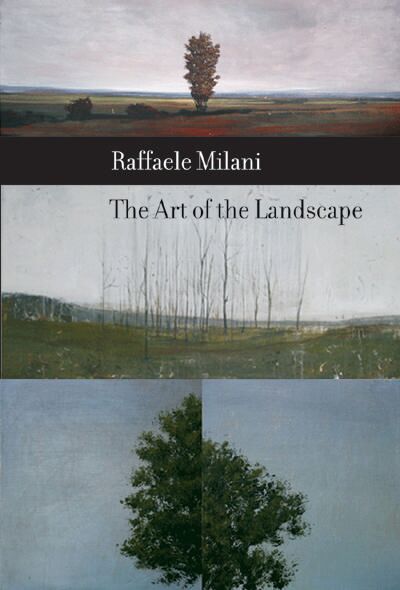
Art of the Landscape
Aesthetics deals with art, a human construction, but what one experiences when placed before nature is also an aesthetic feeling - the countryside is a place of reflection like no other. In The Art of the Landscape, Raffaele Milani interprets natural landscapes as an aesthetic category. Drawing from philosophical traditions, literature, and art, he calls the reader's attention to a special consciousness, originally established during the pre-Romantic age, that has become a distinctive feature of contemporary spirituality. Focusing on the definition of landscapes in relation to the concepts of nature, environment, territory, and man-made settings such as gardens and cities, Milani examines the origins of the predilection for natural scenery in the works of landscape painters and in travel literature. He addresses the distinctness of the aesthetic experience of landscapes, analyses the role of aesthetic categories, and explores landscape art as a medium of contemplation. What emerges is an original morphology of natural beauty derived from the scrutiny of landscape elements most frequently associated with aesthetic emotion - the colour of water and the sky, earth and stones, fire and volcanic eruptions, ruins and the mountains - an analysis especially relevant given the increasing fragility of our natural environment.
eBook

Art of the Landscape
Drawing from philosophical traditions, literature, and art, he calls the reader's attention to a special consciousness, originally established during the pre-Romantic age, that has become a distinctive feature of contemporary spirituality. Focusing on the definition of landscapes in relation to the concepts of nature, environment, territory, and man-made settings such as gardens and cities, Milani examines the origins of the predilection for natural scenery in the works of landscape painters and in travel literature. He addresses the distinctness of the aesthetic experience of landscapes, analyses the role of aesthetic categories, and explores landscape art as a medium of contemplation.
eBook
L’arte del paesaggio e la sua trasformazione
Leggere il paesaggio significa capire la natura, la storia e la cultura di un luogo. Una lettura importante per recuperare i segni del passato, renderli visibili e accostarli a più recenti segni provenienti dalle nuove richieste di possibili trasformazioni. Le forme riconoscibili di un paesaggio rivelano pagine di una lunga storia, dalla tradizione alla modernità. Perché esso è moderno e antico allo stesso tempo. Il paesaggio esprime un’immagine di forme, una reazione sentimentale e allo stesso tempo un’esigenza d’astrazione. E’ categoria dell’oggetto e del soggetto. Dufrenne, in un secolo che sembrava avesse dimenticato la bellezza del paesaggio, aveva elogiato sin dal 1955 la percezione estetica della natura sottolineando una certa indistinzione del sensoriale e dell’affettivo. In generale si accenna a un’arte del paesaggio quando esso viene concepito e sentito in relazione allo sguardo pittorico, alla veduta, alla teatralizzazione della natura, alle suggestioni visive delle note di viaggio. Ma, se vogliamo veramente pensarlo come un’arte dell’origine, un’arte che precede i suoi riflessi nella riproduzione dell’arte figurativa, esso ci appare più ampiamente e profondamente unito a un insieme di aspetti che mettono in luce l’uomo tra natura, cultura, storia e mito. Quest’ultimo si fa poi strumento importantissimo nel cogliere e trasmettere il mistero, l’inesplicabile, l’invisibile. Il paesaggio è, allora, sia reale, un’arte fornita dal fare e dalla cultura di un popolo, sia mentale, legato alla rappresentazione e alla visione del mondo. Gli architetti e i paesaggisti che sono invitati a ridare dignità a un territorio degradato, o troppo alterato e manipolato, dovranno ricordarsi dell’interazione di queste due accezioni ed essere capaci di leggere e interpretare i segni della presenza dell’uomo e migliorare così l’aspetto dei luoghi.
Journal Article

Contemplation of the Landscape
In art, contemplating is different from doing. In my mind I can produce images of landscapes derived from the models provided by Western civilization or I can admire the beauty of the forms independently of these models. As does the garden, the landscape arranges natural images for my mind. The art of the landscape is, in a sense, already made, even though it is in the process of transformation. It obeys the laws of the physical modification of the land, but also the laws of human sensibility and invention (cultivation, management, and so on).
The landscape presents itself to our
Book Chapter
Conclusion
The gaze fixed on the landscape has inspired many writers and painters to immerse themselves in a vision in which they bring together the world of reality and that of dreams. The rising or setting of the sun, the alternation of day and night, as well as of the seasons, has inspired a visionariness with respect to the hours and to places. In the splendour of eternal change, a thought of Heraclitus comes to mind: “Awake, men have a common world, but each sleeper reverts to his private world” (14, A 99); this thought is echoed in another of his
Book Chapter
Morphology of Natural Beauties
Scientific texts describe water as a colourless and tasteless liquid. Although very important, this definition does not apply to aesthetic perception, which relies on sensibility and the imagination. Furthermore, the creative experience of art demonstrates that water has its own radiant beauty, consisting of light, colours, sounds, tastes, and even fragrances. It would not be surprising to discover that someone had composed an “ode to water,” possibly in the sixteenth or seventeenth century. It is an aspect of the wonder of the elements, the fundamental components of the physical world, which can be seen either in harmony or in conflict
Book Chapter
The Art of the Landscape
Beginning with ancient Greece, unrestricted contemplation of the totality of nature fell within the domain of philosophy, but, with the passage of time, this totality died. The landscape separates itself off from the theory of the cosmos and, in human representations, nature is perceived through it. This constitutes a loss in the form of a laceration and regret, which we often find evoked in Romantic poetry. Henceforth, the landscape is seen as invention or as a substitute for nature.
Natural beauty, a quality of the universe consisting of harmony, order, and serenity, splits into a number of aesthetic categories. A
Book Chapter
The Sentimental Journey
In the recent history of the West, the question often arises as to what the journey means in the context culture and art, entwining as it does ancient and modern themes, memories of the past and present reality. Irrespective of destination, whether real (such as Rome, Naples, Sicily, Greece) or imaginary (such as Shangri-La, Lilliput, Aleph, Pallas), the journey has been an instrument of aesthetic exploration in the quest for the authentic and the pure, as opposed to the disfigured image of earth.
It can be said that all travellers are sentimentalists, including Goethe, despite his piece (1787) against sentimentalism
Book Chapter
Aesthetics of the Environment
Near the end ofCombray(Remembrance of Things Past), we wonder how it is possible to speak of or describe the beauty of the world. The answer is that we must overcome the disparity between our impressions and their expression (“le désaccord entre nos impressions et leur expression”). As Starobinski (1999, 157) points out, Marcel Proust introduces the theme of emotion, which needs to acquire the verbal and visual means appropriate to the interpretation of that beauty through the application of a rhetoric of the ineffable. It is an experience of limit that presents a vast array of motifs, correspondences,
Book Chapter