
Catalogue Search | MBRL


Are you sure you want to remove the book from the shelf?

{{itemTitle}}
14
result(s) for
"Morrison, Toni author"
Sort by:

God help the child
At the center: a young woman who calls herself Bride, whose stunning blue-black skin is only one element of her beauty, her boldness and confidence, her success in life, but which caused her light-skinned mother to deny her even the simplest forms of love. There is Booker, the man Bride loves, and loses to anger. Rain, the mysterious white child with whom she crosses paths. And finally, Bride's mother herself, Sweetness, who takes a lifetime to come to understand that what you do to children matters. And they might never forget.
Book

The Collected Poems of Lucille Clifton 1965-2010
Winner of the 2013 Hurston/Wright Legacy Award for Poetry \"The Collected Poems of Lucille Clifton 1965-2010may be the most important book of poetry to appear in years.\"--Publishers Weekly \"All poetry readers will want to own this book; almost everything is in it.\"--Publishers Weekly \"If you only read one poetry book in 2012,The Collected Poems of Lucille Cliftonought to be it.\"-NPR \"The 'Collected Clifton' is a gift, not just for her fans...but for all of us.\"--The Washington Post \"The love readers feel for Lucille Clifton-both the woman and her poetry-is constant and deeply felt. The lines that surface most frequently in praise of her work and her person are moving declarations of racial pride, courage, steadfastness.\"-Toni Morrison, from the Foreword The Collected Poems of Lucille Clifton 1965-2010combines all eleven of Lucille Clifton's published collections with more than fifty previously unpublished poems. The unpublished poems feature early poems from 1965-1969, a collection-in-progress titledthe book of days(2008), and a poignant selection of final poems. An insightful foreword by Nobel Prize-winning author Toni Morrison and comprehensive afterword by noted poet Kevin Young frames Clifton's lifetime body of work, providing the definitive statement about this major America poet's career. On February 13, 2010, the poetry world lost one of its most distinguished members with the passing of Lucille Clifton. In the last year of her life, she was named the first African American woman to receive the $100,000 Ruth Lilly Poetry Prize honoring a US poet whose \"lifetime accomplishments warrant extraordinary recognition,\" and was posthumously awarded the Robert Frost Medal for lifetime achievement from the Poetry Society of America. \"mother-tongue: to man-kind\" (from the unpublishedthe book of days): all that I am asking isthat you see me as somethingmore than a common occurrence,more than a woman in her ordinary skin.
eBook
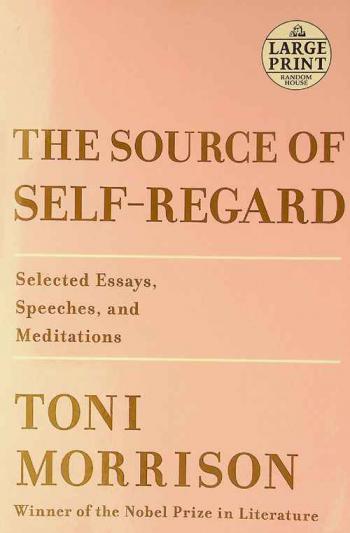
The source of self-regard : selected essays, speeches, and meditations
The source of self-regard is brimming with all the elegance of mind and style, the literary prowess and moral compass that are Toni Morrison's inimitable hallmark. It is divided into three parts: the first is introduced by a powerful prayer for the dead of 9/11; the second by a searching meditation on Martin Luther King Jr., and the last by a heart-wrenching eulogy for James Baldwin. In the writings and speeches included here, Morrison takes on contested social issues: the foreigner, female empowerment, the press, money, \"black matter(s),\" and human rights. She looks at enduring matters of culture: the role of the artist in society, the literary imagination, the Afro-American presence in American literature, and in her Nobel lecture, the power of language itself. And here too is piercing commentary on her own work (including The Bluest Eye, Sula, Tar Baby, Jazz, Beloved, and Paradise) and that of others, among them, painter and collagist Romare Bearden, author Toni Cade Bambara, and theater director Peter Sellars. In all, The source of self-regard is a luminous and essential addition to Toni Morrison's oeuvre

THE FAMILY CAME FIRST
Miss Jones shows how the need to maintain family life shaped the work habits and choices of blacks in general and black women in particular. Examining black women as laborers is one thing; examining this labor force in the context of its life-and-death struggle to save the family is quite another. The attempt to annihilate black families was so spirited that every effort to protect those families was seen as nothing less than sabotage. A male slave who ducked off the plantation to go fishing was perceived as a loafer rather than a provider. Similarly, after slavery, when free black women stayed at home to care for their children (a duty and virtue for white women), they were said to be ''doing nothing'' and to have ''played the lady'' by demanding that their husbands ''support them in idleness.'' Like a silent, underground river, family priorities run through the work choices blacks made after and during slavery. ''Freed blacks resisted both the northern work ethic and the southern system of neoslavery,'' Miss [Jacqueline Jones] writes. ''The full import of their preference for family sharecropping over gang labor becomes apparent when viewed in a national context. The industrial North was increasingly coming to rely on workers who had yielded to employers all authority over their working conditions. In contrast, sharecropping husbands and wives retained a minimal amount of control over their own productive energies and those of their children on both a daily and seasonal basis. Furthermore, the sharecropping system enabled mothers to divide their time between field and housework in a way that reflected a family's needs. The system also removed wives and daughters from the menacing reach of white supervisors. Here were tangible benefits of freedom that could not be reckoned in financial terms.'' THOUGH she provides a context for joining the African past to the Afro-American present, Miss Jones is not at all optimistic about the future. She believes that the black woman's unprecedented strength can no longer ward off the quite precedented assaults on the black family. But in calling for ''a massive public works program (and) a 'solidarity wage' to narrow the gap between the pay scales of lower- and upper-echelon workers,'' she is exchanging one dependency for another. If Miss Jones is right, if the traditional ''make a way out of no way'' resourcefulness of black women can't save the black family and blacks are still at the Government's mercy, then they face their gravest danger yet.
Newspaper Article
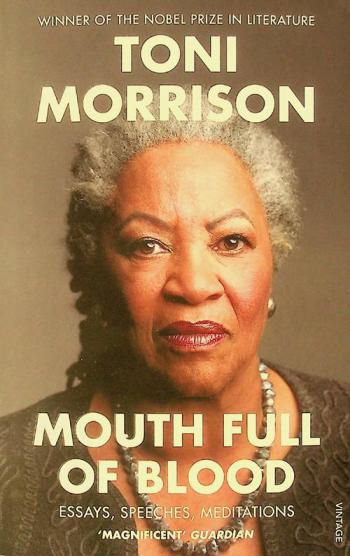
Mouth full of blood : essays, speeches, meditations
Spanning four decades, these essays, speeches and meditations interrogate the world around us. They are concerned with race, gender and globalisation. The sweep of American history and the current state of politics. The duty of the press and the role of the artist. Throughout Mouth Full of Blood our search for truth, moral integrity and expertise is met by Toni Morrison with controlled anger, elegance and literary excellence.
RACE RELATIONS; On to Disneyland and Real Unreality
Nine years after a white boy spit at my son and accused him of being black, this year a white boy accused him of not being black. He was confused. ''Well,'' I said, ''white people complain a lot. They use blackness for lots of things - for whatever is going on in the world. Please don't let them define you. And please don't try to please them. Whatever they want you to be, chances are they want it for themselves, not for you.''
Newspaper Article

Postcolonial narrative and the work of mourning : J.M. Coetzee, Wilson Harris, and Toni Morrison
Sam Durrant’s powerfully original book compares the ways in which the novels of J. M. Coetzee, Wilson Harris, and Toni Morrison memorialize the traumatic histories of racial oppression that continue to haunt our postcolonial era. The works examined bear witness to the colonization of the New World, U.S. slavery, and South African apartheid, histories founded on a violent denial of the humanity of the other that had traumatic consequences for both perpetrators and victims. Working at the borders of psychoanalysis and deconstruction, and drawing inspiration from recent work on the Holocaust, Durrant rethinks Freud’s opposition between mourning and melancholia at the level of the collective and rearticulates the postcolonial project as an inconsolable labor of remembrance.
eBook

The origin of Others
Morrison \"reflects on the themes that preoccupy her work and increasingly dominate national and world politics: race, fear, borders, the mass movement of peoples, the desire for belonging. What is race and why does it matter? What motivates the human tendency to construct Others? Why does the presence of Others make us so afraid? Drawing on her Norton Lectures, Toni Morrison takes up these and other vital questions bearing on identity\"--Dust jacket flap.
Book
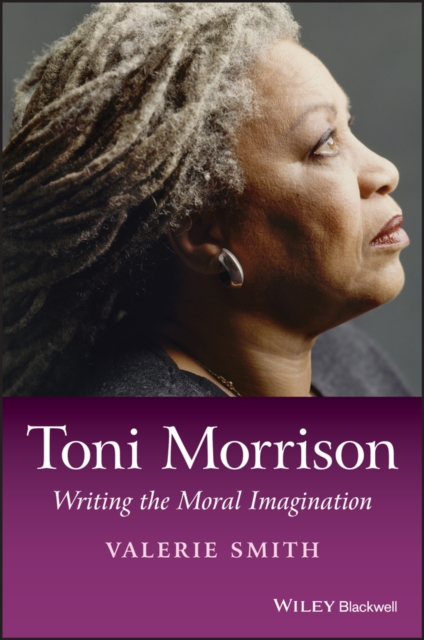
Toni Morrison : writing the moral imagination
This compelling study explores the inextricable links between the Nobel laureate's aesthetic practice and her political vision, through an analysis of the key texts as well as her lesser-studied works, books for children, and most recent novels. * Offers provocative new insights and a refreshingly original contribution to the scholarship of one of the most important contemporary American writers * Analyzes the celebrated fiction of Morrison in relation to her critical writing about the process of reading and writing literature, the relationship between readers and writers, and the cultural contributions of African-American literature * Features extended analyses of Morrison's lesser-known works, most recent novels, and books for children as well as the key texts
eBook