
Catalogue Search | MBRL


Are you sure you want to remove the book from the shelf?

{{itemTitle}}
11,302
result(s) for
"Nelson, W"
Sort by:

Friends, foes, and furs : George Nelson's Lake Winnipeg journals, 1804-1822
\"George Nelson (1786-1859) was a clerk for the North West Company whose unusually detailed and personal writings provide a compelling portrait of the people engaged in the golden age of the Canadian fur trade. Friends, Foes, and Furs is a critical edition of Nelson's daily journals, supplemented with exciting anecdotes from his \"Reminiscences,\" which were written after his retirement to Lower Canada. An introduction and annotations by Harry Duckworth place Nelson's material securely within the established body of fur trade history. This series of journals gives readers a first-person account of Nelson's life and career, from his arrival at the age of eighteen in Lake Winnipeg, where he was stationed as an apprentice clerk from 1804 to 1813, to his second service from 1818 to 1819 and an 1822 canoe journey through the region. A keen and respectful observer, Nelson recorded in his daily journals not only the minutiae of his work, but also details about the lives of voyageurs, the Ojibwe and Swampy Cree communities, and others involved in the fur trade. His insights uncover an extraordinary view of the Lake Winnipeg region in the period just prior to European settlement. Making the full extent of George Nelson's journals available for the first time, Friends, Foes, and Furs is an intriguing account of one man's adventures in the fur trade in prairie Canada.\"-- Provided by publisher.
Book

Accuracy of Consumer Wearable Heart Rate Measurement During an Ecologically Valid 24-Hour Period: Intraindividual Validation Study
Wrist-worn smart watches and fitness monitors (ie, wearables) have become widely adopted by consumers and are gaining increased attention from researchers for their potential contribution to naturalistic digital measurement of health in a scalable, mobile, and unobtrusive way. Various studies have examined the accuracy of these devices in controlled laboratory settings (eg, treadmill and stationary bike); however, no studies have investigated the heart rate accuracy of wearables during a continuous and ecologically valid 24-hour period of actual consumer device use conditions.
The aim of this study was to determine the heart rate accuracy of 2 popular wearable devices, the Apple Watch 3 and Fitbit Charge 2, as compared with the gold standard reference method, an ambulatory electrocardiogram (ECG), during consumer device use conditions in an individual. Data were collected across 5 daily conditions, including sitting, walking, running, activities of daily living (ADL; eg, chores, brushing teeth), and sleeping.
One participant, (first author; 29-year-old Caucasian male) completed a 24-hour ecologically valid protocol by wearing 2 popular wrist wearable devices (Apple Watch 3 and Fitbit Charge 2). In addition, an ambulatory ECG (Vrije Universiteit Ambulatory Monitoring System) was used as the gold standard reference method, which resulted in the collection of 102,740 individual heartbeats. A single-subject design was used to keep all variables constant except for wearable devices while providing a rapid response design to provide initial assessment of wearable accuracy for allowing the research cycle to keep pace with technological advancements. Accuracy of these devices compared with the gold standard ECG was assessed using mean error, mean absolute error, and mean absolute percent error. These data were supplemented with Bland-Altman analyses and concordance class correlation to assess agreement between devices.
The Apple Watch 3 and Fitbit Charge 2 were generally highly accurate across the 24-hour condition. Specifically, the Apple Watch 3 had a mean difference of -1.80 beats per minute (bpm), a mean absolute error percent of 5.86%, and a mean agreement of 95% when compared with the ECG across 24 hours. The Fitbit Charge 2 had a mean difference of -3.47 bpm, a mean absolute error of 5.96%, and a mean agreement of 91% when compared with the ECG across 24 hours. These findings varied by condition.
The Apple Watch 3 and the Fitbit Charge 2 provided acceptable heart rate accuracy (<±10%) across the 24 hour and during each activity, except for the Apple Watch 3 during the daily activities condition. Overall, these findings provide preliminary support that these devices appear to be useful for implementing ambulatory measurement of cardiac activity in research studies, especially those where the specific advantages of these methods (eg, scalability, low participant burden) are particularly suited to the population or research question.
Journal Article


Galvanotactic control of collective cell migration in epithelial monolayers
Many normal and pathological biological processes involve the migration of epithelial cell sheets. This arises from complex emergent behaviour resulting from the interplay between cellular signalling networks and the forces that physically couple the cells. Here, we demonstrate that collective migration of an epithelium can be interactively guided by applying electric fields that bias the underlying signalling networks. We show that complex, spatiotemporal cues are locally interpreted by the epithelium, resulting in rapid, coordinated responses such as a collective U-turn, divergent migration, and unchecked migration against an obstacle. We observed that the degree of external control depends on the size and shape of the cell population, and on the existence of physical coupling between cells. Together, our results offer design and engineering principles for the rational manipulation of the collective behaviour and material properties of a tissue.
The collective migration of epithelial cells arises from the interplay between intercellular forces and cellular signalling networks. It is now shown that the migration of an epithelium can be controlled by applying electric fields that bias the signalling networks, and that such galvanotactic control can prompt cell populations to make coordinated U-turns, undergo divergent or convergent migration, or move against an obstacle.
Journal Article

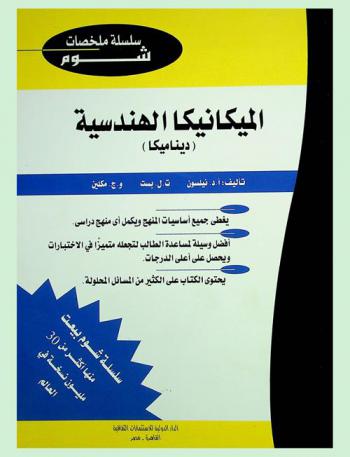
الميكانيكا الهندسية : استاتيكا
الفصل الأول عبارة عن مراجعة كاملة لاقل عدد من تعريفات وطرق المتجهات اللازمة لباقى الكتاب. وتطبيقات هذا الفصل التمهيدى عمل بها خلال هذا الكتاب أعطيت بعض الحلول بإستخام الحاسوب الألى ولكن أغلب المسائل يمكن حلها بالطرق الأخرى. موضوعات الفصول تناظر المادة التى تغطى فى مقررات الميكانيكا التمهيدية القياسية. كل فصل يبدأ بالنص على التعاريف والمبادئ والنظريات وثيقة الصلة بالموضوعات. ويتلو هذا النص مجموعات المسائل المحلولة والإضافية. المسائل المحلولة تخدم تصوير وإيضاح النظرية وتقديم طرق التحليل وعرض الأمثلة العملية ونضع أمام الطالب وبوضوح هذه النقط الدقيقة التى تمكنه من تطبيق المبادئ الأساسية بطريقة صحيحة ومؤكدة. وضعت فى المسائل المحلولة العديد من الإثباتات للنظريات و إستنتاجات المقادير. المسائل الإضافية العديدة تخدم كمراجعة كاملة للموضوعات المغطاة فى كل فصل.
BOOK

Rapid assessment of psychological and epidemiological correlates of COVID-19 concern, financial strain, and health-related behavior change in a large online sample
COVID-19 emerged in November 2019 leading to a global pandemic that has not only resulted in widespread medical complications and loss of life, but has also impacted global economies and transformed daily life. The current rapid response study in a convenience online sample quickly recruited 2,065 participants across the United States, Canada, and Europe in late March and early April 2020. Cross-sectional findings indicated elevated anxiety and depressive symptoms compared to historical norms, which were positively associated with COVID-19 concern more strongly than epidemiological data signifying risk (e.g., world and country confirmed cases). Employment loss was positively associated with greater depressive symptoms and COVID-19 concern, and depressive symptoms and COVID-19 concern were significantly associated with more stringent self-quarantine behavior. The rapid collection of data during the early phase of this pandemic is limited by under-representation of non-White and middle age and older adults. Nevertheless, these findings have implications for interventions to slow the spread of COVID-19 infection.
Journal Article

Primary cilium loss in mammalian cells occurs predominantly by whole-cilium shedding
The primary cilium is a central signaling hub in cell proliferation and differentiation and is built and disassembled every cell cycle in many animal cells. Disassembly is critically important, as misregulation or delay of cilia loss leads to cell cycle defects. The physical means by which cilia are lost are poorly understood but are thought to involve resorption of ciliary components into the cell body. To investigate cilium loss in mammalian cells, we used live-cell imaging to comprehensively characterize individual events. The predominant mode of cilium loss was rapid deciliation, in which the membrane and axoneme of the cilium was shed from the cell. Gradual resorption was also observed, as well as events in which a period of gradual resorption was followed by rapid deciliation. Deciliation resulted in intact shed cilia that could be recovered from culture medium and contained both membrane and axoneme proteins. We modulated levels of katanin and intracellular calcium, two putative regulators of deciliation, and found that excess katanin promotes cilia loss by deciliation, independently of calcium. Together, these results suggest that mammalian ciliary loss involves a tunable decision between deciliation and resorption.
Journal Article


A review of the clinical utility of serum S100B protein levels in the assessment of traumatic brain injury
Background
In order to improve injury assessment of brain injuries, protein markers of pathophysiological processes and tissue fate have been introduced in the clinic. The most studied protein “biomarker” of cerebral damage in traumatic brain injury (TBI) is the protein S100B. The aim of this narrative review is to thoroughly analyze the properties and capabilities of this biomarker with focus on clinical utility in the assessment of patients suffering from TBI.
Results
S100B has successfully been implemented in the clinic regionally (1) to screen mild TBI patients evaluating the need to perform a head computerized tomography, (2) to predict outcome in moderate-to-severe TBI patients, (3) to detect secondary injury development in brain-injured patients and (4) to evaluate treatment efficacy. The potential opportunities and pitfalls of S100B in the different areas usually refer to its specificity and sensitivity to detect and assess intracranial injury.
Conclusion
Given some shortcomings that should be realized, S100B can be used as a versatile screening, monitoring and prediction tool in the management of TBI patients.
Journal Article