
Catalogue Search | MBRL


Are you sure you want to remove the book from the shelf?

{{itemTitle}}
15,000
result(s) for
"PATEL, R."
Sort by:


Review on recent advancements in the role of electrolytes and electrode materials on supercapacitor performances
Supercapacitors currently hold a prominent position in energy storage systems due to their exceptionally high power density, although they fall behind batteries and fuel cells in terms of energy density. This paper examines contemporary approaches aimed at enhancing the energy density of supercapacitors by adopting hybrid configurations, alongside considerations of their power density, rate capability, and cycle stability. Given that electrodes play a pivotal role in supercapacitor cells, this review focuses on the design of hybrid electrode structures with elevated specific capacitance, shedding light on the underlying mechanisms. Factors such as available surface area, porosity, and conductivity of the constituent materials significantly influence electrode performance, prompting the adoption of strategies such as nanostructuring. Additionally, the paper delves into the impact of novel bio-based hybrid electrolytes, drawing upon literature data to outline the fabrication of various hybrid electrode materials incorporating conducting polymers like polyaniline and polypyrrole, as well as metal oxides, carbon compounds, and hybrid electrolytes such as ionic liquids, gel polymers, aqueous, and solid polymer electrolytes. The discussion explores the contributions of different components and methodologies to overall capacitance, with a primary emphasis on the mechanisms of energy storage through non-faradic electrical double-layer capacitance and faradaic pseudo-capacitance. Furthermore, the paper addresses the electrochemical performance of hybrid components, examining their concentrations and functioning via diverse charge storage techniques.
Journal Article

Bioprocessing technology in food and health : potential applications and emerging scope
The functional foods market represents one of the fastest growing and most fascinating areas of investigation and innovation in the food sector. This new volume focuses on recent findings, new research trends, and emerging technologies in bioprocessing: making use of microorganisms in the production of food with health and nutritional benefits.
Book

Utilization of sugarcane bagasse ash as green adsorbent for Fuchsin basic dye removal
Sugarcane bagasse is generated in huge quantities worldwide which can be converted into high-end valuable products. A major portion of bagasse is converted into Sugarcane Bagasse Ash (SCBA) by burning it at a high temperature in industries. Proper utilization of SCBA instead of landfilling can reduce the harmful environmental effects. In this paper, application of bagasse ash as a green adsorbent for the removal of Fuchsin Basic (FB) dye was investigated. SCBA was characterized using XRD, FTIR, SEM-EDS, BET for insights into its properties. Parameters like contact time, pH, temperature, initial concentration and adsorbent dosage were varied and their impact on dye removal was studied. A maximum removal around 78% (for 10 mg/L dye concentration, 3 g/L adsorbent dosage, 7 pH, 60 min and 25 °C) was achieved using SCBA. Adsorption equilibrium was investigated and Langmuir model fitted best (q
max
= 9.1706 mg/g and k
l
= 0.1690 L/mg, R
2
= 0.9939) as compared to Freundlich and Temkin models. Additionally, kinetics studies revealed that Pseudo second order (R
2
= 0.9998) was superior over other kinetic models. Thermodynamic study confirmed the endothermic adsorption of FB on SCBA and FB removal of 50% was observed even after four cycles indicating reusability of adsorbent after regeneration. Use of SCBA directly as adsorbent without excessive pretreatment promises to be an attractive option.
Journal Article
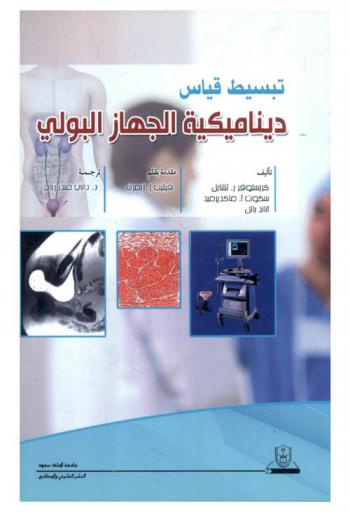
تبسيط قياس ديناميكية الجهاز البولي
يهدف هذا الكتاب إلى تغيير الفكرة السائدة بأن قياس حركية الجهاز البولي هو موضوع معقد ولا يقتصر موضوع قياس حركية الجهاز البولي على فئة معينة محدودة التطبيق ولا يتطلب معدات معقدة تتوافر فقط في \"الأبراج العاجية\" لأن المبادئ الأساسية لقياس حركية الجهاز البولي تعتبر بسيطة وفي معظم الحالات لا تستلزم بحثا معقدا وتغطي فصول الكتاب العشرة مجموعة واسعة من المواضيع تتضمن الأعراض البولية والتعاريف الحالية التي أقرتها الجمعية العالمية لسلس البول والوسائل التقنية لقياس حركية الجهاز البولي ونتائج التشخيص المتعلقة بسلس البول والأنسداد والاضطرابات الحسية والمثانة العصبية وأمراض المسالك البولية للأطفال وقد تم عرض كل فصل كوحدة تتضمن نصا موجزا وجداول عملية تم ترميزها بالألوان بالإضافة إلى ملحق وقسم للقيم المعيارية.
Book

Matrix-Assisted Laser Desorption Ionization—Time of Flight Mass Spectrometry in Clinical Microbiology
Despite widespread application of nucleic acid diagnostics, cultures remain integral in modern laboratories. Because cultures detect a large number of organism types, it is unlikely that they will disappear from clinical practice in the near future. Their downside is slow turn-around time, impacted by time to growth and identification of that growth. The latter is expedited using a new proteomic technology, matrix-assisted laser desorption ionization—time of flight mass spectrometry (MALDI-TOF MS).
Journal Article

Data mining for business analytics : concepts, techniques and applications in Python
Presents an applied approach to data mining concepts and methods, using Python software for illustration. -- Provided by publisher.
Book

Impact of the COVID-19 pandemic on remote mental healthcare and prescribing in psychiatry
Abstract During the COVID-19 pandemic, mental health services often used remote technology to deliver care. However, the rise in remote consultation was largely unplanned. Furthermore, while many patients found remote technology a useful way to access care, others did not. Going forwards, remote technology will continue to play an important role in the delivery of mental healthcare. Research on the most effective ways for mental health services to implement remote technology is thus urgently needed. Electronic health records (EHRs) have been widely adopted in mental healthcare services. EHRs not only support individual patient care, but also open the door to largescale research through the analysis of de-identified clinical data. The South London and Maudsley (SLaM) Biomedical Research Centre (BRC) Case Register is a large EHR dataset comprising structured and unstructured clinical information on patients receiving specialist mental healthcare. In this talk, I will present findings from an analysis of the SLaM BRC Case Register using the Clinical Record Interactive Search tool (CRIS) to evaluate the uptake of remote mental healthcare during the COVID-19 pandemic and its association with medication prescribing. I will discuss the implications of these findings for psychiatrists delivering community mental healthcare and how mental health services can harness remote technology to optimise clinical outcomes. Disclosure of Interest R. Patel Grant / Research support from: NIHR (NIHR301690); MRC (MR/S003118/1); Academy of Medical Sciences (SGL015/1020); Janssen, Consultant of: Induction Healthcare Ltd; Holmusk
Journal Article


Rivaroxaban in Peripheral Artery Disease after Revascularization
Patients with peripheral artery disease who underwent revascularization were randomly assigned to receive rivaroxaban (2.5 mg twice daily) or placebo. All patients received aspirin. The primary outcome of acute limb ischemia, major amputation for vascular causes, MI, ischemic stroke, or cardiovascular death occurred less frequently with rivaroxaban.
Journal Article