
Catalogue Search | MBRL


Are you sure you want to remove the book from the shelf?

{{itemTitle}}
798
result(s) for
"Paul Gottfried"
Sort by:


Antifascism
A conservative take on the antifascist
movement
Antifascism argues that
current self-described antifascists are not struggling against a
reappearance of interwar fascism, and that the Left that claims to
be opposing fascism has little in common with any earlier Left,
except for some overlap with critical theorists of the Frankfurt
School. Paul Gottfried looks at antifascism from its roots
in early twentieth-century Europe to its American manifestation in
the present. The pivotal development for defining the present
political spectrum, he suggests, has been the replacement of a
recognizably Marxist Left by an intersectional one. Political and
ideological struggles have been configured around this new Left,
which has become a dominant force throughout the Western world.
Gottfried discusses the major changes undergone by antifascist
ideology since the 1960s, fascist and antifascist models of the
state and assumptions about human nature, nationalism versus
globalism, the antifascism of the American conservative
establishment, and Antifa in the United States. Also included is an
excursus on the theory of knowledge presented by Thomas Hobbes in
Leviathan .
In Antifascism Gottfried concludes that promoting a
fear of fascism today serves the interests of the powerful-in
particular, those in positions of political, journalistic, and
educational power who want to bully and isolate political
opponents. He points out the generous support given to the
intersectional Left by multinational capitalists and examines the
movement of the white working class in Europe-including former
members of Communist parties-toward the populist Right, suggesting
this shows a political dynamic that is different from the older
dialectic between Marxists and anti-Marxists.
eBook

Antifascism
A conservative take on the antifascist
movement
Antifascism argues that
current self-described antifascists are not struggling against a
reappearance of interwar fascism, and that the Left that claims to
be opposing fascism has little in common with any earlier Left,
except for some overlap with critical theorists of the Frankfurt
School. Paul Gottfried looks at antifascism from its roots
in early twentieth-century Europe to its American manifestation in
the present. The pivotal development for defining the present
political spectrum, he suggests, has been the replacement of a
recognizably Marxist Left by an intersectional one. Political and
ideological struggles have been configured around this new Left,
which has become a dominant force throughout the Western world.
Gottfried discusses the major changes undergone by antifascist
ideology since the 1960s, fascist and antifascist models of the
state and assumptions about human nature, nationalism versus
globalism, the antifascism of the American conservative
establishment, and Antifa in the United States. Also included is an
excursus on the theory of knowledge presented by Thomas Hobbes in
Leviathan .
In Antifascism Gottfried concludes that promoting a
fear of fascism today serves the interests of the powerful-in
particular, those in positions of political, journalistic, and
educational power who want to bully and isolate political
opponents. He points out the generous support given to the
intersectional Left by multinational capitalists and examines the
movement of the white working class in Europe-including former
members of Communist parties-toward the populist Right, suggesting
this shows a political dynamic that is different from the older
dialectic between Marxists and anti-Marxists.
eBook

Revisions and Dissents
Paul Gottfried's critical engagement with political correctness is well known. The essays in Revisions and Dissents focus on a range of topics in European intellectual and political history, social theory, and the history of modern political movements. With subjects as varied as Robert Nisbet, Whig history, the European Union election of 2014, and Donald Trump, the essays are tied together by their strenuous confrontation with historians and journalists whose claims about the past no longer receive critical scrutiny. According to Gottfried, successful writers on historical topics take advantage of political orthodoxy and/or widespread ignorance to present questionable platitudes as self-evident historical judgments. New research ceases to be of importance in determining accepted interpretations. What remains decisive, Gottfried maintains, is whether the favored view fits the political and emotional needs of what he calls \"verbalizing elites.\" In this highly politicized age, Gottfried argues, it is necessary to re-examine these prevalent interpretations of the past. He does so in this engaging volume, which will appeal to general readers interested in political and intellectual history.
eBook

Review of Ulrich Hintze, Theoria Generalis: Das Wisen des Politischen
Has Ulrich Hintze succeeded in producing a \"general political theory\"? At the least, the author has provided a useful tour of the thought-provoking work of thinkers such as Hermann Heller, Hermann Schmitz, and Ludwig von Mises. Along the way, Hintze makes extensive use of Mises to create a theory of the state, taking aim at anarcho-capitalists.
Journal Article

Leo Strauss and the conservative movement in America : a critical appraisal
This book offers an original interpretation of the achievement of Leo Strauss, stressing how his ideas and followers reshaped the American conservative movement. The conservative movement that reached out to Strauss and his legacy was extremely fluid and lacked a self-confident leadership. Conservative activists and journalists felt a desperate need for academic acceptability, which they thought Strauss and his disciples would furnish. They also became deeply concerned with the problem of 'value relativism', which self-described conservatives thought Strauss had effectively addressed. But until recently, neither Strauss nor his disciples have considered themselves to be 'conservatives'. Contrary to another misconception, Straussians have never wished to convert Americans to ancient political ideals and practices, except in a very selective rhetorical fashion. Strauss and his disciples have been avid champions of American modernity, and 'timeless' values as interpreted by Strauss and his followers often look starkly contemporary.
eBook
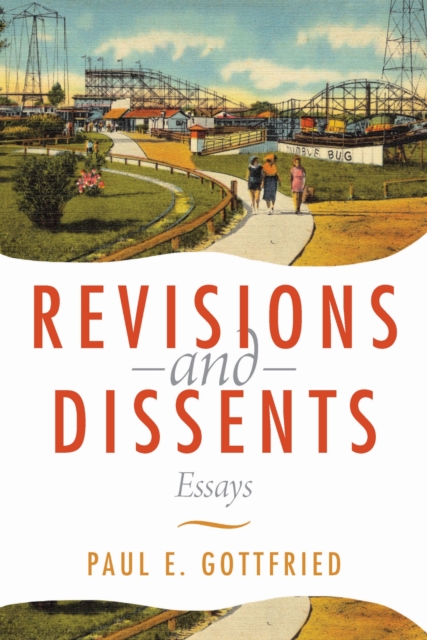
Revisions and dissents: an anthology
Paul Gottfried's critical engagement with political correctness is well known. The essays in Revisions and Dissents focus on a range of topics in European intellectual and political history, social theory, and the history of modern political movements. With subjects as varied as Robert Nisbet, Whig history, the European Union election of 2014, and Donald Trump, the essays are tied together by their strenuous confrontation with historians and journalists whose claims about the past no longer receive critical scrutiny. According to Gottfried, successful writers on historical topics take advantage of political orthodoxy and/or widespread ignorance to present questionable platitudes as self-evident historical judgments. New research ceases to be of importance in determining accepted interpretations. What remains decisive, Gottfried maintains, is whether the favored view fits the political and emotional needs of what he calls verbalizing elites. In this highly politicized age, Gottfried argues, it is necessary to re-examine these prevalent interpretations of the past. He does so in this engaging volume, which will appeal to general readers interested in political and intellectual history.
eBook

Multiculturalism and the politics of guilt : toward a secular theocracy
Multiculturalism and the Politics of Guilt extends Paul Gottfried's examination of Western managerial government's growth in the last third of the twentieth century. Linking multiculturalism to a distinctive political and religious context, the book argues that welfare-state democracy, unlike bourgeois liberalism, has rejected the once conventional distinction between government and civil society.
Gottfried argues that the West's relentless celebrations of diversity have resulted in the downgrading of the once dominant Western culture. The moral rationale of government has become the consciousness-raising of a presumed majority population. While welfare states continue to provide entitlements and fulfill the other material programs of older welfare regimes, they have ceased to make qualitative leaps in the direction of social democracy. For the new political elite, nationalization and income redistributions have become less significant than controlling the speech and thought of democratic citizens. An escalating hostility toward the bourgeois Christian past, explicit or at least implicit in the policies undertaken by the West and urged by the media, is characteristic of what Gottfried labels an emerging \"therapeutic\" state.
For Gottfried, acceptance of an intrusive political correctness has transformed the religious consciousness of Western, particularly Protestant, society. The casting of \"true\" Christianity as a religion of sensitivity only toward victims has created a precondition for extensive social engineering. Gottfried examines late-twentieth-century liberal Christianity as the promoter of the politics of guilt. Metaphysical guilt has been transformed into self-abasement in relation to the \"suffering just\" identified with racial, cultural, and lifestyle minorities. Unlike earlier proponents of religious liberalism, the therapeutic statists oppose anything, including empirical knowledge, that impedes the expression of social and cultural guilt in an effort to raise the self-esteem of designated victims.
Equally troubling to Gottfried is the growth of an American empire that is influencing European values and fashions. Europeans have begun, he says, to embrace the multicultural movement that originated with American liberal Protestantism's emphasis on diversity as essential for democracy. He sees Europeans bringing authoritarian zeal to enforcing ideas and behavior imported from the United States.
Multiculturalism and the Politics of Guilt extends the arguments of the author's earlier After Liberalism. Whether one challenges or supports Gottfried's conclusions, all will profit from a careful reading of this latest diagnosis of the American condition.
eBook

Leo Strauss and the Conservative Movement in America
This book offers an original interpretation of the achievement of Leo Strauss, stressing how his ideas and followers reshaped the American conservative movement. The conservative movement that reached out to Strauss and his legacy was extremely fluid and lacked a self-confident leadership. Conservative activists and journalists felt a desperate need for academic acceptability, which they thought Strauss and his disciples would furnish. They also became deeply concerned with the problem of 'value relativism', which self-described conservatives thought Strauss had effectively addressed. But until recently, neither Strauss nor his disciples have considered themselves to be 'conservatives'. Contrary to another misconception, Straussians have never wished to convert Americans to ancient political ideals and practices, except in a very selective rhetorical fashion. Strauss and his disciples have been avid champions of American modernity, and 'timeless' values as interpreted by Strauss and his followers often look starkly contemporary.
eBook

Christian Matthias Theodor Mommsen
This essay examines a figure usually considered with justification to be the premier Roman historian of the nineteenth century and perhaps the greatest scholar in his field of all times. It tries to show why Mommsen focuses, particularly in the last volume of his magisterial study of Rome down to the end of the Republic, on the life and activities of Julius Caesar. The essay concludes by reassessing conventional narratives about why Mommsen admired Caesar, so much so that he could not bring himself to describe the death of the Roman leader whom he characterized as the founder of a “military monarchy.”
Journal Article