
Catalogue Search | MBRL


Are you sure you want to remove the book from the shelf?

{{itemTitle}}
838
result(s) for
"Phillips, James L"
Sort by:
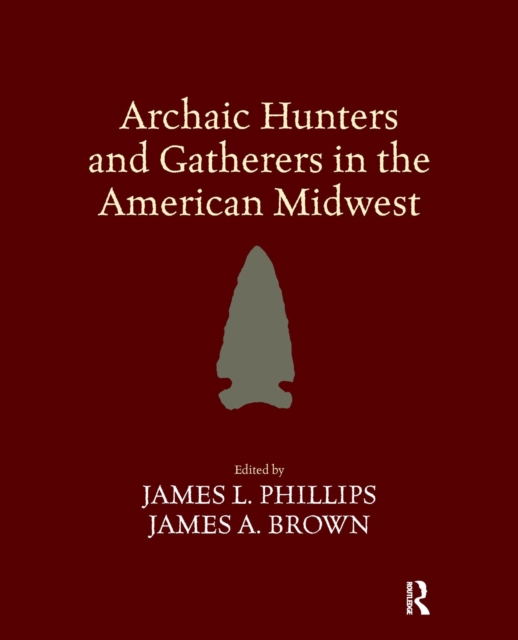
Archaic Hunters and Gatherers in the American Midwest
This volume reports on a series of multidisciplinary projects involving the Archaic period of the American Midwest. A period of innovation and technical achievement, the articles focus on changes in environmental, social, and economic factors operating in this period, and the adaptation of the hunter gatherer peoples living at this time.
eBook

Perceptions Revisited: Pediatric Chief Resident views on Minority Housestaff Recruitment and Retention in Pediatric Residency Programs
This study examined institutional strategies among pediatric residency programs for recruitment and retention of underrepresented minorities (URM) housestaff.
A questionnaire developed by the authors in a 1992 study was modified and then mailed to 185 pediatric chief residents at non-military pediatric training programs in the United States. Descriptive statistics (means and frequency) were calculated for each question. There were three rounds of mailings and a telephone follow-up.
The response rate was 39% (n=73). Thirty-eight percent reported that URM housestaff recruitment and retention was a priority for their program directors, 37% reported that it was a priority for themselves, 25% reported it was a priority for the hospital administration, and 36% reported that they were not sure about the priority of URM housestaff recruitment and retention within their organization. Sixty-seven percent stated that their housestaff selection committees do not have defined recruitment goals, 6% indicated that their committees have specifically defined recruitment goals, and 27% were not sure.
Despite numerous initiatives from government agencies, medical institutions, and institutions of higher education, a critical gap remains among institutions in their recruitment efforts for URM at the level of residency training. Our study suggests that pediatric chief residents may not be adequately educated or primed regarding the importance of recruitment and retention of URM. As individuals involved with both medical training and hospital hierarchy, they are uniquely positioned to influence and carry out program goals and objectives.
Journal Article

Saturday Morning Science Programs: A Model to Increase Diversity in the Biosciences
To examine a pathway program for middle and high school students from underrepresented backgrounds designed to foster career interest in the biomedical sciences. In 2002, the Institute of Medicine released a report entitled Unequal Treatment, which examined the racial and ethnic disparities in health and health care within the United States and encouraged the development of a diverse health care workforce as a means to reduce health care disparities.
Saturday Morning Science (SMS) is a program model presented as a pipeline strategy that addresses thisspecific recommendation. SMS is a 10-week program that emphasized the importance of science and math. Post-SMS evaluations were conducted to assess biomedical career knowledge, attitudes regarding future career plans, and the effectiveness of the program
A total of 87.5% of middle and high school students who were enrolled in SMS completed the program (113 of 130). Seventy percent of SMS participants were underrepresented minorities. Snapshot program evaluation data exposed new ideas about science (strongly agree/agree, 98%; 64 of 65), exposed new ideas about medicine (strongly agree/agree, 97%; 63 of 65, and increased desire to enter science related field (strongly agree/agree 82% (53 of 65).
SMS was designed to motivate students of underrepresented ethnic backgrounds from middle through high school to attend college and prepare for careers in the health sciences. SMS students had the opportunity to interact with scientists, physicians, medical and graduate students, and other academicians. They provided direction and guidance to ensure that students had meaningful experiences specifically designed to expose them to opportunities in the biosciences.
Journal Article

The Texas Regional Psychiatry Minority Mentor Network: A Regional Effort To Increase Psychiatry’s Workforce Diversity
[...]two junior faculty members were promoted to the rank of associate professor. [...]three faculty members were appointed to leadership positions within academic centers, spanning from residency training director, director of diversity and cultural-competence education, and department chair. Barriers identified by mentees and mentors included 1) failed communication attempts via electronic mail for data collection and notification of events; 2) sparse funding for educational and social activities, and no funding for salary support; 3) decreased proximity of the institutions inside and outside the Houston area and community partners; 4) limited time availability for participation; and 5) difficulties with the coordination of events.
Journal Article

Recent excavations at the site of Erq-el-Ahmar
From 1928 to 1933 Rene Neuville surveyed, tested and partially excavated a series of sites southeast of Bethlehem in the Wadis Khareitoun and Jihar. Phillips and Saca recently began a program of re-survey and test excavations in the same two wadis as Neuville, looking for new sites, datable and organic material and in situ lithic assemblages from the previously tested sites.
Journal Article

THE UPPER PALEOLITHIC OF THE WADI FEIRAN, SOUTHERN SINAI
The author describes three Ahmarian sites (Upper Paleolithic) from the Southern Sinai. The number of hearths, the specificity of the lithic industry, and the faunal remains enable us to interpret these sites as an early spring camp (Abu Noshra II), or as a kill/butchering site (Abu Noshra I). L'auteur décrit trois sites Ahmariens (Paléolithique supérieur) du Sinai méridional. La présence de nombreux foyers, la spécificité de l'industrie lithique et les faunes recueillies permettent de les interpréter, soit comme camps de base saisonniers du début du printemps (Abu Noshra II), soit comme sites d'abattage et de boucherie (Abu Noshra I).
Journal Article

Chapter 13: Provenience Investigations of Ceramic and Obsidian Samples Using Laser Ablation Inductively Coupled Plasma Mass Spectrometry and Portable X-Ray Fluorescence
Explaining the modern cultural and linguistic diversity present on the Sepik coast requires an understanding of long-term interaction on both a regional and a broader Melanesian scale. To assess the nature of prehistoric social networks, 438 obsidian specimens and 326 ceramic sherds collected from the coast and brought to the Field Museum of Natural History in Chicago were subjected to chemical analysis by either laser ablation inductively coupled plasma mass spectrometry or portable X-ray fluorescence. The results indicate that people living on the Sepik coast received obsidian from sources in the Admiralty group and on New Britain continuously for the past 2,000 years, and possibly as far back as the mid-Holocene. While obsidian from New Britain is more abundant in contexts believed to pre-date ∼2,000 BP, the more proximal Admiralty sources dominate later assemblages. Ceramic exchange may have begun between production centers on the coast as early as 2,000 years ago, and spanned the length of the coast by at the latest 1,000 BP. Regional differences in the degree and scope of exchange relationships evident in the recent past may have very ancient roots—the present data suggest that social networks on the coast were comparable to those ethnographically documented, and that sometimes quite proximal sites obtained materials from different sources or networks of exchange partners.
Journal Article

The Texan
Phillips reviews Desert Days: My Life as a Field Archaeologist by Fred Wendorf.
Book Review