
Catalogue Search | MBRL


Are you sure you want to remove the book from the shelf?

{{itemTitle}}
29
result(s) for
"Pridham, Karen"
Sort by:

Feeding infants with complex congenital heart disease: a modified Delphi survey to examine potential research and practice gaps
Objective:To determine clinical consensus and non-consensus in regard to evidence-based statements about feeding infants with complex CHD, with a focus on human milk. Areas of non-consensus may indicate discrepancies between research findings and practice, with consequent variation in feeding management.Materials and Methods:A modified Delphi survey validated key feeding topics (round 1), and determined consensus on evidence-based statements (rounds 2 and 3). Patients (n=25) were an interdisciplinary group of clinical experts from across the United States of America. Descriptive analysis used SPSS Statistics (Version 26.0). Thematic analysis of qualitative data provided context for quantitative data.Results:Round 1 generated 5 key topics (human milk, developing oral feeding skills, clinical feeding practice, growth failure, and parental concern about feeding) and 206 evidence-based statements. The final results included 110 (53.4%) statements of consensus and 96 (46.6%) statements of non-consensus. The 10 statements of greatest consensus strongly supported human milk as the preferred nutrition for infants with complex CHD. Areas of non-consensus included the adequacy of human milk to support growth, need for fortification, safety, and feasibility of direct breastfeeding, issues related to tube feeding, and prevention and treatment of growth failure.Conclusions:The results demonstrate clinical consensus about the importance of human milk, but reveal a need for best practices in managing a human milk diet for infants with complex CHD. Areas of non-consensus may lead to clinical practice variation. A sensitive approach to these topics is needed to support family caregivers in navigating feeding concerns.
Journal Article

Furthering the Understanding of Parent-Child Relationships: A Nursing Scholarship Review Series. Part 4: Parent-Child Relationships at Risk
PURPOSE. The purpose of this integrative review is to synthesize nursing scholarship on parent–child relationships considered fragile because of parent/child's chronic condition or occurrence within a risky context. CONCLUSIONS. Most reviewed studies demonstrated negative effects of risk conditions on parent–child relationships and documented importance of child, parent, and contextual variables. Studies were predominately single investigations. Varying theoretical perspectives complicated interpretation. Mainly White, middle‐class, and small samples limited generalizability. Important areas for further research were identified. PRACTICE IMPLICATIONS. Nurse researchers identified factors that may interfere with the parent–child relationship. Nurses are in a position to support families under these circumstances.
Journal Article
Furthering the Understanding of Parent-Child Relationships: A Nursing Scholarship Review Series. Part 2: Grasping the Early Parenting Experience-The Insider View
PURPOSE. The purpose of this integrative review is to systematically and critically synthesize nursing scholarship on parents' perspectives of the parent–child relationship during infancy. CONCLUSION. Research has shown that the process of establishing the parent–child relationship is highly individualized and complex. Numerous barriers and facilitators influencing this relationship have been identified that are relevant to nursing. PRACTICE IMPLICATIONS. Nurses have an important opportunity to positively affect the developing parent–infant relationship. Screening parents for depression and providing parents with resources and support are key nursing interventions supporting the parent–infant relationship.
Journal Article
Furthering the Understanding of Parent-Child Relationships: A Nursing Scholarship Review Series. Part 3: Interaction and the Parent-Child Relationship-Assessment and Intervention Studies
PURPOSE. This integrative review concerns nursing research on parent–child interaction and relationships published from 1980 through 2008 and includes assessment and intervention studies in clinically important settings (e.g., feeding, teaching, play). CONCLUSIONS. Directions for research include development of theoretical frameworks, valid observational systems, and multivariate and longitudinal data analytic strategies. PRACTICE IMPLICATIONS. Observation of social–emotional as well as task‐related interaction qualities in the context of assessing parent–child relationships could generate new questions for nursing research and for family‐centered nursing practice.
Journal Article
Furthering the Understanding of Parent-Child Relationships: A Nursing Scholarship Review Series. Part 5: Parent-Adolescent and Teen Parent-Child Relationships
PURPOSE. The purpose of this paper is to examine nursing's contribution to understanding the parent–adolescent and the teen parent–child relationships. CONCLUSION. Relationships between parents and adolescents may reflect turmoil and affect adolescents' health and development. The social and developmental contexts for teen parenting are powerful and may need strengthening. Several interventions to help teen mothers interact sensitively with their infants have been developed and tested. PRACTICE IMPLICATIONS. Nurse researchers have begun to provide evidence for practitioners to use in caring for families of adolescents and teen parents to acquire interaction skills that, in turn, may promote optimal health and development of the child.
Journal Article

Relationship between Stress and Feeding Behaviors in Parents of Children with Developmental Disabilities
Background:
Controlling feeding practices are associated with negative child eating behaviors and an increased risk of obesity. Parental stress may be related to feeding practices. Children with developmental disabilities have increased obesity prevalence, and families may also experience increased stress. This study examined the relationship between family stress and parental feeding practices in children with developmental disabilities and how concern for the child's weight may moderate this relationship.
Methods:
Secondary analysis using a descriptive cross-sectional design was employed. Parents of children aged 5 to 15 years, with autism spectrum disorder (ASD), Down syndrome (DS), or spina bifida (SB) were recruited nationally. Demographics, the Child Feeding Questionnaire, and the Questionnaire on Resources and Stress were completed online. Analysis included regression with an empirical Bayesian effects model.
Results:
Five hundred twenty-three parents, 186 (ASD), 173 (DS) and 164 (SB), participated. Family stressors were associated with the use of controlling feeding practices. Direct effects included: (1) physical incapacitation on restriction and pressure to eat (ASD and DS); (2) pessimism (ASD) and concerns about child overweight (SB) on pressure to eat; and (3) parent/family problems on restriction (DS). Concern for child overweight moderated these relationships and resulted in two interactions (DS and SB).
Conclusion:
Understanding the relationship of family stressors with parental feeding practices and the role of parental concern for child overweight can potentially optimize feeding in this high-risk population. This study highlights the need to provide family-centered care with awareness of stress and its potential association with daily activities and children's health.
Journal Article
Furthering the Understanding of Parent-Child Relationships: A Nursing Scholarship Review Series. Part 1: Introduction
PURPOSE. Understanding the parent–child relationship is fundamental to nursing of children and families. The purpose of this integrative review is to explore nursing scholarship published from 1980–2008 concerning parent–child relationships. Study approaches are examined, critiqued, and future directions for research identified. CONCLUSIONS. A historical review of nursing research is presented and methods described as an introduction to a review series of the parent–child relationship. IMPLICATIONS. Definition and explication of the parent–child relationship is a first‐step in understanding factors amenable to nursing intervention. A clear definition of the concept of parent–child relationship will support further study using appropriate theoretical frameworks, and enable development and testing of supportive nursing interventions.
Journal Article
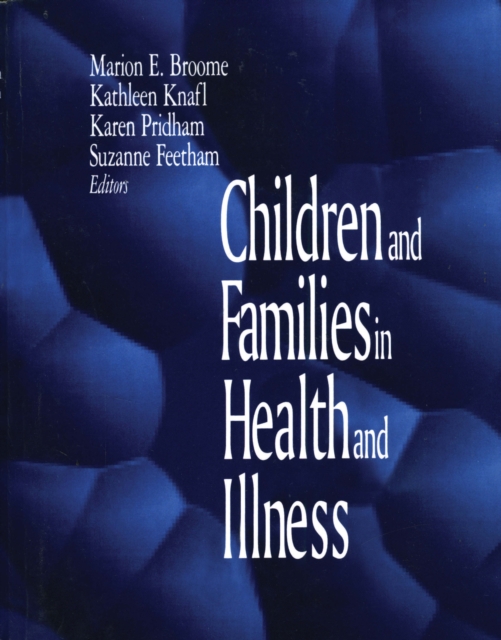
Children and families in health and illness
Written and edited by leading pediatric and family nurse researchers, this book provides a synthesis of the research literature in nursing and health promotion of children, pediatric acute and chronic conditions, and children and families in the health care system.Children and Families in Health and Illness will prove an excellent shelf reference for researchers and a thought-provoking read for advanced-level practitioner in child or family nursing.
eBook

A Continuing Education Program for Hospital and Public Health Nurses to Guide Families of Very Low Birth-weight Infants in Caregiving
Nurses have a critical role in family development of competencies for giving care to very low birth-weight infants. However, current information-based methods of preparation may be inadequate for competency development. This article describes a continuing education program designed to strengthen nurses’ support of families in developing caregiving competencies through processes of guided participation. Program effectiveness was explored with: (1) a survey of participant and non-participant nurse satisfaction with family work and with organizational resources and practices; (2) a description of relationship and caregiving competencies for mothers who had and had not received guided participation; and (3) a review of mothers’ reports of their experience either with or without guided participation. Organizational arrangements and mechanisms for establishing guided participation practice within an agency, including ongoing reflective supervision sessions, peer collaboration, and documentation of competency development, are discussed.
Journal Article