
Catalogue Search | MBRL


Are you sure you want to remove the book from the shelf?

{{itemTitle}}
56
result(s) for
"Prinz, Jesse J"
Sort by:


The Emotional Construction of Morals
Jesse Prinz presents a bravura argument for highly controversial claims about morality, which go to the heart of our understanding of ourselves. He argues that moral values are based on emotional responses, and that these are inculcated by culture, not hard-wired through natural selection. These two claims support a form of moral relativism.
eBook


Aesthetic Emotions Reconsidered
Abstract
We define aesthetic emotions as emotions that underlie the evaluative assessment of artworks. They are separated from the wider class of art-elicited emotions. Aesthetic emotions historically have been characterized as calm, as lacking specific patterns of embodiment, and as being a sui generis kind of pleasure. We reject those views and argue that there is a plurality of aesthetic emotions contributing to praise. After presenting a general account of the nature of emotions, we analyze twelve positive aesthetic emotions in four different categories: emotions of pleasure, contemplation, amazement, and respect. The emotions that we identify in each category, including feelings of fluency, intrigue, wonder, and adoration, have been widely neglected both within aesthetics and in emotion research more broadly.
Journal Article

Grounding evaluative concepts
Evaluative concepts qualify as abstract because they seem to go beyond what is given in experience. This is especially clear in the case of moral concepts. Justice, for example, has no fixed appearance. Less obviously, aesthetic concepts may also qualify as abstract. The very same sensory input can be regarded as beautiful by one person and ugly by another. Artistic success can also transcend sensory accessible features. Here, we focus on moral badness and aesthetic goodness and argue that both can be grounded in emotional responses. Emotions, in turn, are grounded in bodily perceptions, which correspond to action tendencies. When we conceptualize something as good or bad (whether in the moral or aesthetic domain), we experience our bodily responses to that thing. The moral and aesthetic domains are distinguished by the emotions that they involve.
This article is part of the theme issue ‘Varieties of abstract concepts: development, use and representation in the brain’.
Journal Article

A Bad Taste in the Mouth: Gustatory Disgust Influences Moral Judgment
Can sweet-tasting substances trigger kind, favorable judgments about other people? What about substances that are disgusting and bitter? Various studies have linked physical disgust to moral disgust, but despite the rich and sometimes striking findings these studies have yielded, no research has explored morality in conjunction with taste, which can vary greatly and may differentially affect cognition. The research reported here tested the effects of taste perception on moral judgments. After consuming a sweet beverage, a bitter beverage, or water, participants rated a variety of moral transgressions. Results showed that taste perception significantly affected moral judgments, such that physical disgust (induced via a bitter taste) elicited feelings of moral disgust. Further, this effect was more pronounced in participants with politically conservative views than in participants with politically liberal views. Taken together, these differential findings suggest that embodied gustatory experiences may affect moral processing more than previously thought.
Journal Article
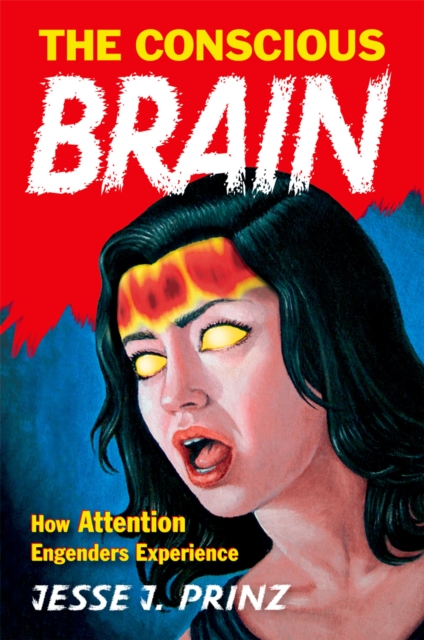
The Conscious Brain
Synthesizing decades of research, The Conscious Brain advances a new theory of the psychological and neurophysiological correlates of conscious experience.
eBook
Grounding evaluative concepts
Evaluative concepts qualify as abstract because they seem to go beyond what is given in experience. This is especially clear in the case of moral concepts. Justice, for example, has no fixed appearance. Less obviously, aesthetic concepts may also qualify as abstract. The very same sensory input can be regarded as beautiful by one person and ugly by another. Artistic success can also transcend sensory accessible features. Here, we focus on moral badness and aesthetic goodness and argue that both can be grounded in emotional responses. Emotions, in turn, are grounded in bodily perceptions, which correspond to action tendencies. When we conceptualize something as good or bad (whether in the moral or aesthetic domain), we experience our bodily responses to that thing. The moral and aesthetic domains are distinguished by the emotions that they involve.
This article is part of the theme issue 'Varieties of abstract concepts: development, use and representation in the brain'.
Journal Article

