
Catalogue Search | MBRL


Are you sure you want to remove the book from the shelf?

{{itemTitle}}
41
result(s) for
"Rosecrance, Richard N"
Sort by:

History and neorealism
\"Neorealists argue that all states aim to acquire power and that state cooperation can therefore only be temporary, based on a common opposition to a third country. This view condemns the world to endless conflict for the indefinite future. Based upon careful attention to actual historical outcomes, this book contends that while some countries and leaders have demonstrated excessive power drives, others have essentially underplayed their power and sought less position and influence than their comparative strength might have justified. Featuring case studies from across the globe, History and Neorealism examines how states have actually acted. The authors conclude that leadership, domestic politics, and the domain (of gain or loss) in which they reside play an important role along with international factors in raising the possibility of a world in which conflict does not remain constant and, though not eliminated, can be progressively reduced\"-- Provided by publisher.
BOOK

The Next Great War?
Experts consider how the lessons of World War I can help prevent U.S.–China conflict.
A century ago, Europe's diplomats mismanaged the crisis triggered by the murder of Archduke Franz Ferdinand of Austria and the continent plunged into World War I, which killed millions, toppled dynasties, and destroyed empires. Today, as the hundredth anniversary of the Great War prompts renewed debate about the war's causes, scholars and policy experts are also considering the parallels between the present international system and the world of 1914. Are China and the United States fated to follow in the footsteps of previous great power rivals? Will today's alliances drag countries into tomorrow's wars? Can leaders manage power relationships peacefully? Or will East Asia's territorial and maritime disputes trigger a larger conflict, just as rivalries in the Balkans did in 1914?
In The Next Great War?, experts reconsider the causes of World War I and explore whether the great powers of the twenty-first century can avoid the mistakes of Europe's statesmen in 1914 and prevent another catastrophic conflict. They find differences as well as similarities between today's world and the world of 1914—but conclude that only a deep understanding of those differences and early action to bring great powers together will likely enable the United States and China to avoid a great war.
Contributors
Alan Alexandroff, Graham Allison, Richard N. Cooper, Charles S. Maier, Steven E. Miller, Joseph S. Nye Jr., T. G. Otte, David K. Richards, Richard N. Rosecrance, Kevin Rudd, Jack Snyder, Etel Solingen, Arthur A. Stein, Stephen Van Evera
eBook

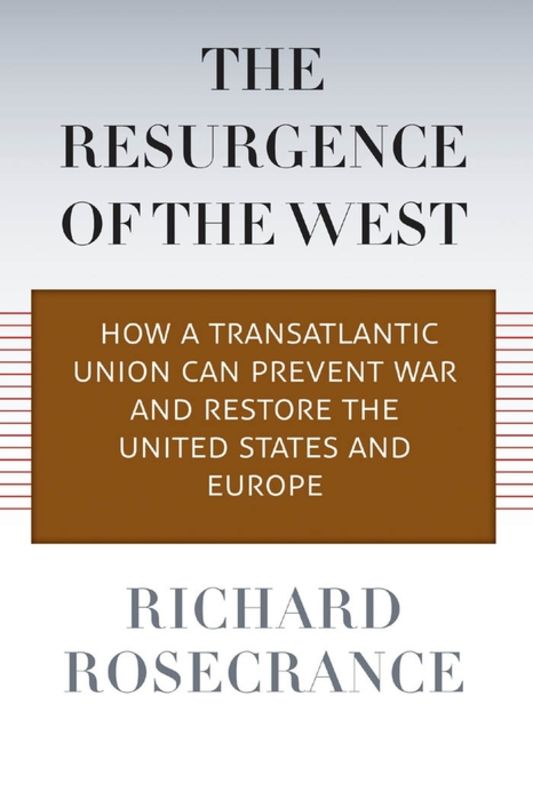
The Resurgence of the West
After two centuries of ascent, the United States finds itself in economic decline. Some advise America to cure its woes alone. But the road to isolation leads inevitably to the end of U.S. leadership in the international system, warns Richard Rosecrance in this bold and novel book. Instead, Rosecrance calls for the United States to join forces with the European Union and create a transatlantic economic union. Such a U.S.-Europe community would unblock arteries of trade and investment, rejuvenate the West, and enable Western countries to deal with East Asian challenges from a position of unity and economic strength.Exploring the possibilities for such a merger, the author writes, \"The European Union offers a means of creating larger units without recourse to force. A connection between Europe and North America could eventually grow into an agglomeration of states, drawing China and the East into a new network of countries. In this way East will eventually join the West.\" Through this great merger the author offers a positive vision of the future in which members of a tightly knit Western alliance regain economic health and attract Eastern nations to join a new and worldwide international order.
eBook

History and Neorealism
Neorealists argue that all states aim to acquire power and that state cooperation can therefore only be temporary, based on a common opposition to a third country. This view condemns the world to endless conflict for the indefinite future. Based upon careful attention to actual historical outcomes, this book contends that, while some countries and leaders have demonstrated excessive power drives, others have essentially underplayed their power and sought less position and influence than their comparative strength might have justified. Featuring case studies from across the globe, History and Neorealism examines how states have actually acted. The authors conclude that leadership, domestic politics, and the domain (of gain or loss) in which they reside play an important role along with international factors in raising the possibility of a world in which conflict does not remain constant and, though not eliminated, can be progressively reduced.
eBook
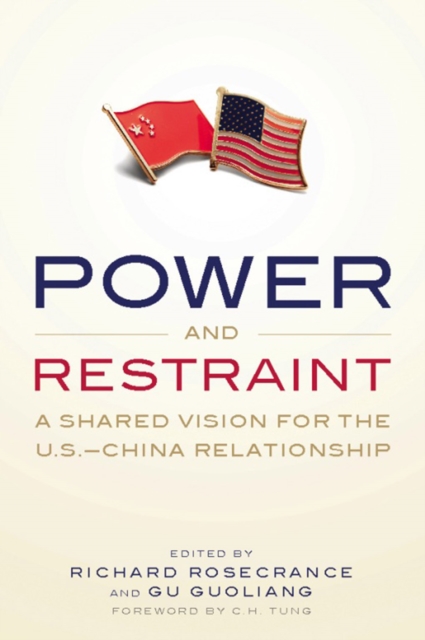
Power and restraint : a shared vision for the U.S.-China relationship
Over several years, some of the most distinguished Chinese and American scholars have engaged in a major research project, sponsored by the China-U.S. Exchange Foundation (USEF), to address the big bilateral and global issues the two countries face. Historically, the ascension of a great power has resulted in armed conflict. This group of scholars-experts in politics, economics, international security, and environmental studies-set out to establish consensus on potentially contentious issues and elaborate areas where the two nations can work together to achieve common goals. Featuring essays on global warming, trade relations, Taiwan, democratization, WMDs and bilateral humanitarian intervention, Power and Restraint finds that China and the United States can exist side by side and establish mutual understanding to better cope with the common challenges they face.
eBook


War and Peace
John Mearsheimer's Tragedy of Great Power Politics errs in claiming that all national security decisions are rational ones. In contrast, sometimes state ambitions and actions go beyond what “rationality” typically would permit; sometimes states do not assert capabilities which they clearly possess. The explanations for such outcomes reside in realms that Mearsheimer either does not consider or dismisses too readily, such as alignments, democracy, ideology, and economic relationships. He also charts a role for the United States (a state confronting “the stopping power of water” that is too limited given the objectives (a balance of power) which he believes it should seek to create. His theory of war is too restricted and so therefore is his theory of peace. But he has fashioned one of the first new empirical essays in general realist theory in recent years and deserves to be commended. His approach will be the focus of debate and analysis for some time to come.
Journal Article
War and Peace
A review essay on a book by John J. Mearsheimer, The Tragedy of Great Power Politics (New York: W. W. Norton, 2001). Mearsheimer errs in claiming that all national security decisions are rational ones. In contrast, sometimes state ambitions & actions go beyond what \"rationality\" typically would permit; sometimes states do not assert capabilities that they clearly possess. The explanations for such outcomes reside in realms that Mearsheimer either does not consider or dismisses too readily, such as alignments, democracy, ideology, & economic relationships. He also charts a role for the US (a state confronting \"the stopping power of water\" that is too limited given the objectives (a balance of power) that he believes it should seek to create. His theory of war is too restricted & so therefore is his theory of peace. But he has fashioned one of the first new empirical essays in general realist theory in recent years & deserves to be commended. His approach will be the focus of debate & analysis for some time to come. 1 Figure. Adapted from the source document.
Journal Article
War and Peace
John Mearsheimer's Tragedy of Great Power Politics errs in claiming that all national security decisions are rational ones. In contrast, sometimes state ambitions and actions go beyond what “rationality” typically would permit; sometimes states do not assert capabilities which they clearly possess. The explanations for such outcomes reside in realms that Mearsheimer either does not consider or dismisses too readily, such as alignments, democracy, ideology, and economic relationships. He also charts a role for the United States (a state confronting “the stopping power of water” that is too limited given the objectives (a balance of power) which he believes it should seek to create. His theory of war is too restricted and so therefore is his theory of peace. But he has fashioned one of the first new empirical essays in general realist theory in recent years and deserves to be commended. His approach will be the focus of debate and analysis for some time to come.
Journal Article