
Catalogue Search | MBRL


Are you sure you want to remove the book from the shelf?

{{itemTitle}}
348
result(s) for
"SPEAR, THOMAS"
Sort by:

Being Maasai
Many of the people who identify themselves as Maasai, or who speak the Maa language, are not pastoralist at all, but framers and hunters. Over time many people have 'become' something else, adn what it means to be Maasai has changed radically over the past several centuries and is still changing today.This collection by historians, archaeologists, anthropologists and linguists examines how Maasai identity has been created, evoked, contested and transformed.North America: Ohio U Press; Tanzania: Mkuki na Nyota; Kenya: EAEP
eBook

Marie Chauvet: The Fortress Still Stands
Spear offers critical reflections on the genealogy of the publication and circulation of Marie Chauvet's writings, particularly the controversial Amour, colère et folie (Love, Anger, Madness). His essay delves deeply into the specific contours of the obstacles Chauvet faced in her lifetime and those her work has encountered in the four decades since her death.
Journal Article
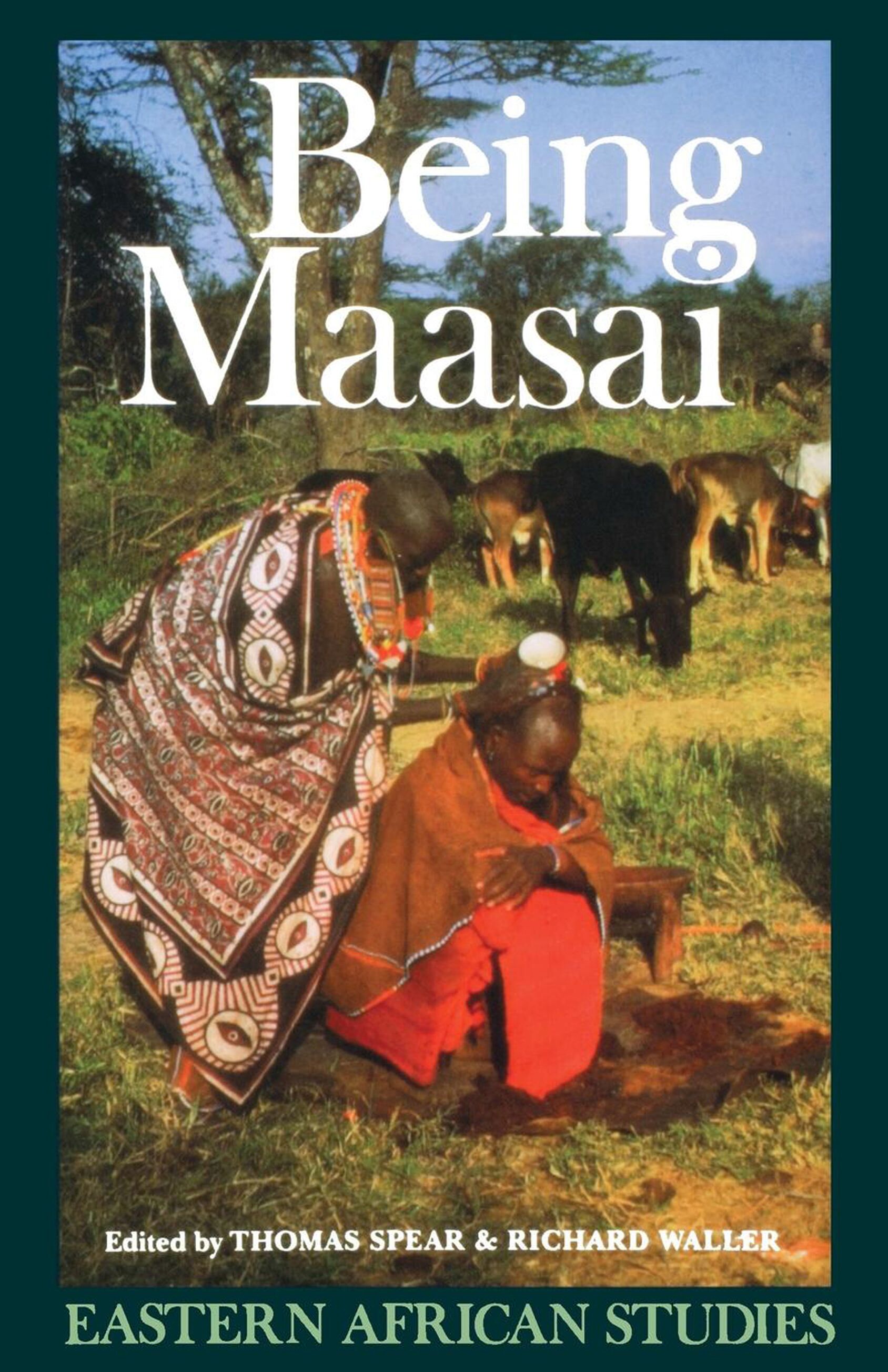
Being Maasai : Ethnicity and Identity in East Africa
A multi-disciplinary approach to studying ethnicity in Africa.Many of the people who identify themselves as Maasai, or who speak the Maa language, are not pastoralist at all, but framers and hunters. Over time many people have 'become' something else, adn what it means to be Maasai has changed radically over the past several centuries and is still changing today. This collection by historians, archaeologists, anthropologists and linguists examines how Maasai identity has been created, evoked, contested and transformed. North America: Ohio U Press; Tanzania: Mkuki na Nyota; Kenya: EAEP
eBook

Ancestral Stories of Ghanaian Bimoba Reflect Millennia-Old Genetic Lineages
Oral history and oral genealogies are mechanisms of collective memory and a main cultural heritage of many populations without a writing system. In the effort to analytically address the correspondence between genetic data and historical genealogies, anthropologists hypothesised that genealogies evolve through time, ultimately containing three parts: literal--where the most recent ancestry is truthfully represented; intended--ancestry is inferred and reflects political relations among groups; and mythical--that does not represent current social reality. While numerous studies discuss oral genealogies, to our knowledge no genetic studies have been able to investigate to what extent genetic relatedness corresponds to the literal and intended parts of oral genealogies. We report on the correspondence between genetic data and oral genealogies among Bimoba males in a single village in North-Eastern Ghana. We compared the pairwise mismatch distribution of Y chromosome short tandem repeat (Y-STR) haplotypes among all lineages present in this village to the self-reported (oral) relatedness. We found that Bimoba are able to correctly identify unrelated individuals in 92% of the cases. In contrast, they are able to correctly identify related individuals only in 38% of the cases, which can be explained by three processes: (1) the compression of genealogies, leading to increasing inaccuracy with increasing genealogical distance, (2) inclusions into the lineage from intended relations such as clan co-option or adoptions, and (3) false paternities, which in this study were found to have a minor effect on the correspondence between genetic data and oral genealogies. In addition, we observed that 70% of unrelated pairs have from six to eight Y-STR differences, a diversification peak which we attribute to an ancient West African expansion dating around 9454 years ago. We conclude that, despite all caveats, oral genealogies are reflecting ancient lineages more accurately than previously thought.
Journal Article

NEO-TRADITIONALISM AND THE LIMITS OF INVENTION IN BRITISH COLONIAL AFRICA
Exploring a range of studies regarding the ‘invention of tradition’, the ‘making of customary law’ and the ‘creation of tribalism’ since the 1980s, this survey article argues that the case for colonial invention has often overstated colonial power and ability to manipulate African institutions to establish hegemony. Rather, tradition was a complex discourse in which people continually reinterpreted the lessons of the past in the context of the present. Colonial power was limited by chiefs' obligation to ensure community well-being to maintain the legitimacy on which colonial authorities depended. And ethnicity reflected longstanding local political, cultural and historical conditions in the changing contexts of colonial rule. None of these institutions were easily fabricated or manipulated, and colonial dependence on them often limited colonial power as much as facilitating it.
Journal Article

Mau Mau’s Children
In 1963 David P. Sandgren went to Kenya to teach in a small, rural school for boys, where he remained for the next four years. These were heady times for Kenyans, as the nation gained its independence, approved a new constitution, and held its first elections. In the school where Sandgren taught, the sons of Gikuyu farmers rose to the challenges of this post colonial era and, in time, entered Kenyan society as adults, joining Kenya’s first generation of post colonial elites. In
Mau Mau’s Children , Sandgren has reconnects with these former students. Drawing on more than one hundred interviews, he provides readers with a collective biography of the lives of Kenya’s first postcolonial elite, stretching from their 1940s childhood to the peak of their careers in the 1990s. Through these interviews,
Mau Mau’s Children shows the trauma of growing up during the Mau Mau Rebellion, the nature of nationalism in Kenya, the new generational conflicts arising, and the significance of education and Gikuyu ethnicity on his students' path to success.
eBook

