
Catalogue Search | MBRL


Are you sure you want to remove the book from the shelf?

{{itemTitle}}
5
result(s) for
"Schifferstein, H. (Hendrik)"
Sort by:
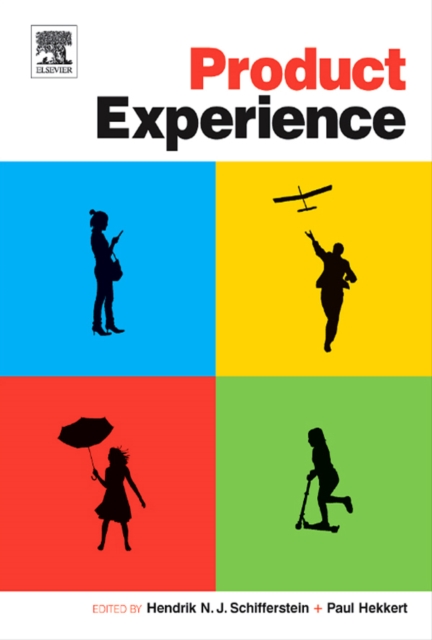
Product experience
Product Experience brings together research that investigates how people experience products: durable, non-durable, or virtual.In contrast to other books, the present book takes a very broad, possibly all-inclusive perspective, on how people experience products.It thereby bridges gaps between several areas within psychology (e.g.
eBook

Enhancing Desirable Food Behaviors by Increasing or Decreasing Disgust: Designing and Testing Infographics
For health and environmental reasons, humanity should reduce the consumption of animal-based products, whereas vegetable consumption should be increased. We created stimuli (drawings with texts) that may be able to increase or decrease the purchasing of mushrooms, cheese, and meat. During the design process, we identified four aspect categories (sensory, health, environment, moral) and we generated positive and negative examples for all products. In Study 1 we determined the familiarity, credibility and relevance of each aspect and measured emotional responses to them. In Study 2, we investigated to what extent four aspects combined in an infographic on a poster lessened or strengthened the emotional responses, purchase intention, and tendency to adapt behavior for the three products. Regression analyses showed that the emotional responses to the posters were well predicted by the responses to the product aspects. Purchase intentions were mainly affected by negative affect, while positive and negative affect seemed equally important for people’s intention to change behavior.
Journal Article
Consumer-Product Attachment: Measurement and Design Implications
Due to differences in the attachment consumers experience towards the durable products they own, they hang on to certain products whereas they easily dispose of others. From the viewpoint of sustainability, it may be worthwhile to lengthen the life span of many durable consumer products. Hence, there is a challenge for designers to strengthen the bond between consumers and their products through the product design process. In the present study, we develop a scale to measure consumer-product attachment, and we identify and measure seven possible determinants of attachment: enjoyment, memories to persons, places, and events, support of self-identity, life vision, utility, reliability, and market value. Only memories and enjoyment contribute positively to the degree of attachment. The highest levels of attachment are registered for recently acquired products (<1 year) and for products owned for more than 20 years. For new products, enjoyment may be the main driver of attachment, whereas for old products memories may be more important.
Journal Article


2 - The tactual experience of objects
A child’s first tactual experiences with objects mostly involve being touched. Once children grow old enough to reach out and touch what surrounds them, their tactual experiences become active. And although children are aware that they are the active agent in kicking the ball and riding the bicycle, it is not always clear whether they are cuddling the toy or whether the toy is cuddling them; touching becomes interactive. This unavoidable reciprocity is characteristic for the sense of touch. Seeing does not imply being seen, neither does hearing imply being heard. But touching implies being touched simultaneously. Touching and being touched are integrated into one phenomenon, the tactual experience. This chapter describes the meaning of touch, based on a literature overview approaching touch from different perspectives, and discusses the five domains of tactual experience with background information for each specific domain. It provides an overview of the different domains from which tactual experiences can be described and explored. In addition, it discusses the Tactual Experience Guide, which summarizes those different domains. This guide helps people to describe their tactual experiences with objects, by offering a consistent framework of the different aspects of tactual experience (the content of the tool), and by offering a format that guides people through this experience (the design of the tool). Throughout the chapter, the descriptions of the different aspects of tactual experience are illustrated with examples derived from the Tactual Experience Guide. Furthermore, it discusses the development of product designers’ aesthetic sensitivity for the tactual experience in human-product interaction and recommendations for future research in the field of tactual aesthetics.
Book Chapter