
Catalogue Search | MBRL


Are you sure you want to remove the book from the shelf?

{{itemTitle}}
89
result(s) for
"Seager, Joni"
Sort by:


Re-imagining the driver–pressure–state–impact–response framework from an equity and inclusive development perspective
The Driver–Pressure–State–Impact–Response (DPSIR) framework has been used by environmental agencies and others to assess environmental challenges and policy responses. However, in doing so, social justice or equity issues tend to come as an afterthought, while there is evidence that environmental challenges and policy responses are not equity (including gender-) neutral. Hence, this paper addresses the question: why should, and how can, equity issues and environmental justice be incorporated into the DPSIR framework? It presents a structure for including equity within DPSIR and applies it. It reviews the literature to bring together data that demonstrates that there is a clear equity perspective along the entire DPSIR analysis. It concludes that although individual environmental policies may succeed to achieve their specific goal in the short term; if they ignore the equity aspects, the policy strategies as a whole are likely to be environmentally unjust, and lead to exclusive and unsustainable development, which, in turn, could further exacerbate environmental challenges. This highlights the need for an integrated approach in efforts to achieve environmentally sustainable development.
Journal Article

The Penguin atlas of women in the world
\"World events continue to reveal the importance of understanding how women live across continents and cultures. Using maps, text, and other graphics in this new revision of her eye-opening book, Joni Seager employs up-to-the-minute research and data to show what shifts have occurred since the first edition was published over twenty years ago--the strides made by women and the distance still to be traveled. She explores the current status of women in relation to such key issues as: equality, motherhood, feminism, the culture of beauty, women at work, women in the global economy, changing households, domestic violence, girls' welfare, lesbian rights, women in government. Filled with a wealth of information creatively displayed, The Penguin Atlas of Women in the World is an indispensable resource for understanding the world we live in\"--Page 4 of cover.
P_MAP

Mapping the patriarchy in conservation
It is essential to ensure the effectiveness of current conservation efforts to meet the interconnected crises of biodiversity loss, habitat degradation, and climate change. In this article, we discuss one aspect that undermines conservation’s effectiveness while at the same time being underexplored in the academic and political discourse on conservation: patriarchal norms and structures. We argue that these norms and structures, which promote male supremacy and inequality, are central to driving environmental destruction. Many conservation programs unintentionally reinforce patriarchal thinking, thereby undermining their effectiveness. We provide examples of how patriarchy influences conservation, such as the precarious position of women (Working Conditions for Women in Conservation), the treatment of animals (Violence against animals), the suppression of particular forms of knowledge (Science and knowledge production), militarization trends in conservation (Securitization and militarization of conservation enforcement), and the financialization of nature (The monetary valuation of nature). We conclude that patriarchal norms and structures within conservation must be questioned and dismantled to make conservation more effective and just.
Journal Article

The women's atlas
\"In this completely revised, redesigned, and updated new edition of her groundbreaking feminist atlas, Joni Seager provides comprehensive and accessible analysis of the state of women worldwide--charting the progress that has been made and the distances still to be traveled. The Women's Atlas delves into issues of gender equality; literacy and information technology; feminism; the culture of beauty; women at work and the global economy; changing households; domestic violence; LGBTQ rights; government and power; and motherhood, among many others.\"-- Provided by publisher.
Book
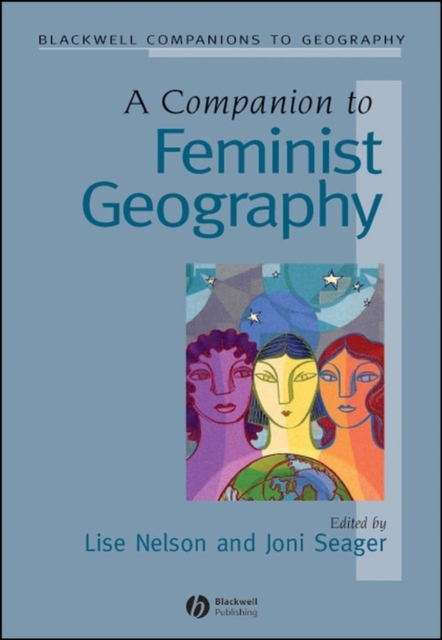
A companion to feminist geography
A Companion to Feminist Geography captures the breadth and diversity of this vibrant and substantive field.Shows how feminist geography has changed the landscape of geographical inquiry and knowledge since the 1970s.Explores the diverse literatures that comprise feminist geography today.Showcases cutting-edge research by feminist geographers.
eBook

Radical Observation
Before Rachel Carson exposed the dangers posed by chemical pesticides, she was a chronicler of the ocean. Raised far from any sea, Carson became one of its most famous environmental interlocutors. Born in rural Pennsylvania in 1907, Carson's mother inculcated in her a love of nature, and a mentor at the Pennsylvania College for Women—now Chatham College—steered her toward marine biology. The rest, as they say, is history.In the early years of the twentieth century, the Marine Biological Laboratory at Woods Hole was one of the few scientific institutions that welcomed women and treated them as equal participants in science. There Carson pursued marine biology as a postgraduate before receiving her MA in zoology from Johns Hopkins University in 1932. (Gertrude Stein, another Pennsylvanian-born woman bound for fame and notoriety, also studied at Woods Hole and then Johns Hopkins, some thirty years before Carson.) Carson was a skilled writer; she entered college as an English major before her mentor, Mary Scott Skinker, lured her into the study of biology. Offering an unusual combination of skill in both science and writing, Carson was hired by the U.S. Bureau of Fisheries to write radio scripts during the Depression, and she supplemented her income by writing feature articles on natural history for the Baltimore Sun. In 1936 she began a sixteen-year career as a scientist and editor for the U. S. Fish and Wildlife Service (FWS), eventually rising to the position of editor in chief.For the FWS she wrote pamphlets on conservation and natural resources, synthesized field reports on fisheries, and edited scientific articles. She also continued her freelancing life: her first national-audience commercial success was \"Undersea,\" an article she wrote for the Atlantic Monthly in September 1937. Received to acclaim, this essay became the basis of Under the Sea-Wind (1941), a book that garnered good reviews but never sold particularly well. In 1951 she published her lyrical study of the ocean, The Sea Around Us. This book leapt to the New York Times best-seller list where it remained for almost ninety weeks; it won the National Book Award, was condensed in Reader's Digest, and made Carson a household name. The Sea Around Us also gave Carson the financial independence she needed to resign from government service in 1952 and devote herself full time to her writing. In 1955 she followed the success of The Sea Around Us with a study of the coastal Atlantic, The Edge of the Sea—retrospectively, the third of a trilogy \"biography of the ocean.\" Carson's ocean trilogy established her reputation as a popularizing nature observer. Before Jacques Cousteau entranced audiences with tales of the mysteries of the deep, Carson was mapping the rhythms of the ocean for a wide and enthralled readership. Unlike her later book, Silent Spring (1962), which was a hard-hitting exposé of human hubris in which Carson raised an overt challenge to business as usual in boosterish America, The Sea Around Us (and, later, Edge) was primarily a descriptive, naturalist chronicle. Lyrical, beautiful, scientifically based, and \"safe\" writings of the wonders-of-nature genre, these books didn't advance a polemic or make explicitly political arguments. Carson herself carefully cultivated a public reputation as a reliable narrator of nature observation. Nonetheless, radical currents ran deep throughout her ocean trilogy.
Journal Article


Where are the women? Towards gender equality in the ranger workforce
The ranger workforce is currently characterized by an extreme gender skew. Exact data—or even reliable estimates—are scarce, but the general understanding is that only 3–11% of the global ranger workforce is female, with considerable local variation (Belecky et al. 2019). Although consideration of the gender context for a workforce often starts with numbers, achieving greater gender balance requires a much more comprehensive understanding of the problems and a wide-net approach to solutions. Bringing women into the ranger workforce is an important human rights and equality goal in itself. Further, there is evidence that women bring skill sets and strengths to the ranger workforce that are different from those of men. Bringing gender equality into the workforce can improve conservation, relationships with communities, park management, and wildlife management. The Chitwan Declaration (World Ranger Congress 2019) commits to broad gender-related goals: gender-equal opportunities in hiring, pay, and promotion in the ranger workforce, as well as appropriate measures to provide safety and support for female rangers. This paper, based in part on interviews with men and women in the current ranger workforce, analyzes the state of the gender imbalance in the ranger workforce, provides a contextual assessment, and advances recommendations for moving towards these Chitwan goals.
Journal Article

Rachel Carson Died of Breast Cancer: The Coming of Age of Feminist Environmentalism
To discuss the state of feminist environmentalism, discussion opens with an examination of ecofeminism. Arguing that debates surrounding ecofeminism have exhausted their intellectual & political returns, recent feminist environmental scholarship on animal rights, public health, & global political economy is reviewed. Some remarks are then offered on the \"population question,\" particularly with respect to how environmental policy is underpinned by the blaming of poor, minority, & non-Euro-American women for global environmental ills; the critical feminist environmentalist literature on populationism is briefly touched on. 68 References. J. Zendejas
Journal Article