
Catalogue Search | MBRL


Are you sure you want to remove the book from the shelf?

{{itemTitle}}
328
result(s) for
"Seth Stein"
Sort by:

Long aftershock sequences within continents and implications for earthquake hazard assessment
Aftershock or small quake?
The assessment of earthquake hazards within continents relies in large part on the assumption that the locations of small earthquakes in the historical record reflect continuing deformation that will cause future large earthquakes. However, this assumption is beginning to look suspect. As demonstrated by the Wenchuan earthquake of May 2008, faults with low recent seismicity are not immune from large earthquakes. And now Seth Stein and Mian Liu argue that many recent intraplate earthquakes are probably aftershocks of large earthquakes that occurred hundreds of years ago, so do not point to the location of future large earthquakes. Stein and Liu present a simple model predicting that the duration of aftershock sequences varies inversely with the rate at which faults are loaded. Thus the common practice of treating continental earthquakes as steady-state seismicity may overestimate the hazard in currently active areas and underestimate it elsewhere.
Within plate interiors, assessments of earthquake hazards rely heavily on the assumption that the locations of the few recorded small earthquakes reflect continuing deformation that will cause future large earthquakes. Here, however, a simple model shows that many of these recent earthquakes are probably aftershocks of large earthquakes that occurred hundreds of years ago, causing earthquake prediction to overestimate hazard in presently active areas, and underestimate it elsewhere.
One of the most powerful features of plate tectonics is that the known plate motions give insight into both the locations and average recurrence interval of future large earthquakes on plate boundaries. Plate tectonics gives no insight, however, into where and when earthquakes will occur within plates, because the interiors of ideal plates should not deform. As a result, within plate interiors, assessments of earthquake hazards rely heavily on the assumption that the locations of small earthquakes shown by the short historical record reflect continuing deformation that will cause future large earthquakes
1
. Here, however, we show that many of these recent earthquakes are probably aftershocks of large earthquakes that occurred hundreds of years ago. We present a simple model predicting that the length of aftershock sequences varies inversely with the rate at which faults are loaded. Aftershock sequences within the slowly deforming continents are predicted to be significantly longer than the decade typically observed at rapidly loaded plate boundaries. These predictions are in accord with observations. So the common practice of treating continental earthquakes as steady-state seismicity overestimates the hazard in presently active areas and underestimates it elsewhere.
Journal Article

Playing against nature
Defending society against natural hazards is a high-stakes game of chance against nature, involving tough decisions. How should a developing nation allocate its budget between building schools for towns without ones or making existing schools earthquake-resistant? Does it make more sense to build levees to protect against floods, or to prevent development in the areas at risk? Would more lives be saved by making hospitals earthquake-resistant, or using the funds for patient care? What should scientists tell the public when – as occurred in L'Aquila, Italy and Mammoth Lakes, California – there is a real but small risk of an upcoming earthquake or volcanic eruption? Recent hurricanes, earthquakes, and tsunamis show that society often handles such choices poorly. Sometimes nature surprises us, when an earthquake, hurricane, or flood is bigger or has greater effects than expected from detailed hazard assessments. In other cases, nature outsmarts us, doing great damage despite expensive mitigation measures or causing us to divert limited resources to mitigate hazards that are overestimated. Much of the problem comes from the fact that formulating effective natural hazard policy involves combining science, economics, and risk analysis to analyze a problem and explore the costs and benefits of different options, in situations where the future is very uncertain. Because mitigation policies are typically chosen without such analysis, the results are often disappointing. This book uses general principles and case studies to explore how we can do better by taking an integrated view of natural hazards issues, rather than treating the relevant geoscience, engineering, economics, and policy formulation separately. Thought-provoking questions at the end of each chapter invite readers to confront the complex issues involved. Readership: Instructors, researchers, practitioners, and students interested in geoscience, engineering, economics, or policy issues relevant to natural hazards. Suitable for upper-level undergraduate or graduate courses. Additional resources can be found at: http://www.wiley.com/go/Stein/Playingagainstnature [http://www.wiley.com/go/Stein/Playingagainstnature]
eBook

Time-Variable Deformation in the New Madrid Seismic Zone
New geodetic measurements show that the New Madrid is currently deforming too slowly, if at all, to account for large earthquakes in the region over the past 5000 years. This result, together with increasing evidence for temporal clustering and spatial migration of earthquake sequences in continental interiors, indicates that either tectonic loading rates or fault properties vary over a few thousand years.
Journal Article

Mantle flow beneath Arabia offset from the opening Red Sea
Continental rifting involves a poorly understood sequence of lithospheric stretching, volcanism, and mantle flow that evolves to seafloor spreading. We present new insight from inversion of seismic traveltimes and waveforms beneath Arabia and surroundings. Low velocities occur beneath the southern Red Sea and Gulf of Aden, consistent with active spreading. However, hot material extends not below the northern Red Sea, but is offset eastward beneath Arabia, showing mantle flow from the Afar hotspot. The location of this channel beneath volcanic rocks erupted since rifting began 30 million years ago indicates that flow moves with Arabia. We propose that the absence of seafloor spreading in the northern Red Sea reflects the offset flow. This geometry may evolve to spreading in the Northern Red Sea, rifting of Arabia, or both. This situation has aspects of both active and passive rifting, showing that both can occur before coalescing to seafloor spreading.
Journal Article

Conventional Hepatic Volumetry May Lead to Inaccurate Segmental Yttrium-90 Radiation Dosimetry
ObjectiveTo compare radioembolization treatment zone volumes from mapping cone beam CT (CBCT) versus planning CT/MRI and to model their impact on dosimetry.MethodsY90 cases were retrospectively identified in which intra-procedural CBCT angiograms were performed. Segmental and lobar treatment zone volumes were calculated with semi-automated contouring using Couinaud venous anatomy (planning CT/MRI) or tumor angiosome enhancement (CBCT). Differences were compared with a Wilcoxon signed-rank test. Treatment zone-specific differences in segmental volumes by volumetric method were also calculated and used to model differences in delivered dose using medical internal radiation dosimetry (MIRD) at 200 and 120 Gy targets. Anatomic, pathologic, and technical factors likely affecting segmental volumes by volumetric method were evaluated.ResultsForty segmental and 48 lobar CBCT angiograms and corresponding planning CT/MRI scans were included. Median Couinaud- and CBCT-derived segmental volumes were 281 and 243 mL, respectively (p = 0.005). Differences between Couinaud and CBCT lobar volumes (right, left) were not significant (p = 0.24, p = 0.07). Couinaud overestimated segmental volumes in 28 cases by a median of 98 mL (83%) and underestimated in 12 cases by median 69 mL (20%). At a 200 Gy dose target, Couinaud estimates produced median delivered doses of 367 and 160 Gy in these 28 and 12 cases. At a 120 Gy target, Couinaud produced doses of 220 and 96 Gy. Proximal vs. distal microcatheter positioning, variant arterial anatomy, and tumor location on or near segmental watersheds were leading factors linked to volumetric differences.ConclusionUse of CBCT-based volumetry may allow more accurate, personalized dosimetry for segmental Y90 radioembolization.
Journal Article
Micropapillary and/or Solid Histologic Subtype Based on Pre-Treatment Biopsy Predicts Local Recurrence After Thermal Ablation of Lung Adenocarcinoma
BackgroundTo investigate whether histologic subtyping from biopsies can predict local recurrence after thermal ablation for lung adenocarcinoma.MethodsPatients treated with CT-guided thermal ablation for lung adenocarcinoma that had pre-ablation needle biopsy with analysis of histologic components were identified. Age, gender, smoking status, treatment indication (primary stage 1 tumor versus salvage), histologic subtype, ground-glass radiographic appearance, tumor size, ablation modality, and ablation margin were evaluated in relation to time to local recurrence (TTLR). Cumulative incidence of recurrence (CIR) was calculated using competing risks analysis and compared across groups using Fine and Grey method with clustering. Multivariate analysis was conducted with stepwise regression.ResultsThere were 53 patients with 57 tumors diagnosed as adenocarcinoma on pre-ablation biopsy and with histologic subtype analysis. Of these, 19% (11) had micropapillary components, 14% (8) had solid components, and 26% (15) had micropapillary and/or solid components. In the univariate analysis, solid (subdistribution hazard ratio [SHR] = 4.04, p = 0.0051, 95% confidence interval [CI] = 1.52–10.7), micropapillary (SHR = 3.36, p = 0.01, CI = 1.33–8.47), and micropapillary and/or solid components (SHR = 5.85, p = 0.00038, CI = 2.21–15.5) were significantly correlated with shorter TTLR. On multivariate analysis, the presence of micropapillary and/or solid component (SHR = 11.4, p = 0.00021, CI: 3.14–41.3) was the only independent predictor of TTLR. The 1-, 2-, and 3-year CIR in patients with micropapillary and/or solid components was 33, 49, and 66% compared to 5, 14, and 18% in patients with no micropapillary or solid components on biopsy specimens.ConclusionMicropapillary and/or solid histologic components identified in pre-ablation biopsy are associated with shorter TTLR after thermal ablation of lung adenocarcinoma.
Journal Article
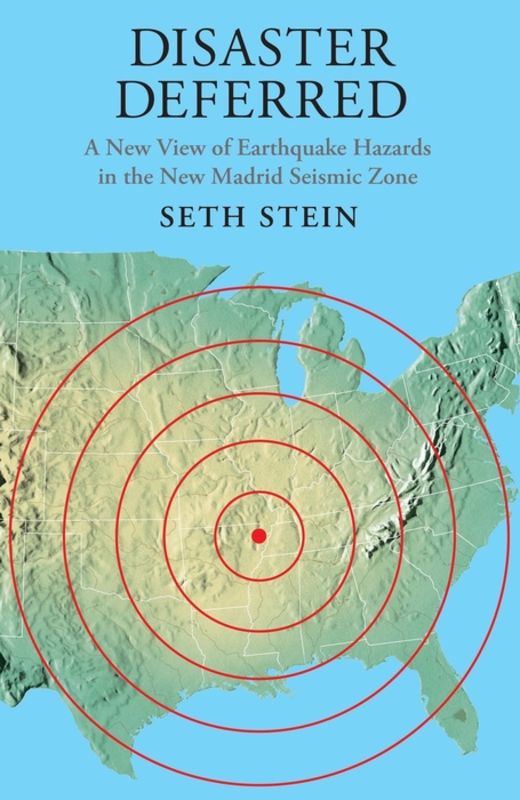
Disaster Deferred
In the winter of 1811-12, a series of large earthquakes in the New Madrid seismic zone-often incorrectly described as the biggest ever to hit the United States-shook the Midwest. Today the federal government ranks the hazard in the Midwest as high as California's and is pressuring communities to undertake expensive preparations for disaster.
Coinciding with the two-hundredth anniversary of the New Madrid earthquakes,Disaster Deferredrevisits these earthquakes, the legends that have grown around them, and the predictions of doom that have followed in their wake. Seth Stein clearly explains the techniques seismologists use to study Midwestern quakes and estimate their danger. Detailing how limited scientific knowledge, bureaucratic instincts, and the media's love of a good story have exaggerated these hazards, Stein calmly debunks the hype surrounding such predictions and encourages the formulation of more sensible, less costly policy. Powered by insider knowledge and an engaging style,Disaster Deferredshows how new geological ideas and data, including those from the Global Positioning System, are painting a very different-and much less frightening-picture of the future.
eBook
Earth's Free Oscillations Excited by the 26 December 2004 Sumatra-Andaman Earthquake
At periods greater than 1000 seconds, Earth's seismic free oscillations have anomalously large amplitude when referenced to the Harvard Centroid Moment Tensor fault mechanism, which is estimated from 300- to 500-second surface waves. By using more realistic rupture models on a steeper fault derived from seismic body and surface waves, we approximated free oscillation amplitudes with a seismic moment (6.5 x 10²² Newton·meters) that corresponds to a moment magnitude of 9.15. With a rupture duration of 600 seconds, the fault-rupture models represent seismic observations adequately but underpredict geodetic displacements that argue for slow fault motion beneath the Nicobar and Andaman islands.
Journal Article
Correction to: Real-time national GPS networks: opportunities for atmospheric sensing
Portions of this letter come from the content published in the paper by Ware et al. [1].
Journal Article

SuomiNet
“SuomiNet,” a university-based, real-time, national Global Positioning System (GPS) network, is being developed for atmospheric research and education with funding from the National Science Foundation and with cost share from collaborating universities. The network, named to honor meteorological satellite pioneer Verner Suomi, will exploit the recently shown ability of ground-based GPS receivers to make thousands of accurate upper- and lower-atmospheric measurements per day. Phase delays induced in GPS signals by the ionosphere and neutral atmosphere can be measured with high precision simultaneously along a dozen or so GPS ray paths in the field of view. These delays can be converted into integrated water vapor (if surface pressure data or estimates are available) and total electron content (TEC), along each GPS ray path. The resulting continuous, accurate, all-weather, real-time GPS moisture data will help advance university research in mesoscale modeling and data assimilation, severe weather, precipitation, cloud dynamics, regional climate, and hydrology. Similarly, continuous, accurate, all-weather, real-time TEC data have applications in modeling and prediction of severe terrestrial and space weather, detection and forecasting of low-altitude ionospheric scintillation activity and geomagnetic storm effects at ionospheric midlatitudes, and detection of ionospheric effects induced by a variety of geophysical events. SuomiNet data also have potential applications in coastal meteorology, providing ground truth for satellite radiometry, and detection of scintillation associated with atmospheric turbulence in the lower troposphere. The goal of SuomiNet is to make large amounts of spatially and temporally dense GPS-sensed atmospheric data widely available in real time, for academic research and education. Information on participation in SuomiNet is available via www.unidata.ucar.edu/suominet.
Journal Article