
Catalogue Search | MBRL


Are you sure you want to remove the book from the shelf?

{{itemTitle}}
12,560
result(s) for
"Shen, Yi"
Sort by:

Best 10 : 20th Asia-Pacific interior design awards = Di er shi jie Ya Tai shi nei she ji da jiang ji huo jiang zuo pin ji
Asia Pacific Interior Design Awards (APIDA) is organised by the Hong Kong Interior Design Association. It aims to give recognition to outstanding interior design projects and designers, promoting professional standards and ethics among interior design practices operating in the Asia Pacific region. The awards accept the interior design projects completed in the Asia/Pacific Region, including Hong Kong, Mainland China, Taiwan, Singapore, Japan, Malaysia, Macau, Thailand, The Philippines, India, Indonesia, Korea, Australia & New Zealand. This book selects the best projects from the excellent entries for the 20th Asia Pacific Interior Design Awards (APIDA). They fall into chapters, including food space, hotel space, leisure and entertainment space, living space, installation and exhibition space, public space, work space, shopping space and students' projects. This collection shows the readers the wisdom and design ideas of the designers in Asia-pacific region and unveil the design hotspots which belong to the Asia-pacific region.
Book

Environmental microaggressions in medicine
Oppressed people face microaggressions in medicine. Extant discussions of microaggressions in medicine primarily focus on verbal and behavioural microaggressions, which typically have perpetrators. For example, in clinical medicine, acts of verbal and behavioural microaggressions can arise from patient–provider interactions, with healthcare providers such as physicians and nurses as perpetrators. However, in clinical medicine, patients can also be victims of environmental microaggressions, which typically are not acts and do not have perpetrators. My goal is to call attention to the existence of environmental microaggressions in medicine in the forms of ordinary medical objects and spaces, such as forehead thermometers that are more likely to miss fevers in black patients and medical imaging devices that do not fit the bodies of fat patients. With these examples, I argue that environmental microaggressions in medicine, in the form of oppressive medical objects and spaces, sustain oppression by shaping patterns of thought and action and exemplify a form of attributional ambiguity without any perpetrator.
Journal Article
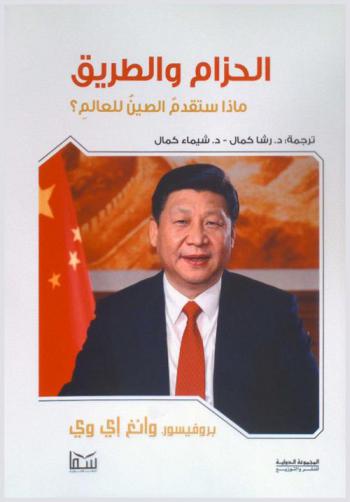
الحزام والطريق : ماذا ستقدم الصين للعالم ؟
حاول هذا الكتاب الذي بين أيديكم أن يقدم إجابات معيارية قياسية لكافة الأسئلة الجذرية المتعلقة بمبادرة \"الحزام والطريق\" والتي تقدم الصين من خلالها حلا لاستغلال قدراتها التي لا تتوقف عن التنامي لتتبوأ مقعدها كمحرك للنمو الاقتصادي العالمي في المستقبل و المتشوقين للتعرف على الملامح الحقيقية للتنين الصيني وتجربته مع سياسة الإصلاح والانفتاح طوال أكثر من ثلاثين عاما ومبادرته الجديدة ذات السمات الفوق عولمية نقدم الحزام والطريق ماذا ستقدم الصين للعالم.
Book

A new approach exploiting thermally activated delayed fluorescence molecules to optimize solar thermal energy storage
We propose a new concept exploiting thermally activated delayed fluorescence (TADF) molecules as photosensitizers, storage units and signal transducers to harness solar thermal energy. Molecular composites based on the TADF core phenoxazine–triphenyltriazine (PXZ-TRZ) anchored with norbornadiene (NBD) were synthesized, yielding compounds PZDN and PZTN with two and four NBD units, respectively. Upon visible-light excitation, energy transfer to the triplet state of NBD occurred, followed by NBD → quadricyclane (QC) conversion, which can be monitored by changes in steady-state or time-resolved spectra. The small S
1
-T
1
energy gap was found to be advantageous in optimizing the solar excitation wavelength. Upon tuning the molecule’s triplet state energy lower than that of NBD (61 kcal/mol), as achieved by another composite PZQN, the efficiency of the NBD → QC conversion decreased drastically. Upon catalysis, the reverse QC → NBD reaction occurred at room temperature, converting the stored chemical energy back to heat with excellent reversibility.
Direct conversion of solar energy to stored chemical energy can be achieved through photoisomerization. Here, authors exploit thermally activated delayed fluorescence materials as a photosensitizer and signal transducer to harness solar energy, to maximize solar spectrum harvesting without sacrificing energy storage time.
Journal Article

المغامرون الصغار : ملحمة عالمية : استكشاف الطاقة النفط
ليث ولين وزياد. المغامرون الصغار بانتظار المغامرات دوما لكن سرعان ما يجدون أنفسهم أمام قضية غامضة وشائقة بسبب اختفاء البروفيسور أديب. المتهم الرئيسي في قضية انفجار مصنع شركة إنيرجيز وسيسعون معا إلى كشف الحقيقة بالبحث عنه وإثبات براءته.
Book

Biological roles of RNA m7G modification and its implications in cancer
M7G modification, known as one of the common post-transcriptional modifications of RNA, is present in many different types of RNAs. With the accurate identification of m7G modifications within RNAs, their functional roles in the regulation of gene expression and different physiological functions have been revealed. In addition, there is growing evidence that m7G modifications are crucial in the emergence of cancer. Here, we review the most recent findings regarding the detection techniques, distribution, biological functions and Regulators of m7G. We also summarize the connections between m7G modifications and cancer development, drug resistance, and tumor microenvironment as well as we discuss the research’s future directions and trends.
Journal Article

أفكار حول تعميق الإصلاح
يناقش الكتاب سلسلة من الإيضاحات الهامة قدمها الرئيس الصيني والأمين العام للجنة المركزية للحزب الشيوعي الصيني، شي جين بينغ، وتدور حول أفكار الإصلاح وتوسيع الانفتاح على نحو شامل في الصين. يضم الكتاب أكثر من 70 وثيقة هامة على صورة كلمات شي جين بينغ وخطاباته وتعليقاته وتوجيهاته وينقسم الكتاب إلى 12 موضوعا خاصا تتضمن 274 قطعة من مقتطفات الأقوال، نشر بعضها لأول مرة.
Book

Structure- and mechanism-guided design of single fluorescent protein-based biosensors
Intensiometric genetically encoded biosensors, based on allosteric modulation of the fluorescence of a single fluorescent protein, are powerful tools for enabling imaging of neural activities and other cellular biochemical events. The archetypical example of such biosensors is the GCaMP series of Ca
2+
biosensors, which have been steadily improved over the past two decades and are now indispensable tools for neuroscience. However, no other biosensors have reached levels of performance, or had revolutionary impacts within specific disciplines, comparable to that of the Ca
2+
biosensors. Of the many reasons why this has been the case, a critical one has been a general black-box view of biosensor structure and mechanism. With this Perspective, we aim to summarize what is known about biosensor structure and mechanisms and, based on this foundation, provide guidelines to accelerate the development of a broader range of biosensors with performance comparable to that of the GCaMP series.
Using extensive knowledge about the structures and mechanisms of genetically encoded fluorescent biosensors, this Perspective provides guidelines to aid and accelerate the development of an increasingly broad range of high-performance imaging tools.
Journal Article

Mung bean proteins and peptides: nutritional, functional and bioactive properties
To date, no extensive literature review exists regarding potential uses of mung bean proteins and peptides. As mung bean has long been widely used as a food source, early studies evaluated mung bean nutritional value against the Food and Agriculture Organization of the United Nations (FAO)/the World Health Organization (WHO) amino acids dietary recommendations. The comparison demonstrated mung bean to be a good protein source, except for deficiencies in sulphur-containing amino acids, methionine and cysteine. Methionine and cysteine residues have been introduced into the 8S globulin through protein engineering technology. Subsequently, purified mung bean proteins and peptides have facilitated the study of their structural and functional properties. Two main types of extraction methods have been reported for isolation of proteins and peptides from mung bean flours, permitting sequencing of major proteins present in mung bean, including albumins and globulins (notably 8S globulin). However, the sequence for albumin deposited in the UniProt database differs from other sequences reported in the literature. Meanwhile, a limited number of reports have revealed other useful bioactivities for proteins and hydrolysed peptides, including angiotensin-converting enzyme inhibitory activity, anti-fungal activity and trypsin inhibitory activity. Consequently, several mung bean hydrolysed peptides have served as effective food additives to prevent proteolysis during storage. Ultimately, further research will reveal other nutritional, functional and bioactive properties of mung bean for uses in diverse applications.
Journal Article
Multifunctional evolution of B and AGL6 MADS box genes in orchids
We previously found that B and AGL6 proteins form L (OAP3-2/OAGL6-2/OPI) and SP (OAP3-1/OAGL6-1/OPI) complexes to determine lip/sepal/petal identities in orchids. Here, we show that the functional L’ (OAP3-1/OAGL6-2/OPI) and SP’ (OAP3-2/OAGL6-1/OPI) complexes likely exist and
AP3
/
PI/AGL6
genes have acquired additional functions during evolution. We demonstrate that the presumed L’ complex changes the structure of the lower lateral sepals and helps the lips fit properly in the center of the flower. In addition, we find that OAP3-1/OAGL6-1/OPI in SP along with presumed SP’ complexes regulate anthocyanin accumulation and pigmentation, whereas presumed L’ along with OAP3-2/OAGL6-2/OPI in L complexes promotes red spot formation in the perianth. Furthermore, the B functional proteins OAP3-1/OPI and OAGL6-1 in the SP complex could function separately to suppress sepal/petal senescence and promote pedicel abscission, respectively. These findings expand the current knowledge behind the multifunctional evolution of the B and
AGL6
genes in plants.
B class AP3/PI and AGL6-like MADS proteins determine lips and sepals/petals identities in orchids. Here, the authors characterize the extended function of OAP3/OPI/OAGL6 in regulating the specific structure of the lateral sepals, pigmentation/senescence of the perianth and abscission of the pedicel.
Journal Article