
Catalogue Search | MBRL


Are you sure you want to remove the book from the shelf?

{{itemTitle}}
85
result(s) for
"Simões, Raquel O"
Sort by:

A longitudinal study of Angiostrongylus cantonensis in an urban population of Rattus norvegicus in Brazil: the influences of seasonality and host features on the pattern of infection
Background
The nematode
Angiostrongylus cantonensis
is a zoonotic parasite and the most important cause of eosinophilic meningitis worldwide in humans. In Brazil, this disease has been reported in the states of Espírito Santo and Pernambuco. The parasite has been detected in the naturally infected intermediate host, in the states of Rio de Janeiro, Pernambuco and Santa Catarina. The murid
Rattus norvegicus R. rattus
were recently reported to be naturally infected in Brazil. In this study, we conducted a two-year investigation of the dissemination pattern of
A. cantonensis
in
R. norvegicus
in an urban area of Rio de Janeiro state, Brazil, and examined the influence of seasonality, year, host weight and host gender on parasitological parameters of
A. cantonensis
in rats.
Methods
The study was conducted in an area of Trindade, São Gonçalo municipality, Rio de Janeiro, Brazil. Prevalence of infected rats, intensity and abundance of
A. cantonensis
were calculated, and generalized linear models were created and compared to verify the contribution of host gender, host weight, year and seasonality to the variations in
A. cantonensis
abundance and prevalence in rats.
Results
The prevalence of
A. cantonensis
infection was stable during the rainy (71%, CI 58.9- 81.6) and dry seasons (71%, CI 57.9-80.8) and was higher in older rats and in females. Seasonality, host weight (used as a proxy of animal age) and gender were all contributing factors to variation in parasite abundance, with females and heavier (older) animals showing larger abundance of parasites, and extreme values of parasite abundance being more frequent in the dry season.
Conclusions
The high prevalence of this parasite throughout the study suggests that its transmission is stable and that conditions are adequate for the spread of the parasite to previously unaffected areas. Dispersion of the parasite to new areas may be mediated by males that tend to have larger dispersal ability, while females may be more important for maintaining the parasite on a local scale due to their higher prevalence and abundance of infection. A multidisciplinary approach considering the ecological distribution of the rats and intermediate hosts, as well as environmental features is required to further understand the dynamics of angiostrongyliasis.
Journal Article

Achatina fulica infected by Angiostrongylus cantonensis on beaches, in the west zone of Rio de Janeiro, Brazil
Angiostrongylus cantonensis is considered the main etiological agent of eosinophilic meningitis in humans. At present, this zoonosis is considered an emerging disease mainly in the Americas. The aim of this study was to determine the prevalence of Achatina fulica infected by Angiostrongylus cantonensis in restinga areas along beaches in the west zone of Rio de Janeiro city, Brazil. The study areas included the following beaches: Barra da Tijuca, Recreio dos Bandeirantes, Reserva, Prainha and Grumari. Ninety specimens of Achatina fulica were collected. Positive molluscs were found only in Barra da Tijuca. Infection prevalence was 5.5%. The presence of this parasite in the beachfront areas, in the west zone of Rio de Janeiro city demonstrates the potential risk of infection for visitors and the expansion of this helminth in the State of Rio de Janeiro.
Journal Article

Additional Data on the Synlophe of Stilestrongylus aculeata (Travassos, 1918) and Stilestrongylus eta (Travassos, 1937) (Heligmonellidae) Parasitic in Akodon montensis (Sigmodontinae) from the Atlantic Forest
Additional data on the synlophe and morphological measurements are provided for the heligmonellids Stilestrongylus aculeata (Travassos, 1918) and Stilestrongylus eta (Travassos, 1937), collected from Akodon montensis Thomas, 1913, of the Atlantic Forest, Rio de Janeiro, Brazil. The synlophe of S. aculeata is characterized by 19 cuticular middle body ridges in males and 24 cuticular middle body ridges in females, whereas S. eta presents 17 middle body ridges in males and 20 middle body ridges in females.
Journal Article

PREVALENCE OF Calodium hepaticum (SYN. Capillaria hepatica) IN Rattus norvegicus IN THE URBAN AREA OF RIO DE JANEIRO, BRAZIL
The nematode Calodium hepaticum (syn. Capillaria hepatica) is a zoonotic helminth found mainly infecting rats. It was studied the prevalence of C. hepaticum infection in Rattus norvegicus in an urban area of Rio de Janeiro (Brazil), with low urban planning and sanitation. The presence of C. hepaticum was identified through visible yellowish-white lesions in liver tissue and histological analyses. The total prevalence of infection was 45%, with no significant differences between sex and age. The presence of infected rodents near the peridomestic area poses substantial risk to human health. O nematóide Calodium hepaticum (sin. Capillaria hepatica) é um helminto zoonótico encontrado infectando principalmente ratos. A prevalência da infecção de C. hepaticum em Rattus norvegicus foi investigada em área urbana do Rio de Janeiro (Brasil) com baixo planejamento e saneamento. A presença de C. hepaticum foi identificada através da presença de lesões macroscópicas caracterizadas por manchas extensas de coloração branco-amarelada difusa por toda superfície do tecido do fígado e através de análise histológica. A prevalência total da infecção foi de 45% sem diferença significativa entre o sexo e idade. A presença de roedores infectados próximos do peridomicílio representa um risco substancial para a saúde humana.
Journal Article
Phylogenetic relationship of the Brazilian isolates of the rat lungworm Angiostrongylus cantonensis (Nematoda: Metastrongylidae) employing mitochondrial COI gene sequence data
BACKGROUND: The rat lungworm Angiostrongylus cantonensis can cause eosinophilic meningoencephalitis in humans. This nematode’s main definitive hosts are rodents and its intermediate hosts are snails. This parasite was first described in China and currently is dispersed across several Pacific islands, Asia, Australia, Africa, some Caribbean islands and most recently in the Americas. Here, we report the genetic variability among A. cantonensis isolates from different geographical locations in Brazil using mitochondrial cytochrome c oxidase subunit I (COI) gene sequences. METHODS: The isolates of A. cantonensis were obtained from distinct geographical locations of Brazil. Genomic DNAs were extracted, amplified by polymerase reaction, purified and sequenced. A partial sequence of COI gene was determined to assess their phylogenetic relationship. RESULTS: The sequences of A. cantonensis were monophyletic. We identified a distinct clade that included all isolates of A. cantonensis from Brazil and Asia based on eight distinct haplotypes (ac1, ac2, ac3, ac4, ac5, ac6, ac7 and ac8) from a previous study. Interestingly, the Brazilian haplotype ac5 is clustered with isolates from Japan, and the Brazilian haplotype ac8 from Rio de Janeiro, São Paulo, Pará and Pernambuco states formed a distinct clade. There is a divergent Brazilian haplotype, which we named ac9, closely related to Chinese haplotype ac6 and Japanese haplotype ac7. CONCLUSION: The genetic variation observed among Brazilian isolates supports the hypothesis that the appearance of A. cantonensis in Brazil is likely a result of multiple introductions of parasite-carrying rats, transported on ships due to active commerce with Africa and Asia during the European colonization period. The rapid spread of the intermediate host, Achatina fulica, also seems to have contributed to the dispersion of this parasite and the infection of the definitive host in different Brazilian regions.
Journal Article
A New Metastrongilid Species (Nematoda: Metastrongylidae): A Lungworm from Akodon montensis (Rodentia: Sigmodontinae) in Brazil
Angiostrongylus lenzii n. sp. (Nematoda: Metastrongyloidea) is described and illustrated from the pulmonary artery of the wild rodent Akodon montensis Thomas, 1913, collected in the municipality of Teresopólis, Rio de Janeiro State, Brazil. It represents the 17th species of the genus and the 2nd in South America as parasites in rodents. This new species is the most similar morphologically to Angiostrongylus vasorum, Angiostrongylus gubernaculatus, Angiostrongylus schmidti, and Angiostrongylus morerai. It can be distinguished from them by the morphology of the caudal bursa, ventral rays 2 and 3 with conspicuous knobs, differences in width and length of lateral and dorsal rays, presence of rays 8, and length of spicules.
Journal Article
A New Heligmonellid Species (Nematoda) from Oligoryzomys nigripes (Rodentia: Sigmodontinae) in the Atlantic Forest, Brazil
Stilestrongylus lanfrediae n. sp. is described from the small intestine of Oligoryzomys nigripes (Cricetidae: Sigmodontinae) collected in the Atlantic Forest (Rio de Janeiro State, Teresópolis, Brazil). The new species shows some similarities to Stilestrongylus stilesi, Stilestrongylus freitasi, Stilestrongylus inexpectatus, Stilestrongylus moreli, and Stilestrongylus andalgala, but it can be distinguished from these species by the following combination of characters: 26 ridges in males and 25 in females at the mid-body, asymmetrical caudal bursa with a pattern of type 2-2-1, rays 6 markedly shorter than other lateral rays, rays 8 inserted asymmetrically on dorsal trunk and shorter than other species, and a proportion of spicule length in relation to body length (SpL/BL) of 25–29%. The new species is also distinguished from other species of Stilestrongylus by the asymmetry of the branches of the dorsal ray and by having the longest spicules.
Journal Article

Canaania obesa (Platyhelminthes: Dicrocoeliidae): redescription and new hosts records
The digenetic trematode Canaania obesa Travassos, 1944 (Dicrocoeliidae) was described as a parasite of the bile ducts of the rodent Akodon cursor Winge, 1887 (Cricetidae) collected in Santa Teresa, state of Espírito Santo, Brazil. In the present study, we report the occurrence of C. obesa infecting three additional sigmodontinae rodent species: Akodon montensis Thomas, 1913; Oligoryzomys nigripes Olfers, 1818 and Nectomys squamipes Brants, 1827, from three municipalities situated at Serra dos Órgãos, Rio de Janeiro, Brazil. Scanning electron microscopy showed that this helminth has a leaf-like shape with conical extremities and the ventral mid body protrudes at the acetabulum level. The microtopography of the tegument shows a heterogeneous surface with smooth or wrinkled areas and several randomly distributed papillae. The cirrus is located just posterior to the oral sucker and is covered by smooth tegument without spines or papillae. The excretory pore is subterminal. The eggs are elliptic and operculate at one of the extremities. The present study adds new taxonomic characters to C. obesa. The municipalities of Nova Friburgo, Teresópolis and Sumidouro are new geographical areas of distribution, and A. montensis, O. nigripes and N. squamipes are new host records for C. obesa.
Journal Article

One year follow-up on a randomized study investigating serratus anterior muscle and pectoral nerves type I block to reduced neuropathic pain descriptors after mastectomy
Breast cancer is the second most common diagnosed type of cancer in women. Chronic neuropathic pain after mastectomy occurs frequently and is a serious health problem. In our previous single-center, prospective, randomized controlled clinical study, we demonstrated that the combination of serratus anterior plane block (SAM) and pectoral nerve block type I (PECS I) with general anesthesia reduced acute postoperative pain. The present report describes a prospective follow-up study of this published study to investigate the development of chronic neuropathic pain 12 months after mastectomy by comparing the use of general anesthesia alone and general anesthesia with SAM + PECS I. Additionally, the use of analgesic medication, quality of life, depressive symptoms, and possible correlations between plasma levels of interleukin (IL)-1 beta, IL-6, and IL-10 collected before and 24 h after surgery as predictors of pain and depression were evaluated. The results showed that the use of SAM + PECS I with general anesthesia reduced numbness, hypoesthesia to touch, the incidence of patients with chronic pain in other body regions and depressive symptoms, however, did not significantly reduce the incidence of chronic neuropathic pain after mastectomy. Additionally, there was no difference in the consumption of analgesic medication and quality of life. Furthermore, no correlation was observed between IL-1 beta, IL-6, and IL-10 levels and pain and depression. The combination of general anesthesia with SAM + PECS I reduced the occurrence of specific neuropathic pain descriptors and depressive symptoms. These results could promote the use of SAM + PECS I blocks for the prevention of specific neuropathic pain symptoms after mastectomy.
Registration of clinical trial:
The Research Ethics Board of the Hospital Sirio-Libanes/Brazil approved the study (CAAE 48721715.0.0000.5461). This study is registered at Registro Brasileiro de Ensaios Clinicos (ReBEC), and ClinicalTrials.gov, Identifier: NCT02647385.
Journal Article
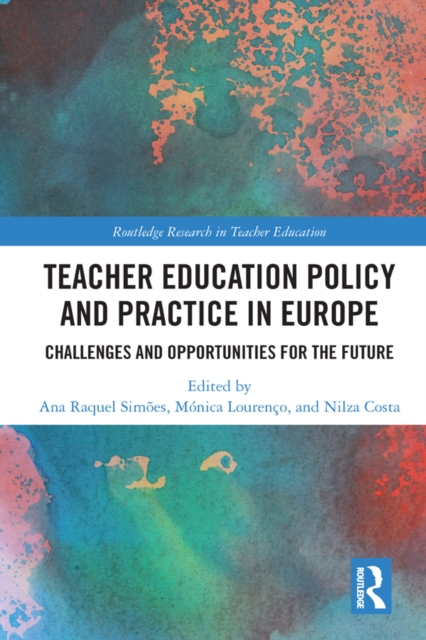
Teacher Education Policy and Practice in Europe
Teacher Education Policy and Practice in Europe provides a critical overview of the current challenges facing teacher education policy and practice in Europe. Drawing on a wide range of contributions, the book demonstrates that in order for teachers to reassume their role as agents of change, it is crucial to create a vision of a future European teacher and promote active engagement in preparing children to live and act in a multicultural and increasingly changing world. The book suggests ways in which teachers could be prepared to meet and overcome the struggles they will encounter in the classroom, including recommendations for teacher education, which open up new possibilities for policy, practice, and research. Considering their own experiences as teachers, contributors also cover topics such as teacher education for the 21st century, the profile of the European teacher, citizenship and identity, social inclusion, linguistic and cultural diversity, and comparative education. Teacher Education Policy and Practice in Europe is essential reading for academics, researchers, and postgraduate students engaged in the study of teacher education, educational policy and educational theory. It should also be of great interest to research-active teacher educators and practising teachers.
eBook