
Catalogue Search | MBRL


Are you sure you want to remove the book from the shelf?

{{itemTitle}}
93
result(s) for
"Simon, Reeva Spector"
Sort by:

The Creation of Iraq, 1914-1921
Leading scholars consider Iraq's history and strategic importance from the vantage point of its residents, neighbors (Iran, Turkey, and Kurdistan), and the Great Powers.
eBook

Spies and Holy Wars
Illuminating a powerful intersection between popular culture and global politics,Spies and Holy Warsdraws on a sampling of more than eight hundred British and American thrillers that are propelled by the theme ofjihad-an Islamic holy war or crusade against the West. Published over the past century, the books in this expansive study encompass spy novels and crime fiction, illustrating new connections between these genres and Western imperialism.
Demonstrating the social implications of the popularity of such books, Reeva Spector Simon covers how the Middle Eastern villain evolved from being the malleable victim before World War II to the international, techno-savvy figure in today's crime novels. She explores the impact of James Bond, pulp fiction, and comic books and also analyzes the ways in which world events shaped the genre, particularly in recent years. Worldwide terrorism and economic domination prevail as the most common sources of narrative tension in these works, while military \"tech novels\" restored the prestige of the American hero in the wake of post-Vietnam skepticism. Moving beyond stereotypes, Simon examines the relationships between publishing trends, political trends, and popular culture at large-giving voice to the previously unexamined truths that emerge from these provocative page-turners.
eBook
Iraq Between the Two World Wars
Why did a group from the Iraqi army seize control of the government and wage a disastrous war against Great Britain, rejecting British and liberal values for those of a militaristic Germany? What impact did these actions have on the thirty-year regime of Saddam Hussein?
Departing from previous studies explaining modern Iraqi history in terms of class theory, Reeva Simon shows that cultural and ideological factors played an equal, if not more important, role in shaping events. In 1921 the British created Iraq, and an entourage of ex-Ottoman army officers, the Sharifians, became the new ruling elite. Simon contends that this elite, returning to an Iraq made up of different ethnic, religious, and social groups, had to weld these disparate elements into a nation. Pan-Arabism was to be the new ideological source of unity and loyalty. Schools and the army became the means through which to implant it, and a series of military coups gave the officers the chance to act in its name. The result was an abortive revolt against Britain in 1941. And the legacy of the revolt is still apparent in the next two generations of Iraqi officers that led to the regime of Saddam Hussein.
This updated edition locates the sources of Iraqi nationalism in the experience of these ex-Ottoman army officers who used the emergent pan-Arabism to weld a disparate population into a nation. Simon shows that the relationships forged between Iraqi officers and Germans in Istanbul before WWI left deep legacies that go a long way toward explaining the disastrous war against Great Britain in 1941, the rejection of liberal values, the revolution of 1958 in which the military finally seized power, and the outlook of the leadership recently overthrown by American and British armies.
eBook
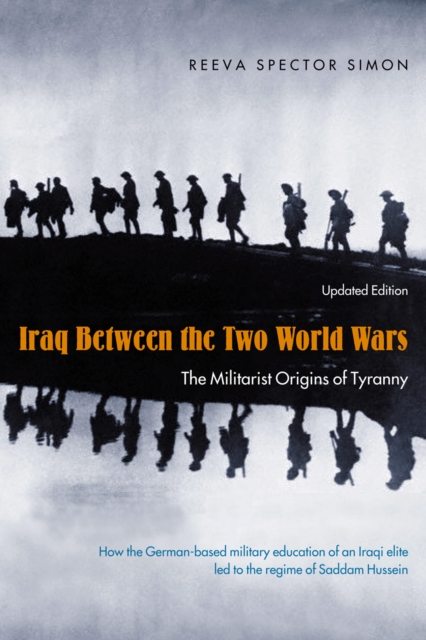
Iraq between the two world wars: the militarist origins of tyranny
Why did a group from the Iraqi army seize control of the government and wage a disastrous war against Great Britain, rejecting British and liberal values for those of a militaristic Germany? What impact did these actions have on the regime of Saddam Hussein? Departing from previous studies explaining modern Iraqi history in terms of class theory, Simon shows that cultural and ideological factors played an equal, if not more important, role in shaping events. In 1921 the British created Iraq, and an entourage of ex-Ottoman army officers, the Sharifians, became the new ruling elite. Simon contends that this elite, returning to an Iraq made up of different ethnic, religious, and social groups, had to weld these disparate elements into a nation. Pan-Arabism was to be the new focus for loyalty. Schools and the army became the means through which to implement it, and a series of military coups gave the officers the chance to act out the ideology. The result was an abortive revolt against Britain in 1941. The legacy of the revolt is still apparent in the next two generations of Iraqi officers that led to the regime of Saddam Hussein.
eBook
Iraq Between the Two World Wars
Why did a group from the Iraqi army seize control of the government and wage a disastrous war against Great Britain, rejecting British and liberal values for those of a militaristic Germany? What impact did these actions have on the thirty-year regime of Saddam Hussein? Departing from previous studies explaining modern Iraqi history in terms of class theory, Reeva Simon shows that cultural and ideological factors played an equal, if not more important, role in shaping events. In 1921 the British created Iraq, and an entourage of ex-Ottoman army officers, the Sharifians, became the new ruling elite. Simon contends that this elite, returning to an Iraq made up of different ethnic, religious, and social groups, had to weld these disparate elements into a nation. Pan-Arabism was to be the new ideological source of unity and loyalty. Schools and the army became the means through which to implant it, and a series of military coups gave the officers the chance to act in its name. The result was an abortive revolt against Britain in 1941. And the legacy of the revolt is still apparent in the next two generations of Iraqi officers that led to the regime of Saddam Hussein. This updated edition locates the sources of Iraqi nationalism in the experience of these ex-Ottoman army officers who used the emergent pan-Arabism to weld a disparate population into a nation. Simon shows that the relationships forged between Iraqi officers and Germans in Istanbul before WWI left deep legacies that go a long way toward explaining the disastrous war against Great Britain in 1941, the rejection of liberal values, the revolution of 1958 in which the military finally seized power, and the outlook of the leadership recently overthrown by American and British armies.
eBook

The Creation of Iraq, 1914-1921
This collection of essays by leading scholars provides a comprehensive yet accessible overview of Iraq's history and its strategic importance from three points of view: local residents, Iraq's neighbors (Iran, Turkey, and Kurdistan), and the Great Powers. The book captures the complexity of forces that contributed to the making of Iraq as a modern state, integrating short and long term policy, individual and group interests, and the impact of World War I. The Creation of Iraq allows the reader to understand the dynamics and interplay of regional history and geo-strategic and imperial priorities in an area of the world that will continue to dominate interrnational politics for years to come.
eBook
