
Catalogue Search | MBRL


Are you sure you want to remove the book from the shelf?

{{itemTitle}}
5
result(s) for
"Sweet, Paula M."
Sort by:

Biomechanical Characterization of Human Amniotic Membrane Preparations for Ocular Surface Reconstruction
Purpose: To investigate the tensile and elastic properties of both commercially available and experimental human amniotic membrane preparations. Method: Nine preparations of human amniotic membrane were studied. The four dry preparations were untreated (nonirradiated, n = 20), and gamma (n = 25), low-dose (AmbioDry ® , Okto Ophtho Inc., Costa Mesa, Calif., USA, n = 20) and high-dose (n = 20) electron beam sterilized. The same dry membranes were moistened with balanced salt solution (n = 20, 34, 20 and 20, respectively). The ninth group consisted of thawed medium-frozen amniotic membrane (AmnioGraft ® , Bio-Tissue Inc., Miami, Fla., USA, n = 20). The membranes were cut into thin strips, loaded on a gram range load sensor, and stretched incrementally to the point of rupture. The modulus of elasticity, displacement until rupture and maximum tolerated stress were recorded and compared. Results: The dry preparations exhibited higher moduli of elasticity when compared with the moist samples, with the low-dose electron beam-irradiated samples having the greatest mean modulus of elasticity overall and maintaining a high modulus of elasticity as a moist sample (p < 0.05). Moist nonirradiated preparations and thawed medium-frozen preparations stretched the farthest before rupture and experienced the greatest mean stresses at the point of rupture. While 3 of 4 membranes had greater stretch when moistened as compared to their dry counterparts, there was no difference in the membrane stiffness between dry and moistened low-dose electron beam-irradiated samples (p > 0.8). Conclusions: Low-dose electron beam-irradiated amnion appeared to maintain desirable elastic characteristics in transition from a dry to rehydrated state and may thus provide an easy-to-manipulate transplant tissue for ocular surface reconstruction. Moist nonirradiated and thawed medium-frozen tissues, however, may provide surgical advantages as they required greater forces to rupture.
Journal Article

‘Great in theory’: Women’s care experiences in relation to Australia’s national maternity Strategy—Qualitative survey responses
The provision of woman-centred maternity care in Australia is guided by a national Strategy released in November 2019 titled Woman-centred care: Strategic directions for Australian maternity services (the Strategy). The Strategy upholds four values (safety, respect, choice, and access) that underpin twelve principles of woman-centred care.
To examine the maternity care experiences of women in Australia and explore how these align with the stated values and principles of the Strategy.
A national online survey was undertaken between February and June 2023. Women who received all their maternity care in Australia since 1 January 2020 were invited to participate. The survey consisted of predominantly closed questions; however, six open-text questions were included to give participants the opportunity to provide in-depth responses about the Strategy and its values. This paper presents a qualitative content analysis of the free-text responses.
A completed survey was submitted by 1750 eligible participants, of whom 1667 provided 3562 qualitative responses included in this analysis. These showed that while the definition of safety provided in the Strategy favours physically safe care, the survey participants preferred a definition that was more holistic, providing for emotional and psychological safety. Participants expressed the need for respectful relationships with their maternity care providers where they felt listened to and heard. They wanted to be made aware of their choices and to have their maternity care decisions supported without coercion. Participants also desired access to continuity of care, particularly with midwives, and greater access to mental health support across the maternity care episode.
The intent of the national Strategy has not yet been fully realised. A nationally coordinated response is required if the Strategy is to move from policy to practice, ensuring that women in Australia receive true woman-centred maternity care as intended.
Journal Article

Etoposide induction of tumor immunity in Lewis lung cancer
To determine if the antineoplastic effect of etoposide includes alteration in Lewis lung cancer cells which evoke an immunologic response in C57B1/6 host mice.
Of C57B1/6 mice injected with 10(6) Lewis lung cancer (3LL) cells followed by treatment with a single 50 mg/kg dose of etoposide (VP-16), 60% survived over 60 days, in contrast to untreated control mice which died within 30 days. Approximately 40% of surviving mice rejected a subsequent challenge with 3LL. Their splenocytes protected naive mice injected with 3LL. To test if VP-16 treatment produced alterations in 3LL cells, which induce host immunity, leading to tumor rejection, C57B1/6 mice were injected with 3LL cells that had survived an 80-90% lethal concentration of VP-16 in vitro. These cells killed 75% of recipient mice but 60% of the surviving mice rejected challenge with 3LL. Splenocytes harvested from tumor-rejecting mice protected naive mice injected with 3LL.
These results support the hypothesis that in addition to its antineoplastic cytotoxic effect, VP-16 induces changes in 3LL cells which are recognized by the host immune system resulting in immune rejection of 3LL. often immunosuppressive and therapeutic advantage is generally based on the tumor cytotoxicity of individual drugs or combinations of drugs [13]. Our earlier work showed a link between the use of cytotoxic chemotherapy with etoposide (VP-16) and the induction of an immune response against syngeneic murine leukemia in the intact host [16]. VP-16 is an immunosuppressive topoisomerase II-inhibiting drug which induces tumor cell apoptosis and is frequently used clinically to treat a variety of tumors [1, 3, 9, 10]. We have noted that the addition of cyclosporin A to VP-16 produces CD8 T lymphocyte-mediated tumor-specific immunity in mice bearing L1210 leukemia [17]. We have extended these experiments to a spontaneously arising non-carcinogen-induced neoplasm, Lewis lung cancer (3LL), and now report that surviving mice successfully treated with VP-16, in the absence of cyclosporin A, reject challenge with 3LL. In addition, results are presented to show that VP-16 modifies 3LL cells rendering them immunogenic. These findings are submitted to support the hypothesis that VP-16-induced cytotoxic changes include cellular membrane alterations in 3LL cells which are recognized by the immune system and cause rejection of this syngeneic lung tumor.
Journal Article
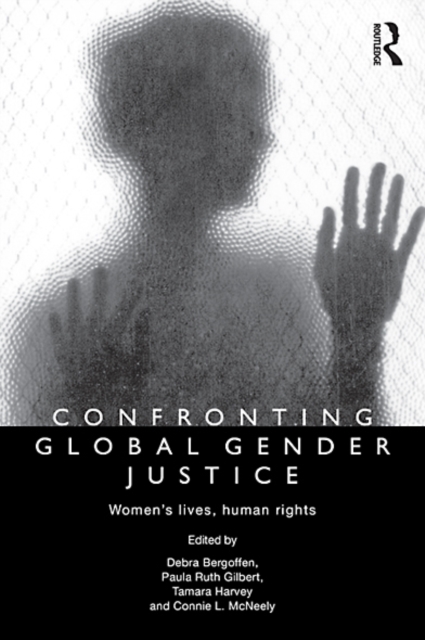
Confronting Global Gender Justice
Confronting Global Gender Justice contains a unique, interdisciplinary collection of essays that address some of the most complex and demanding challenges facing theorists, activists, analysts, and educators engaged in the tasks of defining and researching women’s rights as human rights and fighting to make these rights realities in women’s lives.
With thematic sections on Complicating Discourses of Victimhood, Interrogating Practices of Representation, Mobilizing Strategies of Engagement, and Crossing Legal Landscapes, this volume offers both specific case studies and more general theoretical interventions. Contributors examine and assess current understandings of gender justice, and offer new paradigms and strategies for dealing with the complexities of gender and human rights as they arise across local and international contexts. In addition, it offers a particularly timely assessment of the effectiveness and limits of international rights instruments, governmental and nongovernmental organization activities, grassroots and customary practices, and narrative and photographic representations.
This book is a valuable resource for both undergraduate and graduate students in fields such as Gender or Women’s Studies, Human Rights, Cultural Studies, Anthropology, and Sociology, as well as researchers and professionals working in related areas.
Introduction: Women's Lives, Human Rights by Debra Bergoffen, Paula Ruth Gilbert, and Tamara Harvey Part I: Complicating the Discourses of Victimhood 1. Women and the Genocidal Rape of Women: The Gender Dynamics of Gendered War Crimes by Laura Sjoberg 2. Human Trafficking: Why is it Such and Important Women's Issue? by Louise Shelley 3. Transforming the Representable: Asian Women in Anti-Trafficking Discourse by Donna Kay Maeda 4. Sin, Salvation, or Starvation? The Problematic Role of Religious Morality in U.S. Anti-Sex Trafficking Policy by Lucinda Peach Part II: Interrogating Practices of Representation 5. How Not to Give Rape Political Significance by Louise Du Toit 6. Human Trafficking: A Photographic Essay by Kay Chrenush 7. Marjorie Agosín's Poetics of Memory: Human Rights, Feminism, and Literary Forms by Ricardo F. Vivancos P érez 8. Digital Storytelling for Gender Justice: Exploring the Challenges of Participation and the Limits of Polyvocality by Amy Hill Part III: Strategies of Engagement 9. 'Sweet Electrical Greetings': Women, HIV, and the Evolution of an Intervention Project in Papua New Guinea by Holly Wardlow, with Mary Tamia 10. Economic Empowerment of Women as a Global Project: Economic Rights in the Neo-Liberal Era by Nitza Berkovitch and Adriana Kemp 11. Algerian Women in Movement: Three Waves of Feminist Activism by Valentine M. Moghadam 12. Using Law and Education to Make Human Rights Real in Women's Real Lives by Nancy Chi Cantalupo Part IV: Crossing Legal Landscapes 13. Seduced by Information, Contaminated by Power: Women's Rights as a Global Panopticon by Saida Hod ži ć 14. Human Rights of Women and Girls with Disabilities in Developing Countries by Amy T. Wilson 15. Gender and Customary Mechanisms of Justice in Uganda by Joanna R. Quinn 16. Policing Bodies and Borders: Women, Prostitution, and the Differential Regulation of U.S. Immigration Policy by Deirdre Moloney 17. The Institutionalization of Domestic Violence Against Women in the United States by Julie Walters Part V: Confronting Global Gender Justice 18. Configuring Feminisms, Transforming Paradigms: Reflections from Kum-Kum Bhavnani, from an Interview with Kum-Kum Bhavnani by Connie L. McNeely
Debra Bergoffen is Emeritus Professor of Philosophy at George Mason University. Her book The Philosophy of Simone de Beauvoir: Gendered Phenomenologies, Erotic Generosities (1997), and her most recent articles, including \"Exploiting the Dignity of the Vulnerable Body,\" evidence her ongoing concern with feminist theory, women’s rights and human rights.
Paula Ruth Gilbert is Professor of French, Canadian, and Women and Gender Studies at George Mason University. Her research covers: nineteenth-century French Studies; Quebec Studies; violence and gender and violent women; narrative, gender, and human rights. Her most recent book is Violence and the Female Imagination (2006).
Tamara Harvey is Associate Professor of English at George Mason University. She is author of Figuring Modesty in Feminist Discourse Across the Americas, 1633-1700 (2008), and co-editor with Greg O’Brien of George Washington’s South (2003). Her research focuses on women and early America, with an emphasis on hemispheric studies.
Connie L. McNeely received the Ph.D. in Sociology from Stanford University and is currently on the faculty of the School of Public Policy at George Mason University. Her books have included Constructing the Nation-State (1995) and the edited volume Public Rights, Public Rules (1998). Her current research and most recent publications address various aspects of culture, politics, social theory, and inequality.
eBook

PEAK performance
Americans took home five gold medals from Albertville-- all, won by women. Gearing up for Barcelona, women again are staking the pace. Here, 25 secrets of their success. Many work as well at the local gym as Olympic arena.
Magazine Article