
Catalogue Search | MBRL


Are you sure you want to remove the book from the shelf?

{{itemTitle}}
65
result(s) for
"Wick, Calhoun"
Sort by:
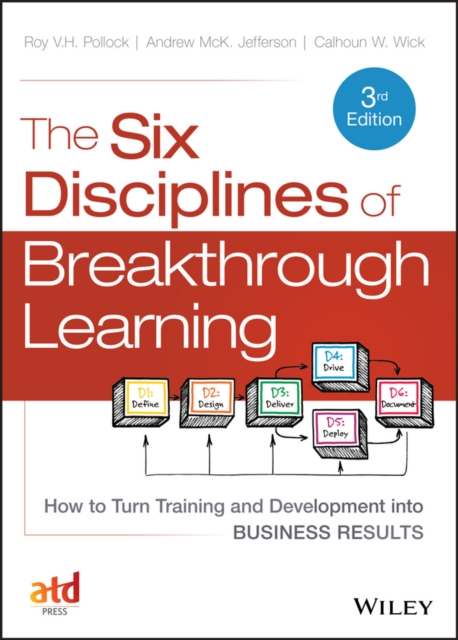
The Six Disciplines of Breakthrough Learning
\"Get real results for your business - maximize your training and development programs Corporate learning and development programs play an undeniable role in successful business endeavors, but only when they're done right. The significant revisions in the third edition of The Six Disciplines of Breakthrough Learning add fresh, timely elements to a resource that has become known globally as a trusted guide for professionals determined to get the most of their companies' training and development programs. All-new examples, tools, guides, and insights combine to make an excellent, all-in-one resource for everyone from workplace professionals and HR managers to training development providers and businesses leaders looking to maximize the return on their enterprise's learning budget. Infused with current research and recent case studies, this resource serves as a practical guide that recommends concrete actions for producing tangible results. Tools, guides, and checklists in every chapter ensure that readers walk away with meaningful strategies that can be implemented right away. The book includes: A complete review of research drawn from thousands of insights, goals, and lessons learned Specific strategies and actions that can be put into effect quickly for immediate results A focus on ROI for business leaders wanting to make a clearer connection between dollars spent and new skills gained Checklists in each chapter to help learning organizations perform quality audits of new and existing learning programs The third edition of The Six Disciplines of Breakthrough Learning contains so many new resources and so much thoroughly-revised content that even those who own previous editions will find its reinvigorated approach highly beneficial. Strengthen the link between your learning efforts and your business goals with this increasingly popular, globally recognized resource\"--
eBook

The field guide to the 6ds
Practical guidelines for implementing the six disciplines of breakthrough learning The Six Disciplines of Breakthrough Learning has become a standard for companies serious about increasing the return on their investment in learning and development. Now the authors help workplace learning professionals apply the concepts of their bestselling book. With real-world applications, case studies, how-to guidelines, and practical advice and examples for implementing the 6Ds, The 6Ds Fieldbook: Beyond ADDIE will help organizations substantially increase the return on investment and decrease \"learning scrap,\" the potential value that goes unrealized in many learning and development initiatives. * Helps OD professionals apply the concepts of the bestselling Six Disciplines of Breakthrough Learning * Includes all new case studies, examples, tools, and best practices in use by organizations that have successfully used the 6Ds * Taps into the experience and expertise of 6Ds practitioners Linking to social media to enhance the lessons of the book, The 6Ds Fieldbook is an easy-to-use and widely-applicable guide to getting the most from learning and development.
eBook
The six disciplines of breakthrough learning
\"Get real results for your business - maximize your training and development programs Corporate learning and development programs play an undeniable role in successful business endeavors, but only when they're done right. The significant revisions in the third edition of The Six Disciplines of Breakthrough Learning add fresh, timely elements to a resource that has become known globally as a trusted guide for professionals determined to get the most of their companies' training and development programs. All-new examples, tools, guides, and insights combine to make an excellent, all-in-one resource for everyone from workplace professionals and HR managers to training development providers and businesses leaders looking to maximize the return on their enterprise's learning budget. Infused with current research and recent case studies, this resource serves as a practical guide that recommends concrete actions for producing tangible results. Tools, guides, and checklists in every chapter ensure that readers walk away with meaningful strategies that can be implemented right away. The book includes: A complete review of research drawn from thousands of insights, goals, and lessons learned Specific strategies and actions that can be put into effect quickly for immediate results A focus on ROI for business leaders wanting to make a clearer connection between dollars spent and new skills gained Checklists in each chapter to help learning organizations perform quality audits of new and existing learning programs The third edition of The Six Disciplines of Breakthrough Learning contains so many new resources and so much thoroughly-revised content that even those who own previous editions will find its reinvigorated approach highly beneficial. Strengthen the link between your learning efforts and your business goals with this increasingly popular, globally recognized resource\".
eBook
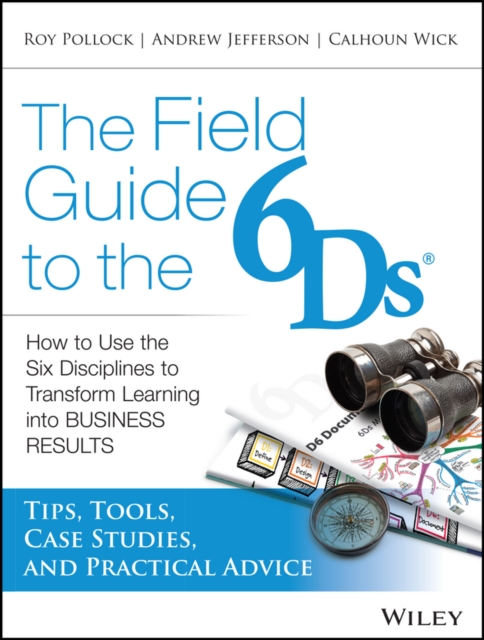
The field guide to the 6Ds: how to use the six disciplines to transform learning into business results : tips, tools, case studies, and practical advice
Practical guidelines for implementing the six disciplines of breakthrough learning The Six Disciplines of Breakthrough Learning has become a standard for companies serious about increasing the return on their investment in learning and development. Now the authors help workplace learning professionals apply the concepts of their bestselling book. With real-world applications, case studies, how-to guidelines, and practical advice and examples for implementing the 6Ds, The 6Ds Fieldbook: Beyond ADDIE will help organizations substantially increase the return on investment and decrease \"learning scrap,\" the potential value that goes unrealized in many learning and development initiatives. Helps OD professionals apply the concepts of the bestselling Six Disciplines of Breakthrough Learning Includes all new case studies, examples, tools, and best practices in use by organizations that have successfully used the 6Ds Taps into the experience and expertise of 6Ds practitioners Linking to social media to enhance the lessons of the book, The 6Ds Fieldbook is an easy-to-use and widely-applicable guide to getting the most from learning and development.
eBook

From ideas to action: Creating a learning organization
Discussions of learning organizations too often end up intangible and obscure. While organizational learning is easy to recognize, it is often difficult to describe and dissect. Here, emphasizing the pragmatic rather than the , the authors offer a solid strategy for creating a learning organization. Their extensive research suggests that at least five elements are essential for companies to become learning organizations. Together, these elements provide a formula for creating a learning organization. By closely examining each element within that formula, managers can measure and increase the rate of learning within their organizations. © 1995 by John Wiley & Sons, Inc.
Journal Article

Going Beyond the Finish Line
Follow-through management puts the course in the center of the learning process. What happens before and after a course makes the difference. The process not only accelerates the transfer of learning from the classroom to the office, but it also makes measuring results possible. After the course concludes, send graduates regular reminders to take action on what they learned and, if needed, give them direct support and coaching. Graduates who stay in touch naturally make the transition into peer coaches; encouraging and helping one another achieve their goals. Course graduates need to be talking to their managers, to each other, and to trainers. The hidden benefit of follow-through management is the ability to refine training based on post-course communication with participants and managers.
Trade Publication Article
The course isn't the finish line
The first of a 2-part series on follow-through management is presented. Planning, managing, and supporting follow-through accelerates the transfer of learning into actions that produce results. To be effective, learning can't be confined to the course. Follow-through management requires a new way of thinking. Managing follow-through means changing both course design and preparation. Business leaders must articulate the results they want a course to achieve. An organization's leaders must communicate that the material is important and it's expected to be applied. To take learning to the next level, participants need to learn how to set accountable development goals and follow through on the concepts learned during the course.
Trade Publication Article
D3: Deliver for Application
This chapter focuses on those aspects of instruction that help employees learn new material and then apply it across the learning‐doing gap. It highlights the problems one encounters most frequently in corporate learning and development programs and suggests solutions. A central theme of The Six Disciplines, and especially of D3, is that business‐sponsored learning is a means to an end: improved performance. The chapter provides an overview of the learning process and the implications for training and development. Attention is the most significant bottleneck in the whole learning process. Because each person's life experience is unique, each person's mental framework is unique, and therefore, the way that each person encodes and consolidates new learning is unique. The chapter stresses the importance of perceived relevance and utility for adult learners and why program designers and instructors need to help participants see the connections to their work and the WIIFM.
Book Chapter
D4: Drive Learning Transfer
Organizations that are most effective at turning learning into results are those that invest in the “structure, support, and accountability” needed to assure learning transfer and application on the job. According to this chapter, the appropriate definition of learning transfer in a corporate setting is “the process of putting learning to work in a way that improves performance”. While instruction, e‐learning, and self‐study can catalyze learning, there are no shortcuts to becoming highly proficient in any endeavor, it takes lots of practice. From a process improvement point of view, improving learning transfer offers much greater opportunity for improving overall results than trying to improve learning per se. Managers have a disproportionate impact on learning transfer and the transfer climate. Learning initiatives are more successful when there is active oversight and participation by the managers of participants' managers. Best‐practice learning organizations drive learning transfer by actively managing the follow‐through process.
Book Chapter
D5: Deploy Performance Support
New technologies and near‐universal access to Internet resources have vastly expanded opportunities to provide performance support that reinforces, amplifies, and extends learning back to the workplace. Performance support should be an integral part of any learning and performance improvement initiative. Improving performance support presents significant untapped potential for enhancing training effectiveness. Performance support is anything that helps an employee do the right thing at the right time, every time. The best practice is to make performance support a required item on the checklist for approving learning designs. Many different people can play a role in supporting learning transfer—from managers to the participant's friends or partners. Learning transfer support and virtual coaching technologies enable exciting new forms of coaching that foster interaction and, at the same time, reduce the time commitment for the providers. Feedback is important to support learning transfer and to sustain employee commitment and enthusiasm in general.
Book Chapter