
Catalogue Search | MBRL


Are you sure you want to remove the book from the shelf?

{{itemTitle}}
14,043
result(s) for
"Yuan, Jian"
Sort by:


DNA methyltransferase DNMT3a contributes to neuropathic pain by repressing Kcna2 in primary afferent neurons
Nerve injury induces changes in gene transcription in dorsal root ganglion (DRG) neurons, which may contribute to nerve injury-induced neuropathic pain. DNA methylation represses gene expression. Here, we report that peripheral nerve injury increases expression of the DNA methyltransferase DNMT3a in the injured DRG neurons via the activation of the transcription factor octamer transcription factor 1. Blocking this increase prevents nerve injury-induced methylation of the voltage-dependent potassium (Kv) channel subunit
Kcna2
promoter region and rescues
Kcna2
expression in the injured DRG and attenuates neuropathic pain. Conversely, in the absence of nerve injury, mimicking this increase reduces the
Kcna2
promoter activity, diminishes
Kcna2
expression, decreases Kv current, increases excitability in DRG neurons and leads to spinal cord central sensitization and neuropathic pain symptoms. These findings suggest that DNMT3a may contribute to neuropathic pain by repressing
Kcna2
expression in the DRG.
Transcriptional changes occur in the dorsal root ganglion in response to nerve injury and may contribute to neuropathic pain. Here the authors show that the DNA methyltransferase DNMT3a is upregulated in rodents following nerve injury, and may contribute to pain-like behaviour by decreasing expression of the voltage-gated potassium channel Kv1.2.
Journal Article
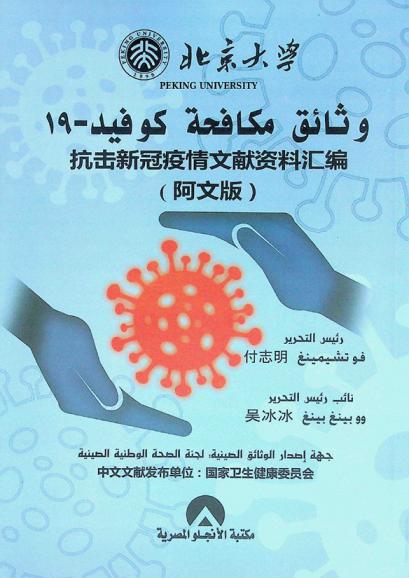
وثائق مكافحة كوفيد-19
بين يدي القارئ كتاب يجمع بين دفتيه الترجمة العربية لوثائق مكافحة كوفيد 19- التي أصدرتها لجنة الصحة الوطنية الصينية، ومـن بـين هذه الوثائق النسخ الست مـن آليات الوقاية مـن الالتهاب الرئوي الناجم عـن فيروس كـورونا المستجد ومكافحته، والنسخة التجريبية السابعة لآليات تـشخيص الالتـِهاب الـرئوي الناجِم عـن فـيروس كـورونا المستجد وعلاجه وغـيرها مـن الـمرفقات. وعـمل على ترجمة النـسخة الـعربية لوثائق مكافحة كـوفيد 19- الصينية فريـق ترجمة به أكـثر من عشريـن أستاذا وطالبا مـن قسم اللغة العربية بكلية اللغات الأجنبية بجامعة بكين بـالتعاون مع كلية الآداب في جامعة القاهرة والمعهد العالي للغات بتونس في جامعة قرطاج، في الفترة مـن مارس وحتى مايو 2020، قام خلالها فـريق الترجمة بترجمة قرابة 100 ألـف رمز صيني.
BOOK
Low chorionic villous succinate accumulation associates with recurrent spontaneous abortion risk
Dysregulated extravillous trophoblast invasion and proliferation are known to increase the risk of recurrent spontaneous abortion (RSA); however, the underlying mechanism remains unclear. Herein, in our retrospective observational case-control study we show that villous samples from RSA patients, compared to healthy controls, display reduced succinate dehydrogenase complex iron sulfur subunit (SDHB) DNA methylation, elevated SDHB expression, and reduced succinate levels, indicating that low succinate levels correlate with RSA. Moreover, we find high succinate levels in early pregnant women are correlated with successful embryo implantation. SDHB promoter methylation recruited MBD1 and excluded c-Fos, inactivating SDHB expression and causing intracellular succinate accumulation which mimicked hypoxia in extravillous trophoblasts cell lines JEG3 and HTR8 via the PHD2-VHL-HIF-1α pathway; however, low succinate levels reversed this effect and increased the risk of abortion in mouse model. This study reveals that abnormal metabolite levels inhibit extravillous trophoblast function and highlights an approach for RSA intervention.
Abnormal placentation is associated with recurrent spontaneous abortion (RSA) risk. Here the authors report that low embryonic villous succinate level associates with risk of RSA in patients, and increasing succinate levels is sufficient to reduce the incidence rate in a mouse model of spontaneous abortion.
Journal Article

Lactylated Apolipoprotein C‐II Induces Immunotherapy Resistance by Promoting Extracellular Lipolysis
Mortality rates due to lung cancer are high worldwide. Although PD‐1 and PD‐L1 immune checkpoint inhibitors boost the survival of patients with non‐small‐cell lung cancer (NSCLC), resistance often arises. The Warburg Effect, which causes lactate build‐up and potential lysine‐lactylation (Kla), links immune dysfunction to tumor metabolism. The role of non‐histone Kla in tumor immune microenvironment and immunotherapy remains to be clarified. Here, global lactylome profiling and metabolomic analyses of samples from patients with NSCLC is conducted. By combining multi‐omics analysis with in vitro and in vivo validation, that intracellular lactate promotes extracellular lipolysis through lactyl‐APOC2 is revealed. Mechanistically, lactate enhances APOC2 lactylation at K70, stabilizing it and resulting in FFA release, regulatory T cell accumulation, immunotherapy resistance, and metastasis. Moreover, the anti‐APOC2K70‐lac antibody that sensitized anti‐PD‐1 therapy in vivo is developed. This findings highlight the potential of anti lactyl‐APOC2‐K70 approach as a new combination therapy for sensitizing immunotherapeutic responses. Although PD‐1/PD‐L1 immune‐checkpoint inhibitors boost the survival of patients with NSCLC, resistance often arises. Combining global lactylome profiling, metabolomics and mechanistic‐experiments, it is found that intracellular lactate promotes extracellular lipolysis through lactyl‐APOC2‐K70, inducing Tregs accumulation and immunotherapy resistance. An anti‐APOC2K70‐lac antibody that sensitized anti‐PD‐1 therapy in vivo is developed. This findings suggest that targeting lactylated APOC2‐K70 could improve the effectiveness of immunotherapy.
Journal Article

Tryptophan potentiates CD8+ T cells against cancer cells by TRIP12 tryptophanylation and surface PD-1 downregulation
BackgroundTryptophan catabolites suppress immunity. Therefore, blocking tryptophan catabolism with indoleamine 2,3-dioxygenase (IDO) inhibitors is pursued as an anticancer strategy.MethodsThe intracellular level of tryptophan and kynurenine was detected by mass spectrum analysis. The effect of tryptophan and IDO inhibitors on cell surface programmed cell death protein 1 (PD-1) level were measured by flow cytometry. A set of biochemical analyses were used to figure out the underlying mechanism. In vitro co-culture system, syngeneic mouse models, immunofluorescent staining, and flow cytometry analysis were employed to investigate the role of tryptophan and IDO inhibitor in regulating the cytotoxicity of CD8+ T cells.ResultsHere, we reported that IDO inhibitors activated CD8+ T cells also by accumulating tryptophan that downregulated PD-1. Tryptophan and IDO inhibitors administration, both increased intracellular tryptophan, and tryptophanyl-tRNA synthetase (WARS) overexpression decreased Jurkat and mice CD8+ T cell surface PD-1. Mechanistically, WARS tryptophanylated lysine 1136 of and activated E3 ligase TRIP12 to degrade NFATc1, a PD-1 transcription activator. SIRT1 de-tryptophanylated TRIP12 and reversed the effects of tryptophan and WARS on PD-1. Tryptophan or IDO inhibitors potentiated CD8+ T cells to induce apoptosis of co-cultured cancer cells, increased cancer-infiltrating CD8+ T cells and slowed down tumor growth of lung cancer in mice.ConclusionsOur results revealed the immune-activating efficacy of tryptophan, and suggested tryptophan supplemental may benefit IDO inhibitors and PD-1 blockade during anticancer treatments.
Journal Article
A proteogenomic analysis of clear cell renal cell carcinoma in a Chinese population
Clear cell renal cell carcinoma (ccRCC) is a common and aggressive subtype of renal cancer. Here we conduct a comprehensive proteogenomic analysis of 232 tumor and adjacent non-tumor tissue pairs from Chinese ccRCC patients. By comparing with tumor adjacent tissues, we find that ccRCC shows extensive metabolic dysregulation and an enhanced immune response. Molecular subtyping classifies ccRCC tumors into three subtypes (GP1–3), among which the most aggressive GP1 exhibits the strongest immune phenotype, increased metastasis, and metabolic imbalance, linking the multi-omics-derived phenotypes to clinical outcomes of ccRCC. Nicotinamide N-methyltransferase (NNMT), a one-carbon metabolic enzyme, is identified as a potential marker of ccRCC and a drug target for GP1. We demonstrate that NNMT induces DNA-dependent protein kinase catalytic subunit (DNA-PKcs) homocysteinylation, increases DNA repair, and promotes ccRCC tumor growth. This study provides insights into the biological underpinnings and prognosis assessment of ccRCC, revealing targetable metabolic vulnerabilities.
Clear cell renal cell carcinoma is an aggressive form of renal cancer, with differences in genomic mutations reported between Western and Eastern populations. In this study, the authors have compiled proteogenomic analysis of Chinese ccRCC to reveal genomic alterations and dysregulation of immune and metabolic responses.
Journal Article

Ketogenic diets inhibit mitochondrial biogenesis and induce cardiac fibrosis
In addition to their use in relieving the symptoms of various diseases, ketogenic diets (KDs) have also been adopted by healthy individuals to prevent being overweight. Herein, we reported that prolonged KD exposure induced cardiac fibrosis. In rats, KD or frequent deep fasting decreased mitochondrial biogenesis, reduced cell respiration, and increased cardiomyocyte apoptosis and cardiac fibrosis. Mechanistically, increased levels of the ketone body β-hydroxybutyrate (β-OHB), an HDAC2 inhibitor, promoted histone acetylation of the
Sirt7
promoter and activated
Sirt7
transcription. This in turn inhibited the transcription of mitochondrial ribosome-encoding genes and mitochondrial biogenesis, leading to cardiomyocyte apoptosis and cardiac fibrosis. Exogenous β-OHB administration mimicked the effects of a KD in rats. Notably, increased β-OHB levels and SIRT7 expression, decreased mitochondrial biogenesis, and increased cardiac fibrosis were detected in human atrial fibrillation heart tissues. Our results highlighted the unknown detrimental effects of KDs and provided insights into strategies for preventing cardiac fibrosis in patients for whom KDs are medically necessary.
Journal Article
Phenylalanine impairs insulin signaling and inhibits glucose uptake through modification of IRβ
Whether amino acids act on cellular insulin signaling remains unclear, given that increased circulating amino acid levels are associated with the onset of type 2 diabetes (T2D). Here, we report that phenylalanine modifies insulin receptor beta (IRβ) and inactivates insulin signaling and glucose uptake. Mice fed phenylalanine-rich chow or phenylalanine-producing aspartame or overexpressing human phenylalanyl-tRNA synthetase (hFARS) develop insulin resistance and T2D symptoms. Mechanistically, FARS phenylalanylate lysine 1057/1079 of IRβ (F-K1057/1079), inactivating IRβ and preventing insulin from promoting glucose uptake by cells. SIRT1 reverse F-K1057/1079 and counteract the insulin-inactivating effects of hFARS and phenylalanine. F-K1057/1079 and SIRT1 levels in white blood cells from T2D patients are positively and negatively correlated with T2D onset, respectively. Blocking F-K1057/1079 with phenylalaninol sensitizes insulin signaling and relieves T2D symptoms in
hFARS
-transgenic and db/db mice. These findings shed light on the activation of insulin signaling and T2D progression through inhibition of phenylalanylation.
Whether amino acids act on cellular insulin signaling remains unclear. Here, the authors find that phenylalanine modifies insulin receptor beta (IRβ) and inactivates insulin signaling and glucose uptake and positively correlated with T2D onset.
Journal Article

The financial risk of real estate combined factor analysis with grey prediction in Liaoning Province
The importance of real estate development has been widely accepted by all countries. Through early warning and avoidance of real estate financial risks, it can effectively promote the healthy and healthy development of the real estate industry, avoiding the impact of accidental factors, such as the COVID-19 pandemic, and promoting the overall economic development. Based on multiple regression analysis and grey prediction methods, this article constructs a real estate financial risk estimation model, and the real estate financial risk is estimated using the relevant data of Liaoning Province from 2001 to 2020. Analyzing the research results of financial risks in Liaoning Province, we can find that the real estate financial risks reached the peak in 2013, and then the real estate financial risks gradually showed a slow decline trend. In general, the financial risks in Liaoning Province are controllable. The study of financial risks in Liaoning Province will help to judge the development of the real estate industry and promote the continuous improvement of the overall economy. The article, through the study of real estate financial risks in Liaoning Province, can promote the development of regional real estate in Liaoning Province and promote the overall economic development of Liaoning Province, which has strong practical significance. The study of real estate financial risks, relevant risk research theories can be enriched, the identification of financial risks can be improved, and the study of real estate financial risks can be strengthened. The article uses a combination of multivariate statistics and grey fuzzy theory to complete the study of real estate financial risks. Therefore, through the exploration of multivariate statistics and grey fuzzy theory, its application value can be elevated.
Journal Article