
Catalogue Search | MBRL


Are you sure you want to remove the book from the shelf?

{{itemTitle}}
412
result(s) for
"إدارة الفنادق"
Sort by:
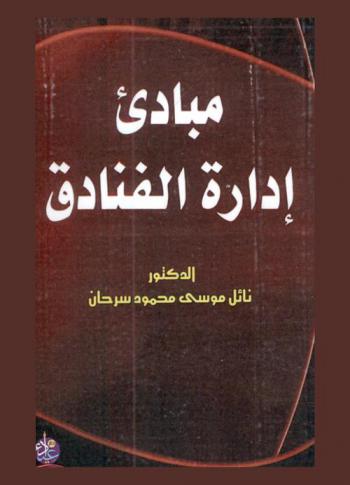
مبادئ إدارة الفنادق
هذا الكتاب يعرض لمفهوم وتطور صناعة الفنادق وأنها أصبحت من الصناعات المهمة والبارزة في أي بلد كان، وان كل دول العالم أدركت مدى أهمية هذه الصناعة، وما لها من دور فعال في تنمية السياحة، مما جعل دول العالم تهتم بهذه الصناعة وتحاول أن تطورها باستمرار. ومع تزايد حركة التنقل بين الأفراد وبشكل مطرد يوازيه زيادة في انتشار وتوسع وتطور وسائل النقل الحديثة مما ساعد كثيراً على انتشار صناعة الفنادق في مختلف بقاع العالم تلبية لحاجات المسافرين وتوفر لهم أفضل الخدمات الممكنة. كما أن هذه الصناعة جزء لا يتجزأ من صناعة السياحة، التي لا يمكن أن تنجح في أي بلد كان دون توفر أو وجود الفنادق فيها، وهذا يوضح مدى الترابط والتكامل بين هاتين الصناعتين، لتقديم أفضل مستوى من الخدمات ولتوفير الراحة إلى المسافرين.
BOOK

The Impact of Covid-19 on the Events Management Industry
Corona virus disease 2019, noted as COVID-19, is a severe virus that started in China, which affects mainly the respiratory system. Its danger relies in its high transmission tendency, which led to lockdowns of countries, stopping international airports, and cancellation of events, activities or any meetings including groupings of people, in order to maintain social distancing. In return, several industries in the world encountered a severe decline. The following research aims to evaluate the impact of COVID-19 on the event management industry, based on the most important part of it, which are the tourism and hotel industries, taking into consideration the case study of St. Regis Hotel, Doha. To reach the aim of the research, previous studies were gathered as secondary data. The research followed a qualitative approach, conducting an interview with four key managers from St. Regis Hotel, Doha. Findings revealed the consequences of COVID-19 on the tourism industry, the main plans followed by hotel to fight this pandemic and the main course of actions to be applied for the recovery strategy. Moreover, the importance of this research relies within the key lessons learned from this pandemic, and the changes it will bring to businesses in its future working conduct, mainly prioritizing the health of stakeholders and planning additional activities and events.
Journal Article
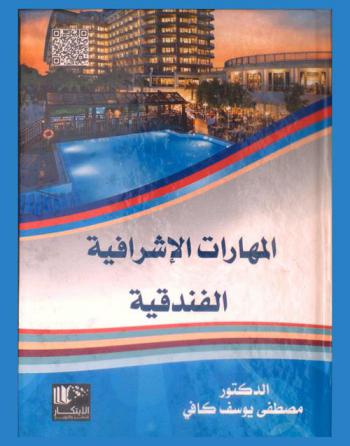
المهارات الإشرافية الفندقية
يتحدث الكتاب عن المهارات الإشرافية الفندقية للدكتور مصطفى يوسف كافي حيث إن إدارة الفنادق في خططها وهيكلتها وتنظيمها وأدواتها من العلوم الإنسانية الحديثة وهذا ناهيك على أن الفنادق تقدم خدمة محسوسة في أغلب ما تقدمه وهذا يتيح الفرصة للضيف بتقييم خدمات الفندق وبالتالي يحتاج الفندق إلى التوسع في عملية الإشراف لكي يقدم خدمة مميزة وترضي رغبات ضيوفه.
Book

Artificial Intelligence in Hotel Management Experiences of Switzerland and China
Artificial Intelligence nowadays prevails in many fields; medicine, education, military, and banking. The current paper aims at shedding light on the role of artificial intelligence in hotels management by using smart applications and robots to improve guests' service, maintaining their loyalty, along with marketing the hotel service and enhancing safety, and eventually increasing incomes. It is noteworthy that this paper included experiences of China and Switzerland using robots and Chatbots hotels, and found that the new experience as much as it has positive sides, it also had negative reviews as any new experience takes time and effort to be improved.
Journal Article

The Effect of Organizational Justice on Job Satisfaction: Applied Study on Jordanian Five Stars Hotels
The purpose of this study is to examine the impact of organizational justice on job satisfaction. The data was collected from (14) five stars hotels located in Amman city by using a questionnaire. The sampling unit and analysis consisted of (348) employees working at the target hotels. Multiple linear regression and Pearson's correlation coefficients were computed to examine the study hypotheses. The study found a positive and statistically significant relationships between distributive, procedural, and interactional justice, and job satisfaction. Additionally, The study found that organizational justice positively and significantly affects job satisfaction. Based on these findings, the study recommends that managers should strive to enhance the levels of organizational justice in their hotels to foster job satisfaction to promote and increase customer satisfaction and service quality, in addition, managers and supervisors should concern about the interpersonal treatment of employees in their hotels in order to promote interactional justice. Moreover, hotels should develop their human resource policies to provide just distribution of rewards and resources among employees. Finally, managers can use the diagnostic instrument that used in current study to benchmark their hotels and determine their level of organizational justice, identify the managerial practices that need to be implemented or improved, and determine the level of effort and resources that might realistically be required to build a stronger organizational justice.
Journal Article

إدارة الإيواء
تناول الكتاب توضيح مفهوم إدارة الإيواء وتعريف التدبير الفندقي وأهميته في الإدارة الفندقية، وهيكله التنظيمي وعلاقته بالدوائر الفندقية الأخرى، كما حاولنا بيان مهام أقسام إدارة الإيواء ودور العاملين فيها، وقد اشتمل الكتاب على سبعة وحدات أساسية : فقد تناولت الوحدة الأولى تعريفا للتدبير الفندقي ووظائفه وأهميته وهيكله التنظيمي، ووظائف هذه الدائرة وخصائصها ومهام المدير والمشرفين ورؤساء الأقسام والعاملين فيها. وتناولت الوحدة الثانية أهمية التنظيف في العمل الفندقي وطرق التنظيف وترتيب الغرف والأثاث والمرافق. وفي الوحدة الثالثة عرضنا موضوع البياضات وأنواعها وتكلفتها وكمياتها وكيفية اختيارها وفرزها وتصنيفها وكيفية جردها. وفي الوحدة الرابعة تناولها المصبغة وتنظيمها ومهماتها ومواصفاتها والمواد المستخدمة فيها وهيكلها التنظيمي. أما الوحدة الخامسة فقد تناولت التصميم الداخلي لغرف الفندق ووضحنا فيها مبادئ التصميم وعناصره ومواده والأرضيات والجدران والتأثيث والتدفئة والتبريد والديكور والزينة. وضمنا الوحدة السادسة التشريعات العمالية الأردنية، وتناولت الوحدة السابعة الأمن والسلامة الفندقية والإسعافات الأولية والإجراءات الواجب اتخاذها عند وقوع الحوادث.
Book
Artificial Intelligence Technology and Service Quality in International Hotels Operating in Beirut-Lebanon
Integrating artificial intelligence (AI) tools in the hospitality sector has become increasingly significant, influencing various hotel operations and service quality aspects. This paper measures the influence of artificial intelligence AI technology on service quality. Its goal is to arrange AI technology in hotel operations following their significance level on the service quality of international hotels in Beirut-Lebanon. Because of the international reputation for hosting five-star hotels, the Beirut area was selected. The questionnaire was used as a quantitative tool. We distribute the questionnaire to hotel guests on-premises using convenience sampling. Four hotels were used to collect and sample, and 492 valid questionnaires were constituted. Results proved that the Central Reservation System, chatbots, AI-powered recommendation systems, and smart room technology technologies significantly improve service quality in Lebanese hotels. The one-way ANOVA analysis confirms that interactivity and customization are key factors in AI adoption, though guests did not perceive ease of use positively. Therefore, hotels should simplify their AI applications to enhance user experience and improve service quality, as the current systems are not intuitively user-friendly.
Journal Article

إجراءات وإدارة الدوائر الأمامية والاستقبال
أعد هذا الكتاب ليلبي متطلبات دراسة مادة إجراءات وإدارة الكوادر الأمامية والاستقبال والمكون من تسع فصول لتساعد الطالب في تنمية مهاراته وقدراته من خلال تعريفه على نشأة الصناعة الفندقية وتطورها، الإدارة الفندقية، والدوائر الأمامية، وعمل التقارير الإحصائية في الفنادق، وغيرها من المعلمات العامة في الصناعة الفندقية بالإضافة إلى نماذج وبطاقات واستبيانات خاصة في الفنادق تبين طرق الحجز والإلغاء ونماذج القدوم والمغادرة بالإضافة إلى المصطلحات والرموز المستخدمة في المكاتب الأمامية، أملا أن يلقي الجميع في قطاع الصناعة الفندقية ما يناسبهم بين طيات هذا الكتاب.
Book
Artificial Intelligence Adoption Factors and Service Quality in International Hotels Operating in Beirut-Lebanon
This paper appraises the influence of artificial intelligence AI adoption factors on service quality. Its objective is to classify AI adoption factors following their significance level on the service quality of international hotels in Beirut-Lebanon. The Beirut area was selected due to its international reputation for hosting five-star hotels. The questionnaire was used as a quantitative tool. This tool was distributed to hotel guests on-premises using convenience sampling. 492 valid questionnaires constituted the sample collected from 4 hotels. Results confirmed that perceived trust and usefulness formed a fit model and constituted two critical adoption factors of AI in the hospitality industry. These two dimensions have the highest influence on service quality. The one-way ANOVA has verified the direct influence of interactivity and customization as AI adoption factors except for the ease of use. Hence, hotels should simplify the AI applications to leverage service quality since guests did not perceive any ease of use in hotels' artificial intelligence applications.
Journal Article