
Catalogue Search | MBRL


Are you sure you want to remove the book from the shelf?

{{itemTitle}}
33
result(s) for
"الأحماض العضوية"
Sort by:
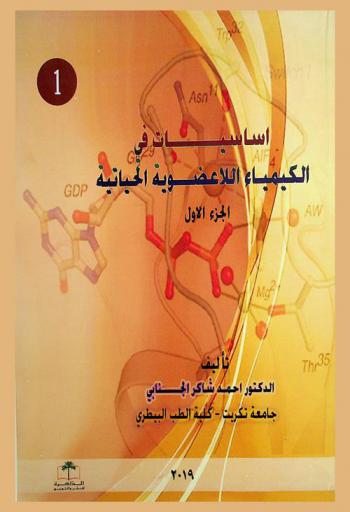
أساسيات في الكيمياء اللاعضوية الحياتية = Principles in Bioinorganic Chemistry
ركز الكتاب بجزئه الأول على التعريف بالعناصر الفلزية ودورها في أجسامنا وكمية ما نحتاج إليه وكيف يرتبط هذه الفلز داخل جسمنا ودراسة الظواهر الطبيعية كسلوك البروتينات الحاوية على الأيونات الفلزية وأهمية هذه الأيونات والدور الحيوي لها والآلية التي تتناسق أو تترابط بها مع الليكاندات الحيوية في خلايا جسمنا وتواجد هذه الفلزات في العديد من العمليات الحيوية كالتنفس في جسم الكائن الحي والنقل الإلكتروني والإيعازات العصبية وغيرها.
BOOK

Comparative evaluation of efficacy and safety profile of rhubarb and α-keto analogs of essential amino acids supplementation in patients with diabetic nephropathy
To determine the efficacy and safety profile of rhubarb and α-keto analogs of
essential amino acids supplementation in patients of diabetic nephropathy (DN), we studied 96
patients of DN attending a tertiary care center of the North India. The patients were randomly
divided into three equal interventional groups. Group I (control) that received conservative
management along with placebo, Group II (rhubarb) that received conservative management
along with rhubarb capsule (350 mg, thrice daily), and Group III [keto amino acid (KAA)] that
received conservative management along with α-keto analogs of essential amino acids (600 mg,
thrice daily). The treatment was continued for 12 weeks. Clinical and biochemical parameters
were assessed at 0, 4, 8, and 12 weeks of treatment. A progressive improvement in clinical features
and biochemical parameters was seen in all three groups after 12 weeks of treatment. The
KAA group showed more marked improvement in clinical features as well as biochemical parameters
compared to the rhubarb group. There was a reduction in blood glucose, blood urea, serum
creatinine, and 24 h total urine protein. There was an increase in hemoglobin, 24 h total urine
volume, and glomerular filtration rate. There was no statistical difference between the rhubarb
and KAA groups with respect to side effects (P > 0.05). Our study suggests that KAA is more
effective than rhubarb as add-on therapy with conservative management in patients of DN.
Journal Article

Influence of additives (inorganic/organic) on the clouding behavior of amphiphilic drug solutions: Some thermodynamic studies
Herein we provide a detailed result about the effect of various additives, viz. inorganic salts, quaternary ammonium bromides (QABs) and amino acids on clouding behavior of amphiphilic drug amitriptyline hydrochloride (AMT). The continuous increase in the cloud point (CP) of drug by increase in inorganic salt concentration and the magnitude of increases rely upon the position of the salts in Hofmeister series and hydrated radii. The QABs also influence continuous increase in the CP, which is illustrated in terms of the alkyl chain length of peculiar QAB. The effect of amino acids on CP of the drug solution is dependent upon the characteristics (acidic, basic, polar or nonpolar) of particular amino acids. The overall behavior of additives has been analyzed and discussed on the basis of electrostatic repulsion or interaction, micellar growth, and mixed micelle formation between the ingredients. In addition to this, thermodynamic parameters are also evaluated.
Journal Article
Stability constants of mixed ligand complexes of lead(II) with 1-(aminomethyl) cyclohexane acetic acid and α-amino acids
Formation of binary and ternary complexes of lead(II) ions with 1-(aminomethyl) cyclohexane acetic acid and some biologically important α-amino acids, such as glycine, l-alanine, l-valine, l-leucine, l-isoleucine, l-phenylalanine and l-proline was investigated using the potentiometric technique at 32 °C. The properties of mixed ligands were investigated and discussed. The acidity constants of the ligands and their stability constants were determined in 50% (v/v) DMSO-water medium under experimental conditions. The ternary complex formation was found to occur in a stepwise manner. The stability of ternary complexes was investigated and compared with that of the corresponding binary complex in terms of the parameters, Δ log K and log X. The concentration distribution of various species formed in the mixed ligand systems was evaluated.
Journal Article

Kinetics of reduction leaching of manganese dioxide ore with Phytolacca americana in sulfuric acid solution
The leaching kinetics of reductive leaching of manganese from manganese dioxide ores (MDO) in dilute sulfuric acid in the presence of Phytolacca americana powder (PAP) was investigated. The effects of stirring speed, leaching temperature and leaching time, particle size, weight ratio of PAP to MDO (CW) and sulfuric acid concentration (CH) on the leaching efficiency of manganese were studied. The leaching efficiency of manganese based on the shrinking core model was found to be controlled by diffusion through the ash/inert layer composed of the associated minerals. The apparent activation energy is 15.18 kJ mol−1. The experimental results indicate reaction order of 0.797 for CH and 1.25 for CW. The overall leaching efficiency equations for MDO dissolution reaction with PAP in dilute sulfuric acid were proposed by a semi-empirical model.
Journal Article

L-2-Hydroxyglutaric Aciduria in Two Palestinian Siblings with a Novel Mutation in the L2HGDH Gene
L-2-Hydroxyglutaric aciduria is a rare autosomal recessive neurometabolic disorder caused by deficiency of L-2-hydroxyglutarate dehydrogenase. This enzyme catalyses the conversion of L-2-hydroxyglutarate to alpha-ketoglutarate and its deficiency causes accumulation of L-2-hydroxyglutarate which is s toxic to the brain leading to the leukoencephalopathy. The researchers reported a novel mutation in the L2HGDH gene in two siblings with L-2-Hydroxyglutaric aciduria and described clinical phenotype. The symptoms were presented with developmental delay, cerebellar ataxia, tremor and speech regression. Urine organic acid analysis revealed massive excretion of 2-Hydroxyglutaric acid. Brain magnetic resonance imaging showed the characteristic leukodystrophy involving the subcortical cerebral white matter and dentate nucleus, sparing the basal ganglia. Genetic analysis of L2HGDH gene showed that they were homozygous for the novel mutation chr14:50,750, 731 c.560_561insATTG (p.C187XfsX1) in exon 5 of L2HGDH gene. Both patients showed symptomatic response to riboflavin and levocarnitine therapy. Conclusion: This report further expanded the genetic spectrum of L- 2-HGA and suggested a successful response to treatment with levocarnitine and riboflavin
Journal Article

Inborn errors of metabolism revealed by organic acid profile analysis in high risk Egyptian patients : six years experience
Objective: To determine the prevalence and types of inborn errors of amino
acid or organic acid metabolism in a group of high risk Egyptian children with
clinical signs and symptoms suggestive of inherited metabolic diseases.
Subjects and Methods: 117 (79 males ? 67.5 % and 38 females ? 32.5 %)
high risk patients with signs and symptoms of a metabolic disorder were studied,
their ages ranged from 3 days to 12 years.
Analysis of urine organic acids by gas chromatography/mass spectrometry
(GC/MS) was performed to all patients.
Results: 22(18.8 % of the total) cases were diagnosed with different types of
aminoacidopathies or organic acidurias. The disease profile showed increased
lactate in 12 cases (54 %), glutaric aciduria type I 3cases (13 %), phenylketonuria
2 cases (9 %), maple syrup urine disease 1 case (4.5 %), glutaric aciduria
type II 1 case (4.5 %), methylmalonic aciduria 1 case (4.5 %), Canavan disease
1 case (4.5 %) and non ketotic hyperglycemia 1 case (4.5 %).
Conclusion: The results demonstrate the importance of the organic acid profile
in the diagnosis of high risk patients. The diagnosed organic acid pattern in this
study showed that 10.2 % of the patients had a mitochondrial energy defect.
Journal Article