
Catalogue Search | MBRL


Are you sure you want to remove the book from the shelf?

{{itemTitle}}
473
result(s) for
"السمنة"
Sort by:
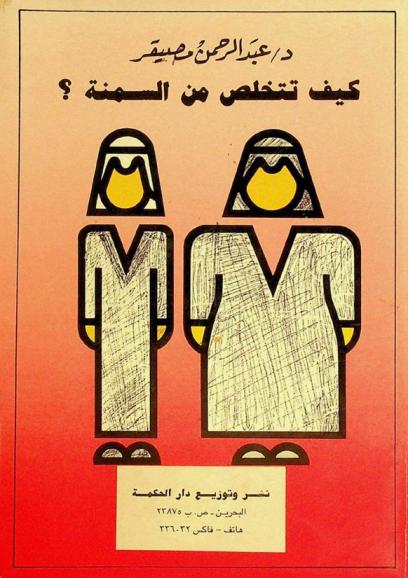
كيف تتخلص من السمنة ؟
يتناول تعريف السمنة وقياسها وأسبابها والمناظر التي تواجه المصابين بالسمنة وكيفية التخلص منها بالطرق الصحيحة ومقدار الطاقة التي بحتاجها الشخص يوميا ومقدار الطاقة اللازمة لحرق كميات معينة من الطعام كما يقدم مجموعة من الأسئلة المحيرة عن السمنة والإجابة عليها وكيفيه معرفة وضع برنامج خاص لتخفيف الوزن سعيا للوصول للوزن المثالي، ويتناول الكتاب ماهي السمنة، أنواع السمنة، ماهي أسباب السمنة، هل هناك خطر من السمنة وغيرها من المشكلات الخاصة بالسمنة.
Book

The Effect of Nutrition Education Program on the Nutrition Status of Bariatric Surgery Patients
The effects of a nutrition education program for bariatric surgery patients on the nutritional status of patients with ages from 20 to 50 years, with a BMI of 40 or 35 kg/m2. In a study number of 90 patients , 60 patients received a nutritional education program for at least six months. Dietary habits and nutritional knowledge were assessed using designed questionnaires by a Registered Dietitian (RD). Our results revealed that before surgery, there were significant exchanges of patient's weight, total dietary intake and nutritional knowledge. After 6 months obvious changes regarding, nutritional knowledge and dietary habits were significantly changed in the study group.
Journal Article
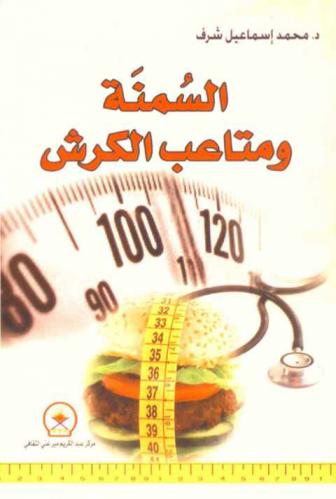

The Effect of a Proposed Training Program on Reducing Excess Weight in Obese Inidividuals \Aged 40-45\ Praticing at Hazna Gym Fitness Center in Msila
This study examines the effect of a proposed training program on reducing excess weight in obese individuals aged 40-45 years at \"Hadna Gym\" in M'sila. The sample consisted of 20 participants with excess weight, selected purposively. An experimental design with pre- and post-assessments was used. The program included 24 sessions, three times a week over two months. The results showed that the program effectively reduced excess weight, with statistically significant improvements in body mass index and body fat percentage between pre- and post-assessments.
Journal Article
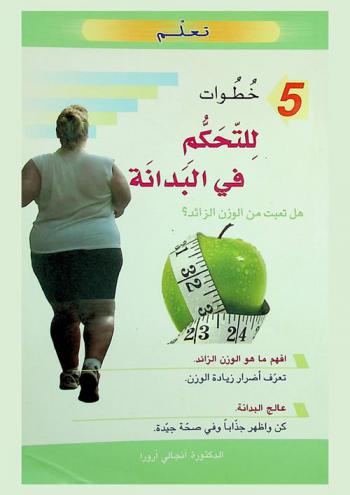

The Effects of Chia and Quinoa Seed Mixes on the Nutritional, Biochemical and Histological Parameters on Obese Rats
In the past few years, obesity and its complications have become more common. As a result, consumers are seeking to incorporate more functional foods into their diets. Chia) Salvia hispanica and quinoa (Chenopodium quinoa Willd) are essential traditional crops with excellent nutritional properties. Therefore, the present study investigated the potential effect of chia and quinoa seeds mixes (CQSm) in an animal model to alleviate symptoms of obesity and other related complications. Thirty male albino rats weighing (130 ± 10 g) were used in this study. The rats were divided into two main groups: the first main group (6 rats) fed on a basal diet (as a control negative group). The second main group (24 rats) was fed on a high-fat diet (HFD) for eight weeks to induce obesity. This group was divided into four subgroups as follows: subgroup (1) fed on (HFD) as a positive control group; subgroup (2) fed on (HFD) diet containing 5% CQSm; subgroup (3): fed on (HFD) diet containing 10% CQSm; subgroup (4(: fed on (HFD( diet containing 20% CQSm. Sensory evaluation for tortilla bread fortified with CQSm was also done. Results indicated that feeding obese rats with diets containing different levels of the mixture of both seeds induced a significant decrease in feed intake, body weight gain%, and peritoneal fat thickness. On the other hand, biochemical analysis showed a significant improvement in values of serum lipid profile, liver enzyme activity, kidney functions, blood glucose, leptin hormone, and antioxidant enzyme activities. In addition, histological examination of the liver and kidneys of rats in groups treated with different levels of the mixture of both seeds showed a noticeable improvement in the tissue structure of these organs. Healthy tortilla bread was produced with proportions of 5, 10, and 20% of CQSm. Sensory evaluation indicated that all tortilla bread samples had an acceptance greater than 75%. In conclusion, the current study indicates that the mixture of chia and quinoa seeds has improved biomarkers, and can be used as a functional food in the diets of obese rats. Based on these results, it is suggested that incorporating foods rich in soluble and insoluble fiber, such as chia and quinoa seeds, into our consumption habits through healthy and safe products may have a protective role against obesity and its associated complications and potentially prevent its progression.
Journal Article
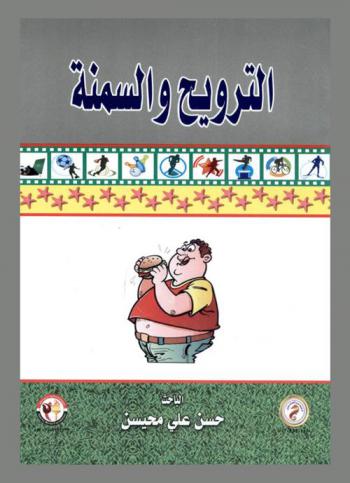

The Prevalence of Obesity in Kuwait: A Case Study Among Kuwait University Students Using GIS
This study seals to understand the spatial relation¬ship between the geography and its effect on obesity prevalence among Kuwait University students. The sample involved 735 participants, 231 male and 504 females, most of whom were overweight and obese. The percentage of overweight was 21% (BMI> 25-30), while the percentage of obesity was 13.7% (BMI > 30). The percentage of both overweight and obese people reached 34.7%. In the study area, there were 327 fast food restaurants located in different places of the urban area. This study used the Geographic Information System to analyze the distribution of obesity and fast food restaurants. The study found that within half a kilometer of fast food outlets, there were 33% of people with normal weight (BMI < 25), 30% of overweight people, while the percentage of people who were considered obese reached 43%, which is a clear indication that obesity is linked with the procimity of the location of fast food restaurants. One of the significant tools used in this study was hot and cold spots. The study found that areas of hot spots of fast food restaurants tended to be located in areas of hot spots of obese people, In conclusion, studying the prevalence of obesity from a geographical perspective helps understand this public health issue and the impact of geography on it.
Journal Article
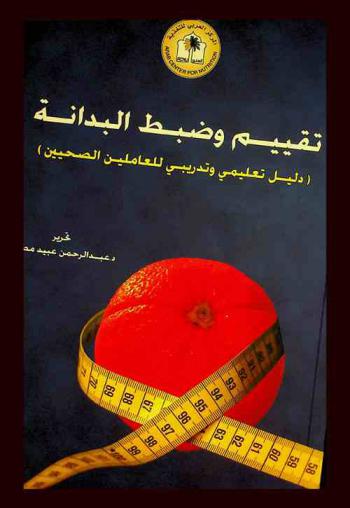
تقييم وضبط البدانة : (دليل تعليمي وتدريبي للعاملين الصحيين)
يتناول كتاب (تقييم وضبط البدانة : (دليل تعليمي وتدريبي للعاملين الصحيين)) في حوالي (154) صفحة من القطع المتوسط موضوع (السمنة) مستعرضا المحتويات التالية : الجزء الأول بعنوان الوزن الزائد والبدانة، الجزء الثاني بعنوان تقييم الوزن الزائد والبدانة لدى المرضى، الجزء الثالث بعنوان تقييم الاستعداد واتخاذ قرارات المعالجة، الجزء الرابع بعنوان الغذائي، الجزء الخامس بعنوان ضبط النشاط البدني، الجزء السادس بعنوان استخدام الدواء في ضبط الوزن.
Book

Examining the Impact of Educational Attainment and Gender on Obesity in Saudi Society
This study examines the relationship between educational attainment and obesity across genders in Saudi Arabia, drawing on Bourdieu's cultural capital theory as a theoretical framework. Given the limited Saudi research in this field, this study is significant because it is the first to apply Bourdieu's sociological perspective to analyze the impact of educational attainment on obesity within Saudi culture, focusing on potential gender differences. The study uses secondary data from the National Health Survey 2023, and logistic regression analyses were conducted to test its hypotheses. The results indicate that the relationship between educational attainment and obesity is moderated by gender. Females without a high school diploma have a higher likelihood of obesity than their male counterparts. For those with a high school diploma or some college education, obesity rates were similar for both genders. Moreover, the results suggest that higher educational attainment reduces the risk of obesity, particularly among females. These findings underscore the importance of educational attainment in addressing obesity, with a pronounced protective effect observed in women. This emphasizes the need for targeted health promotion strategies that consider the unique influences of education on health behaviors, particularly concerning gender differences.
Journal Article