
Catalogue Search | MBRL


Are you sure you want to remove the book from the shelf?

{{itemTitle}}
107
result(s) for
"الطوارئ الطبية"
Sort by:


The Effectiveness of Prehospital Pain Management Protocols Delivered by EMS Providers
Background: Pain is one of the most common complaints among patients treated by Emergency Medical Services (EMS). Despite its high prevalence, prehospital pain often remains under-assessed and undertreated due to clinical, organizational, and operational challenges. In recent years, structured prehospital pain management protocols have been implemented across various EMS systems to enhance analgesia delivery, safety, and quality of care. Objective: This systematic review synthesizes evidence on the effectiveness of protocol-based prehospital pain management delivered by EMS providers, focusing on pain reduction, timeliness of analgesia, protocol adherence, patient satisfaction, and safety outcomes. Methods: Following PRISMA 2020 guidelines, six electronic databases were searched for studies published between 2010 and 2024. Eligible studies included randomized trials, observational cohorts, pre-post evaluations, and pediatric analgesia studies that assessed protocol-driven pain management in prehospital settings. Data extraction and quality appraisal were performed independently by two reviewers, and findings were synthesized narratively due to heterogeneity in study designs and outcome measures. Results: Nineteen studies met the inclusion criteria. Protocol-based analgesia consistently resulted in significant reductions in pain scores (mean reduction 2.3-4.9 points), shortened time to first analgesic administration, and improved protocol adherence (increasing from 42-64% to 71-93%). Multimodal analgesia and non-IV routes-such as intranasal fentanyl and inhaled methoxyflurane-were associated with faster and effective pain relief. Adverse events were rare and mild, and patient satisfaction improved across the limited studies reporting this outcome. Pediatric protocols showed high effectiveness and excellent safety profiles. Conclusion: Structured prehospital pain management protocols substantially enhance the quality, consistency, and safety of analgesia delivered by EMS providers. Despite these improvements, variation in protocol adoption, documentation practices, and training remains a challenge. Continued development of evidence-based protocols, provider education, and implementation strategies is essential to optimize prehospital pain care across EMS systems.
Journal Article
Effectiveness of Prehospital Trauma Triage Systems in Reducing Mortality and Delays in Care
Background: Trauma is a leading global cause of death and disability, and timely prehospital care plays a decisive role in survival. Prehospital trauma triage systems are designed to rapidly identify injury severity and guide EMS providers in transporting patients to the most appropriate trauma center. Over the past decade, advancements in triage algorithms and digital decision-support tools have accelerated efforts to reduce mortality and minimize delays in care. Objective: This systematic review evaluates the effectiveness of prehospital trauma triage systems in reducing mortality, improving time-to-care intervals, and enhancing triage accuracy across diverse EMS settings. Methods: Following PRISMA 2020 guidelines, a comprehensive search of PubMed, Scopus, Web of Science, and CINAHL was conducted for studies published between 2015 and 2025. Eligible studies included observational designs, cohort studies, quasi-experimental trials, simulation-based evaluations, and system-level analyses examining prehospital trauma triage and its effects on mortality, time intervals, and accuracy. Risk of bias was assessed using Joanna Briggs Institute (JBI) appraisal tools. A narrative synthesis approach was used due to heterogeneity across study designs and outcomes. Results: A total of 27 studies met inclusion criteria. Structured triage systems, including stepwise algorithms, FTDS-based models, and digital decision-support tools, were associated with reductions in trauma-related mortality (8%-18%) and improvements in key time intervals such as scene time, transport time, and time to definitive care. Triage accuracy ranged from 62% to 89%, with AI-supported models achieving accuracy above 90%. Undertriage remained a persistent concern, particularly in rural and resource-limited regions, while overtriage continued at moderate-to-high levels in urban systems. EMS provider training, geographic setting, and system integration were key determinants of triage effectiveness. Conclusion: Prehospital trauma triage systems are effective in improving survival and reducing delays in care when implemented within coordinated trauma networks and supported by well-trained EMS providers. While modern tools-including AI and digital aids-show promising improvements in accuracy and efficiency, persistent challenges such as undertriage in rural settings and overtriage in high-volume centers highlight the need for ongoing refinement. Future research should prioritize real-world validation of emerging technologies and context-specific strategies to strengthen global trauma systems.
Journal Article

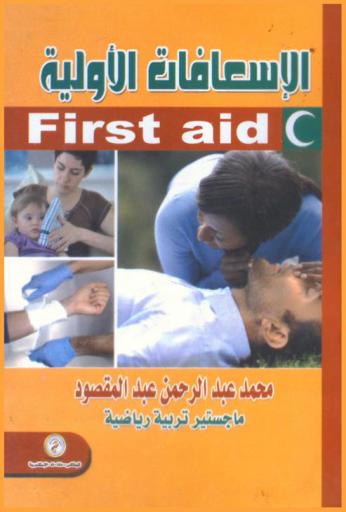
الشامل في الإسعافات الأولية = The comprehensive book on first aid
بذلت قصارى طاقتي ورغبتي أن أسهل ما استطعت من صعوبة المادة المدروسة لتكون سلاحا يفي بالغرض ويحول دون سطوة الموت الغادرة ويقطع عليها الطريق من النفوذ عبر الأبواب الثلاثة التي يسلكها الموت عادة عبر الأجهزة الحيوية الرئيسية من دوران وتنفس ودماغ. إن القيام بعمليات الإسعاف والإنعاش والإنقاذ في مجال الإسعاف السريع يتطلب شخصا هادئا وسريعا ويفضل الأهم على المهم وله خبرة في التشريح والفيزيولوجيا والمهارات الإسعافية لدعم الحياة الأساسي، إن كل حادثة إسعافية لها مقاربات وأساليب حسب الحالة من اختناق أو تسمم أو جروح أو كسور، لهذا جعلنا لكتابنا هذا أساسا تشريحيا وفيزيولوجيا، مدعوما ميثولوجيا، بالإنعاش القلبي الرئوي حسب العمر وحسب الظرف وحسب مؤهلات الإسعاف.
Book
Simulation-Based Training and its Effect on Clinical Decision-Making and Performance among Paramedics
Background: Paramedics operate in dynamic, high-stakes prehospital environments that demand rapid, accurate decisionmaking and technical proficiency. Traditional training methods may not adequately expose learners to rare, critical scenarios. Simulation-based training (SBT) provides a controlled, feedback-driven environment that enhances both cognitive and procedural skills essential to emergency medical services (EMS). Objective: This systematic review evaluated evidence published between 2020 and 2025 regarding the impact of SBT on clinical decision-making and performance among paramedics and emergency medical technicians (EMTs). Methods: The review followed the Preferred Reporting Items for Systematic Reviews and Meta-Analyses (PRISMA 2020) guidelines. Six databases-PubMed, Scopus, CINAHL, Web of Science, ScienceDirect, and Google Scholar- were searched for English-language empirical studies. Eligible studies involved licensed or student paramedics/EMTs participating in simulation-based interventions measuring decision-making, technical performance, or teamwork outcomes. Quality appraisal was conducted using the Joanna Briggs Institute (JBI) checklists. Results: Out of 642 identified records, 10 studies met the inclusion criteria. Interventions included high-fidelity manikin simulations, mixed and virtual reality (VR/MR) systems, and hybrid models. Across studies, SBT significantly improved diagnostic accuracy, reasoning quality, task efficiency, and teamwork performance. For example, simulation-based point-of-care ultrasound (POCUS) training increased diagnostic accuracy by 31% (p < 0.001). Mixed-reality environments enhanced situational awareness and communication effectiveness. Structured debriefing and repetitive exposure consistently emerged as key predictors of skill retention. Most studies demonstrated high methodological quality, though limited long-term follow-up and small sample sizes constrained generalizability. Conclusion: Simulation-based training effectively enhances clinical decision-making, procedural accuracy, and non-technical competencies among paramedics. High-fidelity and technology-enhanced simulations, coupled with deliberate practice and debriefing, offer scalable strategies for strengthening EMS education and operational readiness. Future research should focus on long-term retention, real-world transferability, and integration of artificial intelligence-assisted feedback systems to optimize training outcomes.
Journal Article

Impact of Climate-Related Disasters on Emergency Medical Services
Background: Climate change is intensifying the frequency and severity of disasters such as floods, heatwaves, hurricanes, wildfires, and dust storms. These events place unprecedented strain on Emergency Medical Services (EMS), which are critical to frontline disaster response. Understanding the challenges and adaptation strategies of EMS during climate-related disasters is essential for strengthening global health resilience. Objective: This systematic review synthesizes evidence on the impact of climate-related disasters on EMS, focusing on operational challenges, occupational risks, infrastructure limitations, and adaptation strategies implemented across diverse regions. Methods: The review followed the PRISMA 2020 guidelines. Comprehensive searches of PubMed, Scopus, Web of Science, Embase, and CINAHL were conducted for studies published between 2017 and 2024. Eligible studies examined EMS roles during climate-related disasters and reported either challenges or adaptation measures. Data extraction included study characteristics, disaster type, EMS outcomes, and adaptation strategies. Methodological quality was assessed using the Mixed Methods Appraisal Tool (MMAT 2018). Results: Of 1,246 records screened, 42 studies met the inclusion criteria, representing 23 countries. Major challenges included increased call volumes during heatwaves, logistical barriers during floods, communication failures in hurricanes, and occupational hazards such as smoke inhalation during wildfires. LMICs were particularly affected by fragile infrastructure and limited resources. Adaptation strategies identified included climate-informed early warning systems, mobile health (mHealth) applications, specialized EMS training, amphibious or all-terrain ambulances, and AI-based demand forecasting. High-income countries emphasized technological innovations, while LMICs focused on basic infrastructure adaptation. The Gulf region demonstrated hybrid strategies to address climate hazards in the context of mass gatherings. Conclusion: Climate-related disasters threaten the capacity, safety, and effectiveness of EMS worldwide. Strengthening resilience requires integrating EMS into climate adaptation frameworks, investing in workforce support, scaling innovative technologies, and addressing inequities between regions. Further research should evaluate the long-term effectiveness and scalability of adaptation strategies, particularly in LMICs.
Journal Article

Safety Challenges and Operational Response Strategies for Paramedics in High-Risk and Unsecured Incident Sites
Background: Paramedics frequently operate in high-risk and unsecured incident environments where violence, environmental hazards, insufficient dispatch information, and operational limitations pose direct threats to their safety and decision-making. In Saudi Arabia, the increasing demand for prehospital care, expanding urban developments, and diverse geographic conditions intensify these risks, making scene safety a national priority under Vision 2030 health reforms. Aim: This systematic review aims to synthesize current evidence on the safety challenges encountered by paramedics in high-risk and unsecured incident sites and to identify operational strategies that enhance provider protection and support effective prehospital response, with emphasis on the Saudi Arabian context. Methods: PRISMA 2020 guidelines were followed. Six databases (PubMed, Scopus, Web of Science, CINAHL, Google Scholar, and SDL) were searched for studies published between 2015 and 2025. Fourteen studies met inclusion criteria. Data extraction included study design, population, safety risks, and operational strategies. Quality appraisal utilized Joanna Briggs Institute (JBI) tools, and findings were synthesized narratively due to heterogeneity. Results: Four major themes emerged: (1) high exposure to violence and aggressive bystander behavior, particularly in urban and congested environments; (2) environmental hazards including traffic, unstable structures, fire, and remote desert locations; (3) insufficient scene intelligence and delayed law enforcement support, leading to unsafe entry decisions and delayed care; and (4) limited operational readiness, including gaps in tactical training, interagency coordination, PPE availability, and standardized national safety protocols. Although several strategies-such as scene staging, rapid hazard assessment, and retreat protocols-were reported, their implementation in Saudi Arabia remains inconsistent. Conclusion: Paramedics face substantial safety risks that directly affect their well-being, operational efficiency, and patient outcomes. The Saudi EMS system has made progress through Vision 2030 initiatives; however, further enhancements are needed in tactical training, communication systems, protective equipment, and integrated response frameworks. Strengthening these areas will improve paramedic safety and support a more resilient emergency medical system. Implications: The review supports the development of a national scene safety protocol, improved dispatch intelligence systems, structured tactical EMS training, and coordinated SRCA-police-civil defense response models. Further Saudibased research is recommended to strengthen local evidence and guide policy reform.
Journal Article