
Catalogue Search | MBRL


Are you sure you want to remove the book from the shelf?

{{itemTitle}}
52
result(s) for
"اللغة اليابانية نحو"
Sort by:
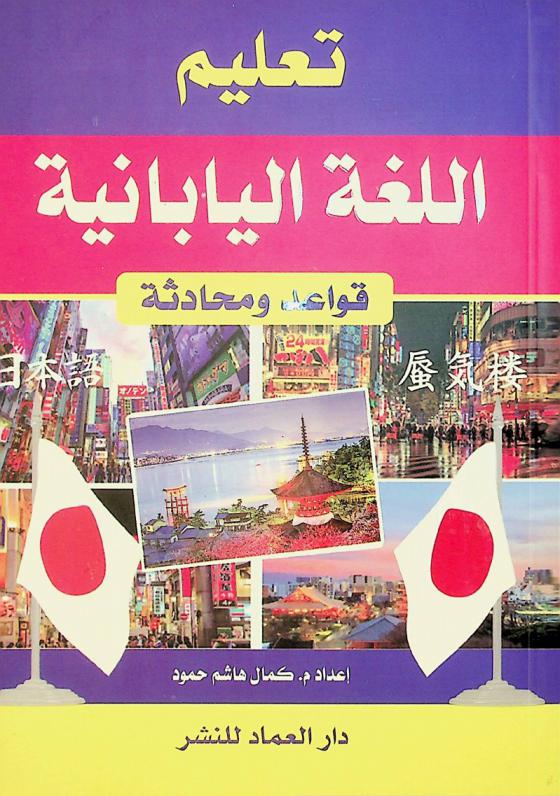
تعليم اللغة اليابانية : قواعد ومحادثة
في هذا الكتاب يتيح التعرف على اللغة اليابانية، نظرا لحاجة القارئ العربي لوجود معين له في تعلم هذه اللغة التي يتكلم بها أكثر من 130 مليون إنسان، فاللغة اليابانية لغة معقدة ليس فقط للزوار أو المقيمين أو الطلبة الوافدين، بل لليابانيين أنفسهم، فاللغة التي يتحجث فيها الموظف الياباني مع رئيسه تختلف كليا عن اللغة التي يتحدث فيها مع زوجته وأولاده، وفي هذا الكتاب يتناول دراسة اللغة اليابانية وقواعدها تحدثا وكتابة.
Book


日本近代教育における「生活綴方」による児童へのアイ デンティティ形成
In the late 1950s, Erikson proposed that the concept of identity was fundamental to psychoanalysis, explaining that it gave consistent positive meaning and value to an individual's existence, leading to a coherent and continuous sense of self. On the other hand, the American social psychologist Newcomb emphasized the social aspect of identity formation, noting that continuous interaction by others has a great meaning in identity formation. In the context of education, continuous guidance from teachers can contribute significantly to the formation of a child's self-awareness. By teaching a Japanese language course during the pre- World War II period in Japan, the time of teaching the \"Spelling of Life\" class in schools became a prominent time, encouraging children to explore their self-awareness. \"Spelling of Life\" is a class in which the teacher directs students to record life situations during their day outside of school, using all their senses to record their feelings as they are. Which led to enhancing a deep connection between children and their real-life experiences. Before the war, children lived in harsh living conditions in poor farming villages in Japan. Teachers' guidance and practices on how to observe and record daily life for use in the Spelling Life class played an important role in deepening these children's concept of identity. During the \"Spelling of Life\" class, they wrote essays based on real-life ideas from situations they had experienced and interviews they had with people in their daily lives. Which deepened the children's understanding of the problems of Japanese society and thus of their relationship and belonging to this society, with its reflection on freedom of expression in their articles that were collected and published later. This contributed to the anger of the government, which in turn led to the suppression of the \"Spelling of Life\" movement and curriculum. The post-war period witnessed a decline in the use of the Spelling of Life course as a teaching methodology. This may be due to the prioritization of subject-specific education in the new post-war democratic educational system. In addition, the post-war educational context witnessed a shift in the challenges faced by children, reducing the urgency of expression that had been the case in the pre-war period.
Journal Article

日本語教育における教師の指導方法及び学習者の反応
In this study, the author provides examples of the actual integration of Japanese-style education in higher education in Egypt (Specialized Japanese Language Translation Program at Cairo University), and the research discusses the advantages and difficulties of this experience, as well as how students develop as a result of this experience. The author obtained a doctorate degree in Japan, received Japanese-style education and realized the importance of active education, so he tried to benefit from Japanese-style education in the field of teaching Japanese to Egyptian university students. The researcher presented a practical educational model for developing important abilities through active learning that contains practical activities that enhance cooperation, independence, the ability to govern and make decisions, and the ability to communicate with others and solve problems. As a result, classroom activities based on active learning in Japanese-style education have proven to be very important and effective for students to understand their own qualities and develop their personality to become useful members of society.
Journal Article

تعلم اللغة اليابانية في المملكة العربية السعودية : دوافعه و رؤية مستقبلية
يرى الباحث أن معظم الأبحاث عن دافعية تعلم اللغة اليابانية بالإضافة إلى واقع تعليمها في البلاد العربية - وبخاصة في المملكة العربية السعودية - لا تزيد عن كونها تقارير ترصد الواقع ولا تتجاوزه استشرافا للتنظير لما ينبغي أن يكون عليه. وفي هذا البحث، يتناول الباحث واقع تعليم اللغة اليابانية في المملكة العربية السعودية، ثم يسلط الضوء على دافعية التعلم لدى طلاب اللغة اليابانية باستخدام استبيان أجرى عن دافعية تعلم اللغة الأجنبية الثانية على طلاب كلية اللغات والترجمة بجامعة الملك سعود، وذلك بهدف الوقوف على دافعية طلاب اللغة اليابانية في تعلم هذه اللغة. ولما كان التعرف على دافعية التعلم يؤثر على سرعة اكتساب اللغة وتحديد الأنشطة التعليمية، وإعطاء تأثيرات إيجابية لعملية التعلم تكون أساسا للتخطيط في تطوير الخطة الدراسية، فإن هذا البحث يتناول إعادة النظر في الخطة الدراسية الحالية لبرنامج اللغة اليابانية، والتفكير في كيفية انعكاس نتيجة هذا البحث في معرفة دافعية الطلاب في تعلم اللغة، لاستثمارها في تطوير الخطة الدراسية، وطرق التدريس، ومناهج أكثر فاعلية وملائمة لطلاب اللغة اليابانية.
Journal Article
異文化間語用論における代案提示表現について -日本語配慮表現の原則に焦点を当てた分析
This study focused on giving alternative expressions in Japanese and Egyptian dialect Arabic from the perspective of cross-cultural pragmatics, and targeted the differences in FTA reduction strategies and expression selection, as well as the degree of politeness and consideration in alternative presentation expressions. As a result, it was found that in Japanese, \"asking for permission\" of \"giving and receiving auxiliary verbs\" is the expression with the highest degree of consideration, while in Arabic, asking for permission or using the question form \"asking for information\" conveys consideration to the other party.
Journal Article
日本語教育における教師の指導方法及び学習者の反応
This study examines the experience of teaching Japanese through the direct teaching method, which is already one of the most effective teaching methods in Japan and abroad. In order to validate its effectiveness, it is necessary to teach a second language without any other auxiliary language, even the mother tongue. The results of this study proved that the direct teaching method has a great effect, but it is necessary to use non-verbal behaviors and Activities as well as verbal behaviors and Activities in Teaching. This study also analyzed whether the introduction method used by the teacher was particularly effective for the learners. Learners' responses and how the teacher responded to them were also considered. As a result, it became clear that the most commonly used teaching tools during the introduction were picture cards, question and answer, and role-play. In addition, when learners did not understand, teachers responded with gestures, body language, and in some cases, the use of mediating words. In other words, it became clear that non-verbal behavior and Activities plays a large role in teaching Japanese through the direct method.
Journal Article