
Catalogue Search | MBRL


Are you sure you want to remove the book from the shelf?

{{itemTitle}}
307
result(s) for
"المترادفات"
Sort by:

A Corpus-Based Study of English Synonyms
Synonymy is one of the complex linguistic features that learners of English face as a second language. This study investigates the similarities and differences among four English synonyms-small, little, tiny, and petite-in terms of their genres, usage comparisons, grammatical patterns, and collocations. The data is derived from both the Corpus of Contemporary American English (COCA) as a native English corpus and the Cambridge Learner Corpus (CLC) as the non-native corpus. The results from both corpora show that small and little are frequently used, while petite is rarely used in COCA and not used at all in CLC. Additionally, little is mainly used in TV and fiction genres, whereas small, tiny, and petite are used in news and magazine genres. The grammatical patterns are similar across these synonyms, except for one distinct pattern associated with little in COCA. Furthermore, the outcomes revealed that there is no comparative form for petite in either corpus; however, little has two comparative forms that differ in meaning. The researchers suggested a few recommendations based on these findings.
Journal Article

Polysemes and Synonym Language Stock
This research study aims at investigating the reason lying behind EFL learners' inability to construe polysemes to output a coherent text while translating from English into Arabic. The researcher, therefore, hypothesizes that there is a rapport between the learners' inability to translate polysemous words and their poor synonym language stock. To test this hypothesis, two groups - experimental and control - were formed; the former consisted of 82 senior EFL learners (51 females and 32 males) in the Department of English, the Faculty of Arts, Port Said University; and the latter was made up of 67 senior learners belonging to the same educational institution. The experimental group was given two pre-tests: translation and synonym, followed by a treatment which in turn followed by two post-tests. The control group, given no treatment, conducted two post-tests. The basic research finding was the positive co-efficient correlation between the ability to construe polysemous words and the synonym language stock. To set an account for this rapport, the researcher postulated that the polysemous words are processed on layers on the semantic level. That is, a lexical item with a sole meaning is processed at layer 1, whereas lexical items with two or more meanings go up to the next layer and then goes to a third providing it still has further semantic contexts.
Journal Article

الأسس المنهجية لتحرير المعجم التاريخي للغة العربية
لا يزال الأمل قائما لدى أبناء العربية وأربابها لإنجاز معجم تاريخي، يكون سجلا للتراث العربي المدون، ويؤرخ لمفردات العربية ومعانيها عبر المراحل الزمنية المتعاقبة للغة. وفي الوقت الحالي تعمل أكثر من مؤسسة على إنجاز هذا المعجم. ورغبة في الاستثمار الأمثل للموارد والطاقات الموجهة لأجل صناعة المعجم التاريخي من ناحية، وتوجيه القائمين عليه إلى الأسس والضوابط التي تساعدهم على تجاوز إشكالات تحرير المعجم المنشود من ناحية أخرى، فإن هذه الدراسة تسعى إلى تقديم رؤية منهجية قابلة للتطبيق لتحرير المعجم التاريخي للعربية. وقد التزمت الدراسة المنهج التحليلي القائم على التفسير والنقد والاستنباط، انطلاقا من واقع الصناعة المعجمية العربية، واستئناسا بتجارب اللغات الأخرى في صناعة المعاجم اللغوية التاريخية. وتهدف الدراسة إلى تقديم إطار مرجعي لضبط معايير تحرير المعجم التاريخي للعربية من خلال عشرة محاور يتداخل فيها شكل المعجم الخارجي مع محتواه الداخلي. وتتمثل هذه المحاور في: الترتيب، وتحرير المباني، وتحرير المعاني الوظيفية، والتعريف، والاستشهاد، والتأريخ، وتعيين مستعملي الشواهد، وتحرير مستويات الاستعمال، والتوثيق. وتوصلت الدراسة إلى جملة من النتائج، منها: تقديم تصور عن مواصفات المعجم التاريخي للعربية، واقتراح منهجية واقعية لتحرير المعجم العربي عموما، والمعجم التاريخي على وجه الخصوص.
Journal Article
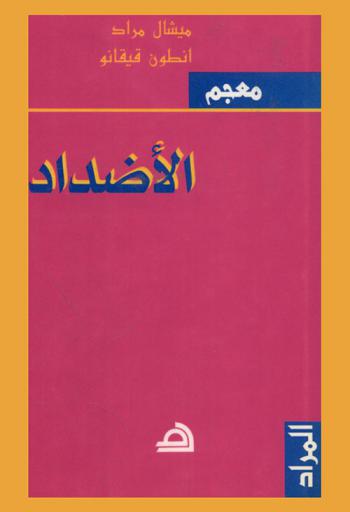
معجم الأضداد
يعتمد هذا الكتاب على ثلاث ركائز أساسية أولا : مدى احتياج المثقفين والطلاب إلى الموضوع المتداول. ثانيا : القيمة العلمية والأدبية التي يمتاز الموضوع بها وثالثا عن النوعية الجيدة التي يتم بها إنجاز العمل طباعيا وانطلاقا من هذا المفهوم هذا المعجم ليكون مرجعا أساسيا للبحث عن الأضداد في اللغة العربية وأهل اللغة يعلمون ما للضد من أهمية تسهم في شرح نقيضه وتبعد عنه كل الالتباس.
REF-BOOK

دراسة الحقول الدلالية لمفهوم العطاء في الصحيفة السجادية
الصحيفة السجادية مجموعة قيمة من ادعية الامام السجاد (عليه السلام) التي لما اهمية كثيرة من الزوايا المختلفة الدينية والادبية. واحد طرق كشف المعاني ورسالات الامام المكنونة فيها هو الاستفادة من نظريات علم اللغة والحقول الدلالية. تحاول هذه الدراسة ان تبين الحقل الدلالي لمفهوم << العطاء >> اعتمادا علي نظرية الحقل الدلالي في ضوء علم الدلالة. في دراسة الحقول الدلالية للفظ << عطاء >> قد جاءت كلمة << عطاء >> كلمة غير مسمية وجاءت المفردات؛ الاحسان، البذل، الجود، الرفد، الكرم، الهبة، الفضل، المنح، النفل، النعمة والمن كلمات مسمية. قد دونت هذه الدراسة من خلال منهج الوصفي- التحليلي وأسلوب مكتبي ودرست الالفاظ علي اساس المعجمات، ثم حللت العلاقات الدلالية بينها وقد اظهرت الاستنتاجات الحاصلة، وجوه الاشتراك والافتراق اللغوية بين الالفاظ المترادفة في حقل؛ واحدة، وكلها مبينة ان الامام السجاد (عليه السلام) اقتطف الكلمات اقتطافاً خلافاً.
Journal Article