
Catalogue Search | MBRL


Are you sure you want to remove the book from the shelf?

{{itemTitle}}
16,446
result(s) for
"النصوص"
Sort by:
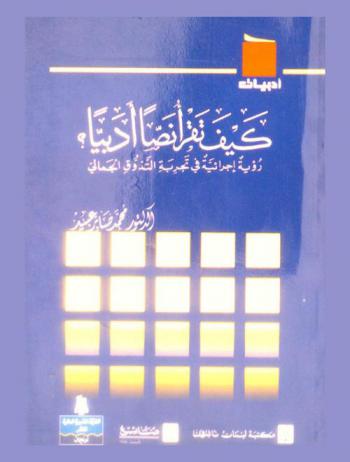
كيف تقرأ نصا أدبيا ؟ : رؤية إجرائية في تجربة التذوق الجمالي
القراءة منهج حياة بأسرها، تصدر عن فكر ووعي بقيمة ما نطلع عليه من أدب وحوارات ونصوص سردية وبحوث علمية، وهذا يؤول إلى إلغاء كل فوضى وخواء معرفي، ما عدا تلك الفاعلية والأثر في تقصي رؤية شفافة لباطن المادة التي تختزل ماهية الأفكار وشتى الخلجات، والرؤى المنحازة إلى كينونة النصوص ككل. فكل نص أدبي قابل للتفسير بوجهة نظر مختلفة، فهو يبنى على فكرة الإدراك الحسي والقدرة على التعايش معها وكأنها جزء من واقعه. إذن نحن إزاء قراءة مثمرة وفعالة، وهي التي تصنع الذائقة الأدبية بقدر ما تتحول إلى إصغاء للآخر كممارسة وفن دون مكابرة أو أحكام مسبقة، فقط تمعن وتأمل في تلك اللغة الخصبة للوصول إلى إدراك وتأويل ما يتطابق من دلالات وصور في ردهات النص أو البحث.
Book

Shaping Reception
This review paper explores the multifarious phenomenon of translation from a paratextual perspective as developed by Gérard Genette (1987). Through examining the various aspects of paratexts and providing more insights into the peritextual as well as the epitextual constituents that shape the translated works, the present study seeks to reveal the interplay between the source text and its translation(s) in addition to shedding light on the sociocultural contexts in which these translations are produced and received by the target audience. Furthermore, the paper scrutinizes how paratextual elements operate as sociocultural mediators that are capable of shaping the target readers' perception and interpretation of their sociocultural surroundings. Through investigating the dynamic relationship between the translated texts and their paratexts, the study at hand aims to highlight how paratexts can be utilized not only as an effective tool for analyzing the ideological and sociocultural underpinnings of the translated products, but also as an instrument for evaluating the sociocultural impact on the reception and visibility of the target texts across different times, and hence foregrounding that the paratextual elements are as essentials as the textual ones in understanding the translation process.
Journal Article
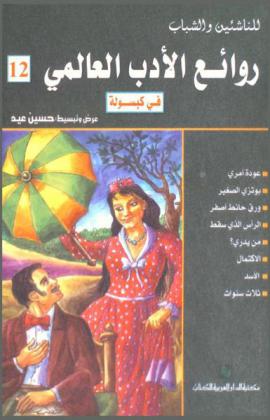
روائع الأدب العالمي في كبسولة
يتناول هذا الكتاب عرض وتبسيط للأعمال الأدبية العالمية المقررة على الطلبة من الناشئين والشباب في مراحل التعليم المختلفة وتصدر في شكل سلسلة من الكتب لتوسيع دائرة المستفيدين من قراء الأدب العالمي وهذه السلسلة تيسر للشباب الاطلاع على معظم الأعمال الشهيرة التى كتبها أدباء عالميون من القدماء والمحدثين من مختلف دول العالم.
Book

An Analysis of Interactional Metadiscourse Markers in Hawthorne's Simplified Novel \The Scarlet Letter\
In academic writing, writers intend to use the linguistic term \"metadiscourse\" to guide, to make their readers interact, and to persuade them through interactive and interactional levels of metadiscourse. Hence, the current study is important for specialists and researchers who study the analysis of the interactional metadiscourse, especially in novels and short stories. Furthermore, the study seeks to answer the following questions: Firstly, how does the interactional level of metadiscourse persuade the readers? Secondly, what are the most frequent marker of interactional metadiscourse in the simplified novel? The study also attempts to examine the interactional metadiscourse markers in Hawthorne's novel \"The Scarlet Letter\" in its simplified Oxford edition. The selected data consists of ten samples. The study aims to identify the frequencies and function of each marker in interactional metadiscourse. Two hypotheses are utilized to achieve the aims: First, the interactional metadiscourse markers have an essential impact on audience persuasion. Second, the writer interacts with readers in the text, using a higher frequency of self-mentions markers. To validate these hypotheses, the procedure includes the following steps: Presenting a literature review, using Hyland's (2019) metadiscourse model, selecting data samples, analysing the selected data using qualitative and quantitative methods, and presenting and discussing the findings. The results indicate that interactional metadiscourse markers have significant functions in persuading the reader through writing. In addition, self-mention markers are employed frequently since these markers project writers in the text to persuade their readers by attracting their attention to the mood and atmosphere of the novel.
Journal Article
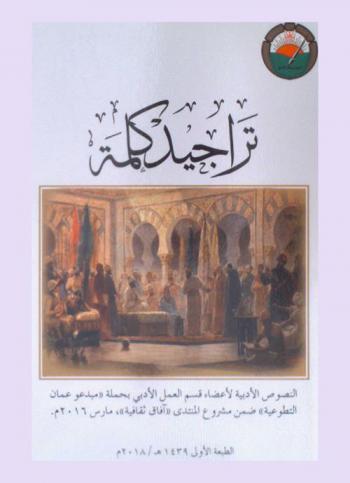

Unpublished Ur Iii Texts
This article presents four cuneiform tablets from the confiscated collection in the Iraq Museum in Baghdad. The texts likely originate from the Umma provenance, and are dated to the reign of Amarsuen (AS9) and šusuen (šS2) of the Ur III dynasty. The tablets contain information about the field Ageština, which is also mentioned in Ur III texts. We trace the location of a- ša3-a-ge štin-na, the area of the Ageština, and agricultural processes through additional texts available in the BDTNS database, complementing the information found in our unpublished texts.
Journal Article
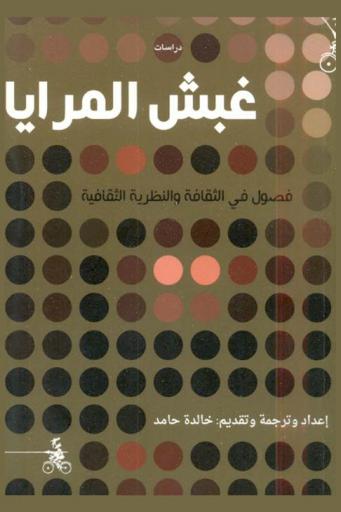
غبش المرايا : فصول في الثقافة والنظرية الثقافية
هذا الكتاب هو مدخل لتحليل نصوص ثقافية هي عماد النظرية التي يرتكز عليها كل واحد من المؤلفين الذين وقع عليهم الاختيار، وهم : ريموند ويليمز، وثيودور أدورنو، وماكس هوركهايم، وستيوارت هول، وكليفورد غيرتز، وأنطونيو غرامشي، وبيير بورديو، وميشيل دي سيرتو، ومايكل ريتشاردسون، وبيل هوكس، وتيري ايغلتون. وتجدر الإشارة إلى أن النصوص المنتقاة هنا تمثل بصمة كل واحد منهم وهي نصوص أساسية مكتوبة بقلم هؤلاء الأعلام لا نقلا عنهم مثلما هو شائع في الترجمات الآن.
Book

Equivalence and Non-Equivalence in the Intrasemiotic Translation of English-Arabic Pictograms towards a Comprehensive Model of Multi-Channel Translation
The present paper investigates equivalence and non-equivalence in the intrasemiotic translation of ten English/Arabic pictograms (PG) as multi-channel representations combining verbal and visual contents. This topic is conducted in the light of Baker's (2018) equivalence strategies alongside Gottlieb's (2017) divisions of intrasemiotic translation. Particularly, the study aims to investigate the word level equivalence in PGs and the cohesive ties between the lexical and visual contents above word level. It also tries to find out whether the intrasemiotic translation of the English/Arabic PGs is beneficial in conveying the same source message of the PG or not. Additionally, the paper explores whether using the same visual channel affects the cultural equivalence and distorts the semantic message of the lexical content of the PG or not. For the purpose of the present paper, a qualitative method of analysis is applied to analyze the selected data. The study reveals that the intrasemiotic translation of English/Arabic PGs is beneficial in conveying the intended message although the visual content, sometimes, interfere with the target readers' culture and religion. The study also concludes that being lexically non-equivalent, does not generally affect the lexical message of the PG, especially when the visual content is clear and explicable.
Journal Article

عيناك عقيدتي : نصوص
الكتابة هي متنفس الحديث المكنون بداخلنا وقيثارة الروح التي تتوق الى البوح ؛ حاولت جاهدة بأن اجتاز هذا الحزن الذي اغشى فؤادي منذ ان حل الفراق وطرق أبوابنا في تلك الليلة الظلماء الا انه سطى بكل حرية على الوجدان، في كتابي \" حيث انني بعد كل نص استوطنه الحزن بسلاح الكلمات عيناك عقيدتي \" : ادخل في صراع ونضال روحي صعب جدا المبعثرة حاولت تخطيه والابتعاد عنه ولكن وجدت الأيام تلهمني للكتابه عن البؤس والأسى اضافه الى الفقد العظيم الذي فطر الفؤاد وجعله اعمى عن السعادة التي تملأ الكون ؛ بالاضافة الى ان الكبرياء قد لعب دور كبير في هذه الحرب الروحية الموجعة التي تحمل بين طياتها حزن أزلي وقد جمعت تواريخ ترسخت بالذاكرة فهي رغم ألم ذكراها الا انها تسكن في جوف كياني المملوء بالحب المنكسر وفي اغلب الكتابات قد اضمرت الحنين ولم اعترف به يوما له لأن الاقسى من الشوق هو الندم على الحديث الذي لم يقدر حق تقديره.
Book
An Analysis of the Use of Conjunctions as Cohesive Devices in Essays in Academic English Classes
In this study, the researcher investigated the use of grammatical cohesive devices (conjunctions) in learners' written productions, focusing on Saudi undergraduate students who were studying academic English as a foreign language (EFL). The aim of the study was to examine the use and frequency of four types of conjunctions-additive, adversative, causal, and temporal-in learners' essays. The researcher employed a mixed-methods (quantitative and qualitative) approach to collect data from learners' essays. Textual analysis was the qualitative method employed to identify and count the four types of conjunctions and to determine whether the learners used any cohesive devices incorrectly. This was followed by quantitative data analysis to calculate the students' mean scores and consider significant differences. The data were analysed using Halliday and Hasan's (1976) cohesion framework. Forty female Saudi students participated in the study by writing and submitting essays following explicit instruction on conjunctions. The findings revealed that Saudi EFL learners used different types of conjunctions correctly in their essays, such as 'and' as additive conjunction; 'but' as adversative conjunction; 'because' as causal conjunction; and finally, 'first', as temporal conjunction. The findings also showed that additive conjunctions were the most frequently used in learners' essays.
Journal Article