
Catalogue Search | MBRL


Are you sure you want to remove the book from the shelf?

{{itemTitle}}
61
result(s) for
"فول الصويا"
Sort by:
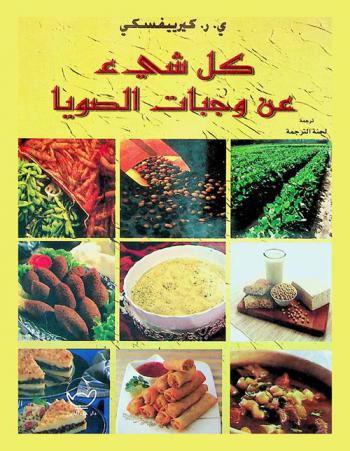
كل شيء عن وجبات الصويا
الصويا هي واحدة من أقدم الثقافات الغذائية في العالم. وهي مصدر كامل للبروتين النباتي. وتتميز المنتجات التي تعد منها بقيمة غذائية عالية. وتستخدم الصويا بشكل خاص في الماكروبيوتيك. يتناول هذا الكتاب مجموعة واسعة من وصفات الصويا : حساء، صلصات، حلويات، عصائر، مقبلات وسلطات.. وغيرها من المنتجات التي تدخل فيها الصويا ومشتقاتها كمكون أساسي.
Book

Effect of Seeds and Sprouts of Red Radish and Soybeans on Oxidative Stress Caused by Paracetamol on Rats
Background: Oxidative stress resulting from increased free radicals and decreased antioxidants can be controlled by consuming natural antioxidants from safe sources such as red radish and soybean seeds and sprouts. Methods The chemical composition, antinutritional factors, total polyphenols, total flavonoids and antioxidant activity by DPPH were estimated. Two main groups contain 36 rats split into the first group (ve-) 6 rats, and the second group 30 rats which took 2 g/kg BW from Paracetamol for 7 days. Then divided into 5 groups, (ve+), (ve-), 10% red radish seeds and 10% red radish sprouts, 20% soybean seeds and 20% soybean sprouts for 6 weeks. MDA, GHS and CAT were evaluated. Results: significant differences in nutritional composition, polyphenols, flavonoids and antioxidant activity (DPPH). Sprouting was found to have significant nutritional value in both red radish and soybean sprouts. A Supplementation diet with 20% sprouted of soybean and 10% red radish sprouts demonstrated strong antioxidant activity across all macroscopic and biochemical parameters tested.
Journal Article

Degradation efficiency of phenolic compounds using immobilized peroxidase purified from soybean
This study was aimed on purification, immobilization and application of peroxidase enzyme
from whole plant of soy bean for the decolorization of textile dyes and degradation of some
phenolic compounds. The purification of peroxidase was in two steps include: concentration
by sucrose and gel filtration by using sephadex G-150. The purification fold was 4.46 and 2.09
with an enzyme yield of 22.34% and 25.55% for peak 1 and peak 2 respectively. The purified
peroxidase enzyme was immobilized by two methods include: covalent linkage immobilization
by gluteraldehyde activated chitosan and entrapment by sodium alginate and agarose gel, the
immobilization ratio reached to 58.07%, 50% and 11.75% respectively. Crude, purified and
immobilized peroxidase were studied with textile dyes (red, blue, yellow and black) after 24
hr, the maximum removal efficiency was with immobilized peroxidase reached to 13.25, 35.12,
14.37 and 26.92 % respectively. Immobilized peroxidase on chitosan was able to degrade some
phenolic compounds (tannic acid, naphthalene and gallic acid) during 2 hr, and the
degradation efficiency was reached to 95.85%, 79.75% and 33.88% respectively.
Journal Article