
Catalogue Search | MBRL


Are you sure you want to remove the book from the shelf?

{{itemTitle}}
6
result(s) for
"Agressiveness."
Sort by:

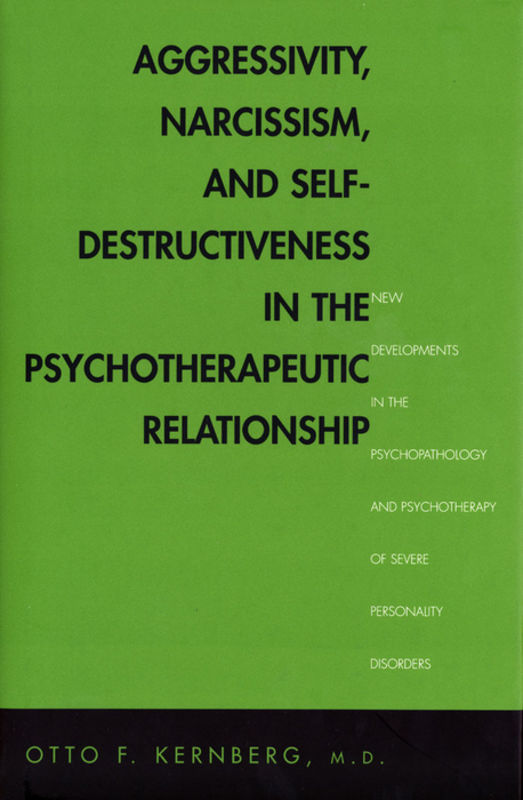
Aggressivity, Narcissism, and Self-Destructiveness in the Psychotherapeutic Relationship
In this book a leading psychoanalytic clinician and theoretician presents his thoughts on the latest psychodynamic developments and insights related to treatment of severe personality disorders. Dividing his discussions into two sections, one on psychopathology and the other on psychotherapy, Dr. Otto Kernberg examines borderline personality disorder, narcissism, sexual inhibition, transference and countertransference, suicidal behaviour, and eating disorders. In each chapter he integrates the ideas of European and Latin American psychoanalytic thinkers, bringing them to the attention of English-speaking readers. This book includes a selection of recently published journal articles. Their collection into one volume makes readily available Dr. Kernberg's present thinking on an important subject.
eBook

Pathogenicity Variation and Mycelial Compatibility Groups in Sclerotinia Sclerotiorum
Population variability of S. sclerotiorum, the causal agent of Sclerotinia stalk rot of sunflower, was determined by mycelial compatibility grouping (MCG) and pathogenicity variation comparison. To study mycelial compatibility grouping and pathogenicity variability, isolates of S. sclerotiorum were collected from sunflower fields in East, West Azerbaijan and Ardebil provinces of Iran. Among 186 isolates tested, 26 MCGs were identified and 46% were represented by single isolates. There were differences among MCGs comparing mycelial growth rate, sclerotial production on PDA and aggressiveness cause disease. Significant differences were detected in number of sclerotia, dry weight of sclerotia, mycelial growth rate and aggressiveness among MCGs (p < 0.001) regardless of their geographic origins. There was generally a poor correlation (r = 0.21, p ≤ 0.05) between sclerotia weight and number of sclerotia produced on PDA and also to the mycelial growth rate at 24 (r = 0.35, p ≤ 0.05) and 48h (r = 0.39, p ≤ 0.05). Our studies in comparison of the detached leaf and cut-stem methods showed that the highest rank correlations (r = 0.78 p ≤ 0.01), while aggressiveness of two inoculation methods (stem and leaf detached) were not correlated to colony diameter growth or the other two factors. Variation in isolates aggressiveness may be important considerations in disease management systems.
Journal Article


Troubles oppositionnels chez l'enfant : leur compréhension et leurs soins
RésuméLes demandes de consultation en psychiatrie infanto-juvénile qui concernent les troubles oppositionnels de l’enfant sont en augmentation. Parallèlement, l’opposition et en corollaire la violence représentent des aspects quotidiennement évoqués au sein de nos sociétés. A partir d’une situation paradigmatique, l’article développe une réflexion sur la compréhension des conduites d’opposition et leur accompagnement thérapeutique. Pour comprendre cette manière d’être, l’auteur parcourt diverses étiologies possibles en reprenant la distinction entre violence et agressivité. Si l’opposition (le « non ») traduit la différenciation et l’individuation, sa persistance au-delà de 30-36 mois indique un « avatar développemental ». Pour expliquer celui-ci, différents facteurs interviennent, qu’ils appartiennent au sujet lui-même, à son environnement ou à la société.Vient ensuite le temps pour soigner ; plusieurs aspects sont alors abordés pour décrire l’accompagnement thérapeutique des troubles oppositionnels : le jeu de la demande, le format et le contenu des rencontres, les aménagements de la vie concrète. SummaryThe demand for child/juvenile psychiatric consultation for oppositional disorders of the child are on the increase. Concurrently violence represented as a consequence of opposition are aspects that are evoqued daily in our societies. Starting from a pragmatic situation the article reflects on oppositional behaviours and the therapeutic endeavours that accompany them. To understand in this way the author goes over various possible etiologies while reviewing the distinction between violence and agressiveness. If opposition, « no », means differentiation and individuation, its persistance over more than 30 to 36 months indicates a « developmental avatar ». To explain this, different factors intervene, whether they belong to the subject, the subject’s environment or to society.Then comes the time for treatment. Many angles are viewed to describe the therapeutic accompaniment of oppositional disorders : the question of the demand, the framework and content of meetings, concrete living arrangements.
Journal Article

Bilişsel davranışçı teknikler ve psikodrama teknikleri kullanılarak yapılan grup uygulamalarının ergenlerin saldırganlığını azaltmadaki etkilerinin karşılaştırılması
Bu araştırmanın amacı, bilişsel davranışçı teknikler ile psikodrama teknikleri kullanılarak yapılan grup
uygulamalarının ergenlerde saldırganlığı azaltmadaki etkilerini karşılaştırmalı olarak incelemektir. Araştırma,
iki deney ve bir kontrol gruplu ön test, son test ve izleme modeline dayalı yarı deneysel bir çalışmadır.
Araştırma, Adana Seyhan Nezihe Yalvaç Anadolu Otelcilik ve Turizm Meslek Lisesi dokuzuncu sınıfl
arında öğrenim gören öğrencilerle gerçekleştirilmiştir. Bu öğrencilere Saldırganlık Ölçeği uygulanmış
saldırganlık düzeyi en yüksek olan toplam 36 öğrenci her gruba 12 kişi olmak üzere tesadüfî yöntemle
atanmıştır. Araştırmanın bağımlı değişkeni olan saldırganlık Buss ve Warren (2000) tarafından yeniden
gözden geçirilen, Can (2002) tarafından Türkçe'ye uyarlanan Saldırganlık Ölçeği ile ölçülmüştür. Birinci
deney grubuna, araştırmacılar tarafından hazırlanan Bilişsel Davranışçı Terapi odaklı grupla psikolojik
danışma on oturum, ikinci deney grubuna ise yine araştırmacılar tarafından gerçekleştirilen Psikodrama
odaklı grup uygulamaları on dört oturum olarak uygulanmıştır. Kontrol grubuna ise herhangi bir çalışma
yapılmamıştır. Son test, deney grubu uygulamaları bittikten sonra, izleme ölçümleri ise, deneysel uygulamaların
bitiminden on altı hafta sonra alınmıştır. Veriler Kovaryans Analizi ve Bağımlı Gruplar t Testi ile
analiz edilmiştir. Bulgular, bilişsel davranışçı teknikler ile yapılan grupla psikolojik danışma uygulamalarının
saldırganlık toplam, fiziksel saldırganlık, öfke, düşmanlık ve dolaylı saldırganlık puanları üzerinde etkili
olduğunu, sözel saldırganlık puanları üzerinde ise etkili olmadığını göstermiştir. Psikodrama teknikleri
ile yapılan grup uygulamalarının, saldırganlık toplam, öfke, düşmanlık ve dolaylı saldırganlık puanları
üzerinde etkili olduğu sözel ve fiziksel saldırganlık puanları üzerinde etkili olmadığı görülmüştür. Karşılaştırmaya
ilişkin analizler, bilişsel davranışçı teknikler kullanılarak uygulama yapılan birinci deney grubunun,
psikodrama teknikleri kullanılarak uygulama yapılan ikinci deney grubuna göre, öğrencilerin saldırganlık
toplam, fiziksel saldırganlık ve öfke puanları üzerinde daha etkili olduğunu göstermiştir. Diğer
alt ölçeklerde etki farkı bulunmamıştır. Yapılan izleme çalışmasında, iki deney grubunun etkisinin on altı
hafta sonra alınan izleme ölçümüne kadar devam ettiği tespit edilmiştir.
Th e aim of this research is to investigate whether cognitive-behavioral group practices
and psychodrama decrease adolescent aggression. Th is is a quasi-experimental, pre-post
and follow up study with two experiments and one control group. Th e Aggression Scale
(Buss & Warren, 2000) adapted to Turkish by Can (2002) was administered as a pretest
to 9th grade students of Nezihe Yalvaç Anatolian Hotel and Tourism Vocational High
School in Adana. After the administration and assessment of the scale, 36 students who
had the highest aggression levels were selected and were randomly divided into three groups.
Th e experimental and control groups each included 12 students. Cognitive behavioral
techniques were applied to the first experimental group in 10 sessions, psychodrama
techniques were applied to the second experimental group in 14 sessions. No application
has been done to the control group. After the groups ended, the Aggression Scale was readministered
to all groups as a post test. 16 weeks after ending the groups, the scale was
administered one mor time to the experimental groups as a follow up test. Findings were
analyzed with ANCOVA and t test for dependent samples. Findings have showed that
cognitive-behavioral approach was eff ective in decreasing aggression scores, except verbal
aggression and psychodrama approach was eff ective in decreasing all aggression scores
except verbal physical aggression. ANCOVA analyses showed that cognitive-behavioral
approach was more eff ective in decreasing total aggression, physical aggression, and anger
than psychodrama. Follow up test results showed that the eff ects of group practices on
both experimental groups were lasting even 16 weeks later.
Journal Article