
Catalogue Search | MBRL


Are you sure you want to remove the book from the shelf?

{{itemTitle}}
9,874
result(s) for
"American Indian Studies"
Sort by:

Constructing power & place in Mesoamerica : pre-Hispanic paintings from three regions
\"Identities of power and place, as expressed in paintings from the periods before and after the Spanish conquest of Mesoamerica, are the subject of this book of case studies from Central Mexico, Oaxaca, and the Maya area. These sophisticated, skillfully rendered images occur with architecture, in manuscripts, on large pieces of cloth, and on ceramics.\"-- Provided by publisher.
Book

A Reference Grammar of Kotiria (Wanano)
Published through the Recovering Languages and Literacies of the Americas initiative, supported by the Andrew W. Mellon Foundation.
This volume is the first descriptive grammar of Kotiria (Wanano), a member of the eastern Tukanoan language family spoken in the Vaupes River basin of Colombia and Brazil in the northwest Amazon rain forest. The Kotirias, who have lived in this remote region for more than seven hundred years, participate in the complex Vaupés social system, characterized by long-standing linguistic and cultural interaction. The Kotirias remained relatively isolated from the dominant societies until the early part of the twentieth century, when increasing outside influence in the region triggered rapid social and linguistic change. Today the Kotirias number only about sixteen hundred people, and their language, though still used in traditional communities, is in risk of becoming endangered.
Kristine Stenzel draws on eight years of intensive work with the Kotirias to promote, record, and revitalize their language. Working with dozens of native speakers and drawing on numerous oral narratives and written texts, this book is the first comprehensive study of this endangered language and one of the few reference grammars of this language family.
eBook

American indians and popular culture
\"Americans are still fascinated by the romantic notion of the \"noble savage,\" yet know little about the real Native peoples of North America. This two-volume work seeks to remedy that by examining stereotypes and celebrating the true cultures of American Indians today\"-- Provided by publisher.
Book

Kiowa Belief and Ritual
Directed by anthropologist Alexander Lesser in 1935, the Santa Fe Laboratory of Anthropology sponsored a field school in southwestern Oklahoma that focused on the neighboring Kiowas. During two months, graduate students compiled more than 1,300 pages of single-spaced field notes derived from cross-interviewing thirty-five Kiowas. These eyewitness and first-generation reflections on the horse and buffalo days are undoubtedly the best materials available for reconstructing pre-reservation Kiowa beliefs and rituals. The field school compiled massive data resulting in a number of publications on this formerly nomadic Plains tribe, though the planned collaborative ethnographies never materialized. The extensive Kiowa field notes, which contain invaluable information, remained largely unpublished until now.InKiowa Belief and Ritual, Benjamin R. Kracht reconstructs Kiowa cosmology during the height of the horse and buffalo culture from field notes pertaining to cosmology, visions, shamans, sorcery, dream shields, tribal bundles, and the now-extinct Sun Dance ceremony. These topics are interpreted through the Kiowa concept of a power force permeating the universe. Additional data gleaned from the field notes of James Mooney and Alice Marriott enrich the narrative. Drawing on more than thirty years of field experiences, Kracht's discussion of how indigenous notions of \"power\" are manifested today significantly enhances the existing literature concerning Plains religions.
eBook

Recovering Native American writings in the boarding school press
\"Recovering Native American Writings in the Boarding School Press is the first comprehensive collection of writings by students and well-known Native American authors who published in boarding school newspapers during the late nineteenth and early twentieth centuries.Students used their acquired literacy in English along with more concrete tools that the boarding schools made available, such as printing technology, to create identities for themselves as editors and writers. In these roles they sought to challenge Native American stereotypes and share issues of importance to their communities.
Writings by Gertrude Bonnin (Zitkala-sa), Charles Eastman, and Luther Standing Bear are paired with the works of lesser-known writers to reveal parallels and points of contrast between students and generations.Drawing works primarily from the Carlisle Indian Industrial School (Pennsylvania), the Hampton Institute (Virginia), and the Seneca Indian School (Oklahoma), Jacqueline Emery illustrates how the boarding school presses were used for numerous and competing purposes.While some student writings appear to reflect the assimilationist agenda, others provide more critical perspectives on the schools' agendas and the dominant culture.This collection of Native-authored letters, editorials, essays, short fiction, and retold tales published in boarding school newspapers illuminates the boarding school legacy and how it has shaped, and continues to shape, Native American literary production.
\"-- Provided by publisher.
Writings by Gertrude Bonnin (Zitkala-sa), Charles Eastman, and Luther Standing Bear are paired with the works of lesser-known writers to reveal parallels and points of contrast between students and generations.Drawing works primarily from the Carlisle Indian Industrial School (Pennsylvania), the Hampton Institute (Virginia), and the Seneca Indian School (Oklahoma), Jacqueline Emery illustrates how the boarding school presses were used for numerous and competing purposes.While some student writings appear to reflect the assimilationist agenda, others provide more critical perspectives on the schools' agendas and the dominant culture.This collection of Native-authored letters, editorials, essays, short fiction, and retold tales published in boarding school newspapers illuminates the boarding school legacy and how it has shaped, and continues to shape, Native American literary production.
\"-- Provided by publisher.
Book
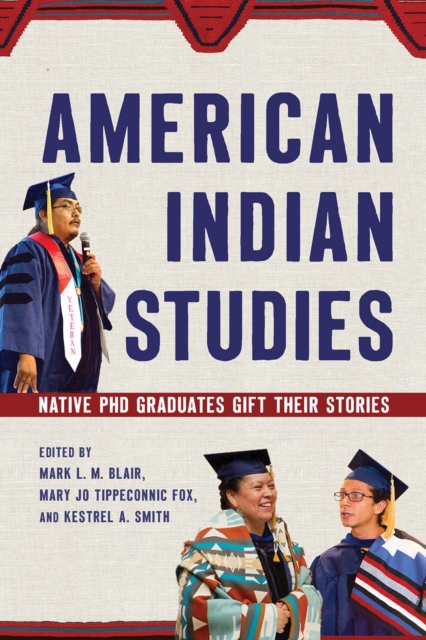
American Indian Studies
In American Indian Studies , Native PhD graduates share
their personal stories about their educational experiences and how
doctoral education has shaped their identities, lives,
relationships, and careers.
This collection of personal narratives from Native graduates of
the University of Arizona's American Indian Studies (AIS) doctoral
program, the first such program of its kind, gifts stories of
endurance and resiliency, hardship and struggle, and accomplishment
and success. It provides insight into the diverse and dynamic
experiences of Native graduate students. The narratives address
family and kinship, mentorship, and service and giving back.
Essayists share the benefits of having an AIS program at a
mainstream academic institution-not just for the students enrolled
but also for their communities.
This book offers Native students aspiring to a PhD a realistic
picture of what it takes. While each student has their own path to
walk, these stories provide the gift of encouragement and serve to
empower Native students to reach their educational goals, whether
it be in an AIS program or other fields of study.
eBook

This benevolent experiment : indigenous boarding schools, genocide, and redress in Canada and the United States
\"A nuanced comparative history of Indigenous boarding schools in the U.S. and Canada\"-- Provided by publisher.
Book

From the Skin
In this volume, contributors demonstrate the real-world
application of Indigenous theory to the work they do in their own
communities and how this work is driven by urgency, responsibility,
and justice-work that is from the skin . In From the
Skin , contributors reflect on and describe how they apply the
theories and concepts of Indigenous studies to their communities,
programs, and organizations, and the ways the discipline has
informed and influenced the same. They show the ways these efforts
advance disciplinary theories, methodologies, and praxes. Chapters
cover topics including librarianship, health programs, community
organizing, knowledge recovery, youth programming, and gendered
violence. Through their examples, the contributors show how they
negotiate their peoples' knowledge systems with knowledge produced
in Indigenous studies programs, demonstrating how they understand
the relationship between their people, their nations, and academia.
Editors J. Jeffery Clark and Elise Boxer propose and develop the
term practitioner-theorist to describe how the
contributors theorize and practice knowledge within and between
their nations and academia. Because they live and exist in their
community, these practitioner-theorists always consider how their
thinking and actions benefit their people and nations. The
practitioner-theorists of this volume envision and labor toward
decolonial futures where Indigenous peoples and nations exist on
their own terms. Contributors Randi Lynn
Boucher-Giago Elise Boxer Shawn Brigman J. Jeffery Clark Nick Estes
Eric Hardy Shalene Joseph Jennifer Marley Brittani R. Orona
Alexander Soto
eBook

To Come to a Better Understanding
To Come to a Better Understanding analyzes the cultural encounters of the medicine men and clergy meetings held on Rosebud Reservation in St. Francis, South Dakota, from 1973 through 1978. Organized by Father Stolzman, a Catholic priest studying Lakota religious practice, the meetings fit the goal of the recently formed Medicine Men's Association to share its members' knowledge about Lakota thought and ritual. Both groups stated that the purpose of the historic theological discussions was \"to come to a better understanding.\" Though the groups ended their formal discussions after eighty-four meetings, Sandra L. Garner shows how this cultural exchange reflects a rich Native intellectual tradition and articulates the multiple meanings of \"understanding\" that necessarily characterize intercultural encounters. Garner examines the exchanges of these two very different cultures, which share a history of inequitable power relationships, to explore questions of cultural ownership and activism. These meetings were another form of activism, a \"quiet side\" without the militancy of the American Indian Movement. Based on ethnographic fieldwork and archival analysis, this volume focuses on the medicine men participants—who served as translators, interpreters, and cultural mediators—to explore how modern political, social, and religious issues were negotiated from an indigenous perspective that valued experience as critical to understanding.
eBook

The Incarceration of Native American Women
In The Incarceration of Native American Women , Carma
Corcoran examines the rising number of Native American women being
incarcerated in Indian Country. With years of experience as a case
management officer, law professor, consultant to tribal defenders'
offices, and workshop leader in prisons, she believes this upward
trajectory of incarceration continues largely unacknowledged and
untended. She explores how a combination of F. David Peat's gentle
action theory and the Native traditional ways of knowing and being
could heal Native American women who are or have been incarcerated.
Colonization and the historical trauma of Native American
incarceration runs through history, spanning multiple generations
and including colonial wartime imprisonment, captivity, Indian
removal, and boarding schools. The ongoing ills of childhood abuse,
domestic violence, sexual assault, and drug and alcohol addiction
and the rising number of suicides are indicators that Native people
need healing. Based on her research and work with Native women in
prisons, Corcoran provides a theory of wellness and recovery that
creates a pathway for meaningful change. The Incarceration of
Native American Women offers students, academics, social
workers, counselors, and those in the criminal justice system a new
method of approach and application while providing a deeper
understanding of the cultural and historical experiences of Native
Americans in relation to criminology.
eBook