
Catalogue Search | MBRL


Are you sure you want to remove the book from the shelf?

{{itemTitle}}
296
result(s) for
"Anger in adolescence"
Sort by:

Aim
\"As World War II threatens the United States in 1941, fourteen-year-old Junior Bledsoe fights his own battles at home. Junior struggles with school and with anger--at his father, his insufferable granddaddy, his neighbors, and himself--as he desperately tries to understand himself and find his own aim in life. But he finds relief in escaping to the quiet of the nearby woods and tinkering with cars, something he learned from his Pop, and a fatherly neighbor provides much-needed guidance\"--Amazon.com.
Book

Doing Anger Differently
Michael Currie has worked with adolescent boys and their families for twenty years.He understands that the explosive outbursts and sullen monosyllabic exchanges that punctuate adolescence are very confronting for parents, who often feel they can do little about their son's anger.
eBook

Girlfighting
Offers a developmental explanation for girlfighting and
pathways to build girl allies For some time, reality TV,
talk shows, soap-operas, and sitcoms have turned their spotlights
on women and girls who thrive on competition and nastiness. Few
fairytales lack the evil stepmother, wicked witch, or jealous
sister. Even cartoons feature mean and sassy girls who only become
sweet and innocent when adults appear. And recently, popular books
and magazines have turned their gaze away from ways of positively
influencing girls' independence and self-esteem and towards the
topic of girls' meanness to other girls. What does this say about
the way our culture views girlhood? How much do these portrayals
affect the way girls view themselves? In
Girlfighting , psychologist and educator Lyn Mikel
Brown scrutinizes the way our culture nurtures and reinforces this
sort of meanness in girls. She argues that the old adage \"girls
will be girls\"-gossipy, competitive, cliquish, backstabbing- and
the idea that fighting is part of a developmental stage or a
rite-of-passage, are not acceptable explanations. Instead, she
asserts, girls are discouraged from expressing strong feelings and
are pressured to fulfill unrealistic expectations, to be popular,
and struggle to find their way in a society that still reinforces
gender stereotypes and places greater value on boys. Under such
pressure, in their frustration and anger, girls (often
unconsciously) find it less risky to take out their fears and
anxieties on other girls instead of challenging the ways boys treat
them, the way the media represents them, or the way the culture at
large supports sexist practices. Girlfighting
traces the changes in girls' thoughts, actions and feelings from
childhood into young adulthood, providing the developmental
understanding and theoretical explanation often lacking in other
conversations. Through interviews with over 400 girls of diverse
racial, economic, and geographic backgrounds, Brown chronicles the
labyrinthine journey girls take from direct and outspoken children
who like and trust other girls, to distrusting and competitive
young women. She argues that this familiar pathway can and should
be interrupted and provides ways to move beyond girlfighting to
build girl allies and to support coalitions among girls. By
allowing the voices of girls to be heard, Brown demonstrates the
complex and often contradictory realities girls face, helping us to
better understand and critique the socializing forces in their
lives and challenging us to rethink the messages we send them.
eBook
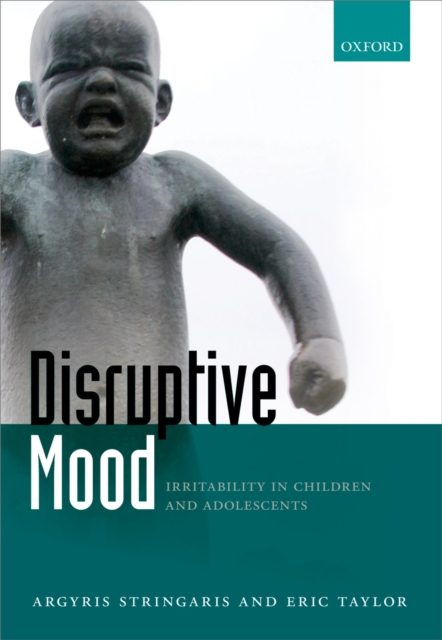
Disruptive Mood
A practical guide to understanding and treating children and adolescents prone to extreme levels of angry outbursts, Disruptive Mood: Irritability in Children and Adolescents is based on the very latest research and theory. Providing both a clinical and scientific perspective on irritability in children, this book is a timely look at recent developments in the field. Abnormal states of anger are a common reason for referral to child health services, and cause concern in clinics, schools, and families. Misdiagnosis and treatment can stem from a lack of understanding of the mechanisms involved in high levels of anger in children, and Disruptive Mood: Irritability in Children and Adolescents provides clear guidance on the development of abnormal states of anger, their consequences for later development, and how to assess andmake differential diagnoses between them. A useful resource for clinical practice, this book is concise and accessible, and offers tools for evaluating treatments. Disruptive Mood: Irritability in Children and Adolescents is designed for practitioners involved in child and adolescent mental health and education andresearchers who need an introduction to this complex field.
eBook

Your Angry Child
Discover an important source of practical and understandable advice for parents of children with anger management issues!
Your Angry Child: A Guide for Parents was created to provide parents of angry children and teenagers with an up-to-date understanding of the 'whys' and 'hows' of anger problems. You'll find specific, focused ways of helping angry children and managing the difficulties that anger causes-some brand new, some time-tested. Written by a psychologist with over 30 years of experience treating troubled and severely behaviorally disordered youth and 20 years experience as a forensic psychologist, this book provides practical and understandable advice that parents can make use of immediately.
This insightful book presents up-to-date case histories, current research, and practical, down-to-earth techniques that can help parents of children and adolescents with anger problems. Extraordinarily useful for parents, this book is also an ideal adjunct to counseling and psychotherapy and an essential reference for teachers, pediatricians and family practice physicians, students of psychology, corrections officers, and others who work with angry/violent youth.
The first chapters of Your Angry Child: A Guide for Parents provide a thoughtful introduction to child development concepts and the development of anger, examining how hostility and aggression impact the family and illustrating the effects of resistance and oppositional behavior. Next, the book focuses specifically on practical aspects of anger management, including:
attachment issues
antisocial behavior
anger's impact on temperament, development, moral reasoning, and the thinking process in general
indicators of anger problems, such as temper tantrums, cruelty to animals, and fire setting
the effect of the media on violent tendencies in children
ADHD, oppositional defiant disorder, and other conduct disorder
eBook
Working with anger and young people
Understanding the roots of anger and encouraging appropriate and acceptable ways of expressing this are essential skills for anyone working with young people. Working with Anger and Young People warns against 'quick fix' solutions to dealing with anger, and draws on the author's experiences of youth counselling and training workshops to propose helpful interventions for addressing anger effectively and moving on from it.
From attachment anxieties and feelings of powerlessness, to frustration at difficult family relations, Nick Luxmoore considers the common reasons for young people's anger during this difficult stage of their development. Through accounts of his work with a range of young people, he offers tried-and-tested exercises and talking points to help work through common counterproductive responses to anger such as antisocial behaviour and physical or verbal violence. Crucially, he also recognises the needs of those working with these young people with anger problems and provides advice on working safely, maintaining control and achieving job satisfaction.
This sensitive, accessible book will be an informative and engaging resource for anyone working with young people with anger issues.
eBook
Crucial Skills
This programme is aimed at students (aged 11 to 16) with challenging and angry behaviours leading to disaffection and disciplinary problems. The book includes teacher notes, lesson plans and photocopiable resources.
eBook

Healthy Anger
For anyone who has ever helplessly confronted a child's rage or a teenager's defiant fury, Healthy Anger offers a wealth of wise insight, clear advice, and eminently practical strategies for turning anger into understanding.
eBook

Girlfighting
Offers a developmental explanation for girlfighting and pathways to build girl allies For some time, reality TV, talk shows, soap-operas, and sitcoms have turned their spotlights on women and girls who thrive on competition and nastiness. Few fairytales lack the evil stepmother, wicked witch, or jealous sister. Even cartoons feature mean and sassy girls who only become sweet and innocent when adults appear. And recently, popular books and magazines have turned their gaze away from ways of positively influencing girls' independence and self-esteem and towards the topic of girls' meanness to other girls. What does this say about the way our culture views girlhood? How much do these portrayals affect the way girls view themselves? In Girlfighting, psychologist and educator Lyn Mikel Brown scrutinizes the way our culture nurtures and reinforces this sort of meanness in girls. She argues that the old adage “girls will be girls”—gossipy, competitive, cliquish, backstabbing— and the idea that fighting is part of a developmental stage or a rite-of-passage, are not acceptable explanations. Instead, she asserts, girls are discouraged from expressing strong feelings and are pressured to fulfill unrealistic expectations, to be popular, and struggle to find their way in a society that still reinforces gender stereotypes and places greater value on boys. Under such pressure, in their frustration and anger, girls (often unconsciously) find it less risky to take out their fears and anxieties on other girls instead of challenging the ways boys treat them, the way the media represents them, or the way the culture at large supports sexist practices. Girlfighting traces the changes in girls' thoughts, actions and feelings from childhood into young adulthood, providing the developmental understanding and theoretical explanation often lacking in other conversations. Through interviews with over 400 girls of diverse racial, economic, and geographic backgrounds, Brown chronicles the labyrinthine journey girls take from direct and outspoken children who like and trust other girls, to distrusting and competitive young women. She argues that this familiar pathway can and should be interrupted and provides ways to move beyond girlfighting to build girl allies and to support coalitions among girls. By allowing the voices of girls to be heard, Brown demonstrates the complex and often contradictory realities girls face, helping us to better understand and critique the socializing forces in their lives and challenging us to rethink the messages we send them.
eBook