
Catalogue Search | MBRL


Are you sure you want to remove the book from the shelf?

{{itemTitle}}
4,801
result(s) for
"Asperger"
Sort by:

The Many Faces of Asperger's Syndrome
This is the first book on the psychoanalytic treatment of children, young people and adults with Asperger's syndrome. It includes multidisciplinary contributions on psychiatric perspectives and psychological theories of the condition. There is an overview of relevant psychoanalytic theory, and chapters on Asperger's original paper, on firstperson accounts, on assessment and on care in the community. Clinical case histories of children, young people and the first published account of work with adults provide the possibility of using psychoanalytic work as a means of diagnostically differentiating between sub-groups, as well as providing a detailed insight into the emotional experience of people with Asperger's syndrome.
eBook

Asperger Syndrome and Alcohol
Asperger Syndrome and Alcohol exposes the unexplored problem of people with Autism Spectrum Disorders (ASDs) using alcohol as a coping mechanism to deal with everyday life. Alcohol can relieve the anxiety of social situations and make those with ASDs feel as though they can fit in. Ultimately, however, reliance on alcohol can lead the user down a path of self-destruction and exacerbate existing problems. Utilising their professional and personal experience, the authors provide an overview of ASDs and of alcohol abuse, and explore current knowledge about where the two overlap. Tinsley explores his own personal history as someone with an ASD who has experienced and beaten alcohol addiction. He discusses how the impact of his diagnosis and his understanding of the condition played a huge part in his recovery, and how by viewing his life through the prism of autism, his confusion has been replaced by a greater understanding of himself and the world around him. This inspiring book on an under-researched area will be of interest to professionals working with people with ASDs, as well as individuals with ASDs who may be dealing with alcohol or substance misuse, and their families.
eBook


The Coping Cat Program for Children with Anxiety and Autism Spectrum Disorder: A Pilot Randomized Controlled Trial
The purpose of this pilot study was to evaluate whether a modified version of the Coping Cat program could be effective in reducing anxiety in children with autism spectrum disorder (ASD). Twenty-two children (ages 8–14; IQ ≥ 70) with ASD and clinically significant anxiety were randomly assigned to 16 sessions of the Coping Cat program (cognitive-behavioral therapy; CBT) or a 16-week waitlist. Children in the CBT condition evidenced significantly larger reductions in anxiety than those in the waitlist. Treatment gains were largely maintained at two-month follow-up. Results provide preliminary evidence that a modified version of the Coping Cat program may be a feasible and effective program for reducing clinically significant levels of anxiety in children with high-functioning ASD.
Journal Article
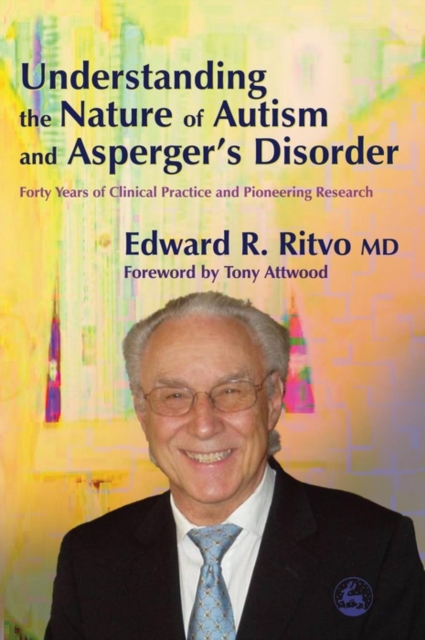
Understanding the nature of autism and Asperger's disorder : forty years of clinical practice and pioneering research
Edward R. Ritvo md is an internationally recognized medical expert, researcher and pioneer in the field of autism and Asperger's disorder and co-author of the official diagnostic criteria in the DSM (Diagnostic and Statistical Manual of Mental Disorders). Much of what is known about these disorders today is based on his painstaking research and groundbreaking discoveries. In this book he shares his forty years' experience and opens his extensive UCLA casebook to the reader. Understanding the Nature of Autism and Asperger's Disorder is 'a consultation with Prof. Ritvo' - a thoroughly accessible introduction for professionals, families, spouses and individuals with autism and Asperger's Disorder. Prof. Ritvo traces the historical development of understanding about autism and Asperger's Disorder, from the centuries of misdiagnoses and the first recognition of the characteristics of the disorders to his own highly-regarded methods for making a diagnosis. Drawing on case histories from forty years' of clinical practice, he explains their basic nature, what the causes are, what is different in the brain, treatments that work (and those that don't), what a child with a diagnosis might be like when he or she grows up, and what future research may hold. This book will be an absolute must-read for anyone with an interest in autism and Asperger's Disorder, whether a practitioner, a parent, a student, or an affected individual.
eBook
Children, youth and adults with Asperger Syndrome : integrating multiple perspectives
This book offers a comprehensive overview of clinical, research and personal perspectives on Asperger Syndrome, including contributions from parents and experts in the fields of psychology, social work, psychiatry, genetics, sexology and vocational counselling. It includes first-hand accounts from adults with AS, highlighting their difficulties in areas such as social competence and education. Specialist perspectives on AS, including sexuality and relationships, finding and keeping employment and anxiety and depression are sensitively addressed. The viewpoints of parents explore experiences of parenting AS individuals. These varied approaches to living with AS complement the emerging literature on theory, research and practice in this area. The broad scope of Children, Youth and Adults with Asperger Syndrome guarantees a wide readership among practitioners, students, parents, young people and adults with AS, educates service providers how to assist people with AS and suggests a model of interdisciplinary collaboration for administrators and funders.
eBook

Hans Asperger, National Socialism, and “race hygiene” in Nazi-era Vienna
Background
Hans Asperger (1906–1980) first designated a group of children with distinct psychological characteristics as ‘autistic psychopaths’ in 1938, several years before Leo Kanner’s famous 1943 paper on autism. In 1944, Asperger published a comprehensive study on the topic (submitted to Vienna University in 1942 as his postdoctoral thesis), which would only find international acknowledgement in the 1980s. From then on, the eponym ‘Asperger’s syndrome’ increasingly gained currency in recognition of his outstanding contribution to the conceptualization of the condition. At the time, the fact that Asperger had spent pivotal years of his career in Nazi Vienna caused some controversy regarding his potential ties to National Socialism and its race hygiene policies. Documentary evidence was scarce, however, and over time a narrative of Asperger as an active opponent of National Socialism took hold. The main goal of this paper is to re-evaluate this narrative, which is based to a large extent on statements made by Asperger himself and on a small segment of his published work.
Methods
Drawing on a vast array of contemporary publications and previously unexplored archival documents (including Asperger’s personnel files and the clinical assessments he wrote on his patients), this paper offers a critical examination of Asperger’s life, politics, and career before and during the Nazi period in Austria.
Results
Asperger managed to accommodate himself to the Nazi regime and was rewarded for his affirmations of loyalty with career opportunities. He joined several organizations affiliated with the NSDAP (although not the Nazi party itself), publicly legitimized race hygiene policies including forced sterilizations and, on several occasions, actively cooperated with the child ‘euthanasia’ program. The language he employed to diagnose his patients was often remarkably harsh (even in comparison with assessments written by the staff at Vienna’s notorious Spiegelgrund ‘euthanasia’ institution), belying the notion that he tried to protect the children under his care by embellishing their diagnoses.
Conclusion
The narrative of Asperger as a principled opponent of National Socialism and a courageous defender of his patients against Nazi ‘euthanasia’ and other race hygiene measures does not hold up in the face of the historical evidence. What emerges is a much more problematic role played by this pioneer of autism research. Future use of the eponym should reflect the troubling context of its origins in Nazi-era Vienna.
Journal Article
A Group-Administered social Skills Training for 8- to 12- Year-Old, high-Functioning Children With Autism Spectrum Disorders: An Evaluation of its Effectiveness in a Naturalistic Outpatient Treatment Setting
A social skills training (SST) for high-functioning children with autism spectrum disorders (ASD) was evaluated in an outpatient setting using a combined between- and within-subject design in which SST and a waiting list condition were compared. According to parents and teachers, the SST produced greater improvement of social skills than the waiting list, and these effects were maintained at 3 months follow-up. No between-group effects were found for loneliness, although in general scores on this outcome measure decreased from pre- to follow-up. The effects of SST were unaffected by social anxiety, ADHD symptoms, Theory of Mind, or desire for social interaction. Altogether, SST seems an effective intervention for high-functioning children with ASD that can be applied in daily clinical practice.
Journal Article