
Catalogue Search | MBRL


Are you sure you want to remove the book from the shelf?

{{itemTitle}}
37
result(s) for
"BIVALVO"
Sort by:

Host specificity and metamorphosis of the glochidium of the freshwater mussel Unio tumidiformis (Bivalvia: Unionidae)
The glochidium larvae of freshwater mussels of the family Unionidae need to find suitable hosts to attach themselves and metamorphose into free-living juveniles. The specificity of the host-parasite relationship was investigated for the Iberian Unio tumidiformis by means of experimental infections and also by analyzing naturally infected fish. The process of encapsulation of glochidia was studied using scanning electron microscopy. Unio tumidiformis has proven to be an unusual host-specific unionid mussel, apparently parasitizing only fish of the genus Squalius. Successful encapsulation or complete metamorphosis was observed in five fish taxa: S. aradensis, S. caroliterti, S. pyrenaicus, S. torgalensis and S. alburnoides complex (only for the nuclear hybrids with at least one copy of the S. pyrenaicus genome). Complete metamorphose was achieved in 6 to 14 days at mean temperatures ranging from 21.8 to 26.1 deg C. The current study provides support for cell migration being the main force of cyst formation and shows the influence of potential host's genome in response to the infection process to determine the success of the metamorphosis.
Journal Article

Checklist of the marine bivalves from Peru
A checklist of the marine bivalve species from Peru is presented, this list has 401 species which are distributed in 65 families and 195 genera. The taxonomical classification and nomenclature is based on classical and current bibliography including Bernard (1983) and Coan & Valentich-Scott (2012). We give distribution and habitat information about every species.
Journal Article

Modiolarca lateralis (Pteryomorphia: Mytilidae): bivalve associated to six species of ascidians from Bocas del Toro, Panama
We describe the presence of the bivalve Modiolarca lateralis (Say, 1822) in six tropical ascidians Ascidia curvata, A. sydneiensis, A. panamensis, A. interrupta, Herdmania pallida and Polycarpa spongiabilis collected at depths of 1-3 m on coral reefs, mangrove roots and dock supports in Almirante Bay, Bocas del Toro, Panama (9°18'N, 82°13'W) during June-July 2011. Bivalve prevalence varied between 9-30% across species, but was mainly associated with A. panamensis, P. spongiabilis and A. interrupta. Prevalence seems to be influenced by tunic thickness rather than by the ascidian size. Bivalves varied in size (0.6-11 mm shell length), with the smallest individual found in A. sydneiensis. There were only one or two bivalves per ascidians, although a maximum of 18 was found in one A. panamensis. M. lateralis seems to behave similarly to its temperate counterparts: it has a variety of hosts, occurs mainly in the anterior region of the ascidians, and has a variable abundance per host.
Journal Article

Quantification of lipophilic toxins associated with diarrhetic shellfish poisoning in Japanese bivalves by liquid chromatography-mass spectrometry and comparison with mouse bioassay
: Quantification of lipophilic toxins in bivalves associated with diarrhetic shellfish poisoning was investigated by liquid chromatography–mass spectrometry (LC–MS). Using a C8‐silica reversed phase column and a mobile phase of aqueous acetonitrile containing 2 mM ammonium formate and 50 mM formic acid, okadaic acid, dinophysistoxin‐1, 7‐O‐palmitoyldinophysistoxin‐1, pectenotoxin‐1, pectenotoxin‐2, pectenotoxin‐6, pectenotoxin‐2 seco‐acid, yessotoxin, and 45‐hydroxyyessotoxin in bivalves were quantified by LC–MS in the negative mode. When the crude 90% methanol extracts were analyzed by LC–MS, there were no significant effects from bivalve matrices on the quantification of toxins. More than 200 bivalve samples collected from various production areas in Japan were analyzed by LC–MS. Pectenotoxin‐6 and dinophysistoxin‐1 were the dominant toxins in scallops and mussels, respectively. Yessotoxin and 45‐hydroxyyessotoxin were also detected in both species. Comparison of the quantitative results obtained for these bivalve samples between LC–MS and mouse bioassay indicates that LC–MS is suitable for routine monitoring of lipophilic toxins in Japanese bivalves.
Journal Article

Taxonomy and identification of the armored dinoflagellate genus Heterocapsa (Peridiniales, Dinophyceae)
The armored dinoflagellate genus Heterocapsa is composed of relatively small species, including a species responsible for harmful red tides, H. circularisquama. Some Heterocapsa species such as H. rotundata and H. triquetra have been well documented as red tide-forming species, but are not recognized as causing harmful effects. Following sequential shellfish mass mortalities in the coastal waters of western Japan due to H. circularisquama red tides, this species has attracted considerable interest. Many properties of this species, such as its distribution and growth characteristics, have been investigated to better understand the mechanisms involved in harmful red tide formation. Related to the need for unambiguous identification of H. circularisquama, several unidentified (or undescribed) Heterocapsa species, which must be distinguished from the harmful taxon, have been detected sympatrically in regions where H. circularisquama blooms occur. However, the taxonomic affiliation of these Heterocapsa species have not yet been determined because several characteristics of Heterocapsa (e.g. body scale ultrastructure) have not yet been reported from all described species due to the changing taxonomic criteria. After the taxonomic ambiguities in this genus were resolved, cellular and body scale morphology of Heterocapsa were reinvestigated and several new species were described. In the present paper, the taxonomic history and morphological characters of the genus Heterocapsa are summarized.
Journal Article
Occurrence of domoic acid in tropical bivalves
Domoic acid was found in bivalves belonging to the genus Spondylus collected randomly from the Philippines, Vietnam, Thailand and Ishigaki Island, Japan. This is the first report of domoic acid accumulating in bivalves from tropical waters. Large differences in domoic acid levels were observed among the Spondylus specimens collected from different areas. The Spondylus specimens from the Philippines and Vietnam showed higher levels of domoic acid whereas the level in Spondylus spp. from Thailand and Japan was low. The highest level of domoic acid, more than four times the safe consumption level of 20 microg/g whole tissue, was found in a specimen from the Philippines. On the other hand, bivalves other than Spondylus collected from the same area at the same time in the Philippines showed very low levels of domoic acid, showing that bivalves belonging to the genus Spondylus accumulate specifically high levels of domoic acid. These results suggest the wide distribution of causative phytoplankton in tropical waters.
Journal Article
Distribución temporal de larvas de Mytilus chilensis (Hupé, 1954) (Mollusca: Mytilidae), en el mar interior de Chiloé, sur de Chile Temporal distribution of larvae of Mytilus chilensis (Hupé, 1854) (Mollusca: Mytilidae), in the interior sea of Chiloé, southern Chile
Entre septiembre 2007 y marzo 2008, en Quillaipe, Metri, Sotomo, Canutillar y Pichicolo (mar interior de Chiloé), se determinó mensualmente la presencia larval de M. chilensis, mediante arrastres verticales de plancton, en una columna de 0-7,5 m y paralelamente se determinó histológicamente el estado reproductivo de ejemplares adultos. Se detectó permanentemente la presencia de larvas en los cinco sitios estudiados, con un significativo incremento entre octubre y diciembre, superando en Canutillar 49 mil larvas por m-3, sitio que junto a Sotomo registraron las mayores densidades. El análisis de cohortes mostró una similitud de los grupos larvales presentes en los diferentes sitios a partir de septiembre, acentuándose durante noviembre y diciembre, así como una permanente aparición de cohortes en estadios iniciales. En contraste con estos resultados, el proceso reproductivo de M. chilensis en estos sitios, se manifestó de enero a marzo. Se discute que los desoves registrados en estos sitios, no serían responsables de la presencia de las larvas, actuando en consecuencia como áreas receptoras, y de retención de larvas provenientes de otros sitios. Estos resultados sugieren la necesidad de profundizar conocimientos biológicos y ecológicos en áreas de distribución de la especie, así como de dinámica larval y post-larval para identificar áreas exportadoras y de retención, para contribuir a un manejo eficiente y optimizar la captación de semilla.The larval presence of M. chilensis was determined monthly from September 2007 to March 2008, in Quillaipe, Metri, Sotomo, Canutillar, and Pichicolo (interior sea of Chiloé) using vertical plankton trawls through a water column from 0 to 7.5 m. At the same time, the reproductive stage of adult individuals was determined histologically. Larvae were detected continuously at the five study sites, with a significant increase from October to December, exceeding 49 thousand per m-3 at Canutillar where, along with Sotomo, the greatest densities were recorded during the study. Cohort analysis showed a similarity in the larval cohorts present at the different sites from September onwards; this was accentuated in November and December, as was the constant appearance of cohorts in the initial stages. In contrast with these results, the reproductive process of M. chilensis at these sites occurred from January to March. Whether or not the spawning recorded at these sites is responsible for the observed larvae is a matter of debate, as the sites may receive and retain larvae exported from other sites. These results suggest a need to compile further biological and ecological knowledge on the areas where this species is distributed and its larval and post-larval dynamics in order to identify exporting and retention areas and thereby contribute to efficient management and the optimization of spat collection.
Journal Article
Harmful algal blooms and Vibrio spp. association in fishing and marine farming areas of mollusk bivalves in Sechura and Pisco bays, Peru
Between February 2010 and May 2014, 22 surveys in Pisco and 16 in Sechura were conducted; both are major areas for shellfish produc-tion and mariculture in Peru. The incidence of Vibrio in seawater was monitored during algal blooms and in their absence. Environmental parameters such as temperature and nutrients were measured. In Sechura, Pseudo-nitzschia seriata and Protoperidinium depressumcaused algal blooms and were dominant throughout the evaluation period. The temperatures in this area ranged from 21.8 to 25.3 °C. In Pisco, the harmful algal bloom-forming Akashiwo sanguinea, Messodinium rubrum, and Prorocentrum minimum and the dinoflagellate Cochlodinium polikrykoides were most prevalent. Harmful algal blooms occurred when temperatures were between 17.1 and 23.3 °C, with phosphates ranging 1.22 - 6.85 μM and nitrates 0.15 - 7.85 μM. In May 2012, the dinoflagellate Alexandrium peruvianum caused an algal bloom, with temperatures ranging 18.0 to 23.2 °C, phosphate values from 0.73 to 11.56 μM, and nitrates from 0.76 to 9.81 μM. Coliforms were low, < 2 - 23 MPN/100 ml, in both bays throughout the study period. Vibrio alginolyticus was the dominant Vibrio spp. predominated in both bays, while V. vulnificus and V. parahaemolyticus were detected in Pisco, where warmer sea temperatures are common and severe infections cases by seafood ingestion has been associated with a pathogenV. parahaemolyticus.
Journal Article
Liquid-chromatographic hybrid triple-quadrupole linear-ion-trap MS/MS analysis of fatty-acid esters of dinophysistoxin-1 in bivalves and toxic dinoflagellates in Japan
Fatty-acid esters of dinophysistoxin-1 (DTX1) in scallops Patinopecten yessoensis, mussels Mytilus coruscus, and toxic dinoflagellate Dinophysis species, collected from Japanese seawater, were analyzed by liquid-chromatography mass spectrometry (LC-MS). Precursor ion monitoring, multiple reaction monitoring for 18 fatty-acid esters of DTX1, and full-scan MS/MS spectra obtained with a hybrid triple-quadrupole linear-ion-trap mass spectrometer showed that 14:0, 16:0, and 16:1 esters were the most abundant 7-O-acyl-DTX1 analogues in bivalves. Fatty-acids esters formed by conjugations at hydroxyl positions other than the 7-position of DTX1 was not detected in the bivalves. DTX1 and okadaic acid-16:0 fatty-acid esters have been reported as the most abundant ester in bivalves in several previous studies; however, we found that 7-O-16:1-DTX1 was the most abundant ester in some mussels in which 16:1 was more dominant than 16:0 in the free fatty-acid profile. Comparison between 7-O-acyl-DTX1 and free fatty-acid profiles in the same bivalve samples suggests that polyunsaturated fatty acids are selectively excluded in enzymatic acylation of DTX1. No 7-O-acyl-DTX1 was detected in any single-cell isolates of D. fortii, D. acuminata, D. mitra, D. norvegica, D. tripos, D. infundibulus, and D. rotundata.
Journal Article
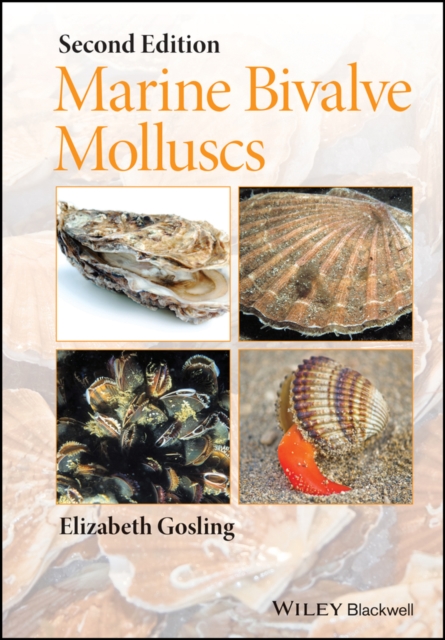
Marine Bivalve Molluscs
Marine Bivalve Molluscs Marine Bivalve Molluscs is a comprehensive and thoroughly updated Second Edition of Bivalve Molluscs, covering all major aspects of this important class of invertebrates. As well as being an important class biologically and ecologically, many of the bivalves are fished and cultured commercially (e.g. mussels, oysters, scallops and clams) in a multi-billion dollar worldwide industry. Elizabeth Gosling has written a landmark book that will stand for many years as the standard work on the subject. Chapters in Marine Bivalve Molluscs cover morphology, ecology, feeding, reproduction, settlement and recruitment, growth, physiology, fisheries, aquaculture, genetics, diseases and parasites, and public health issues. A full understanding of many of these aspects is vital for all those working in bivalve fisheries and culture. An essential purchase for anyone concerned with this important class of animals, copies of Marine Bivalve Molluscs should be on the shelves of biologists, ecologists, environmental scientists, fisheries scientists and personnel within the aquaculture industry. Copies of the book should be available in all libraries and research establishments where these subjects are studied or taught. REVIEWS OF THE FIRST EDITION An admirable achievement…a valuable addition to marine sciences libraries everywhere. The back cover of this book says that it is a landmark text that will stand for many years as the standard work on this subject. I can only agree with this sentiment. ~ Aquaculture A welcome addition to the literature and provides the reader with a comprehensive overview of biological and environmental factors that affect and control both natural populations of marine bivalves and culture operations. ~ Aquaculture International The author has done an admirable job in compiling a wealth of information into a readable text. ~ Transactions of the American Fisheries Society Will serve well as a description of much of both the experimental biology and the aquaculture of bivalves. ~ Journal of Experimental Marine Biology and Ecology Provides excellent reviews of all major aspects…an extremely important reference for anyone engaged in bivalve research, fisheries management, and aquaculture. ~ Quarterly Review of Biology The book is very readable, in an easy style. It is well illustrated and there is a wealth of data and statistics presented. ~ Bulletin of the Malacological Society of London
eBook