
Catalogue Search | MBRL


Are you sure you want to remove the book from the shelf?

{{itemTitle}}
176
result(s) for
"CONVERSOS"
Sort by:

The Virgin of Guadalupe and the Conversos
Hidden lives, hidden history, and hidden manuscripts. InThe Virgin of Guadalupe and the Conversos,Marie-Theresa Hernández unmasks the secret lives ofconversosandjudaizantesand their likely influence on the Catholic Church in the New World.The termsconversoandjudaizanteare often used for descendants of Spanish Jews (the Sephardi, or Sefarditas as they are sometimes called), who converted under duress to Christianity in the fourteenth and fifteenth centuries. There are few, if any, archival documents that prove the existence ofjudaizantesafter the Spanish expulsion of the Jews in 1492 and the Portuguese expulsion in 1497, as it is unlikely that a secret Jew in sixteenth-century Spain would have documented his allegiance to the Law of Moses, thereby providing evidence for the Inquisition.On aDa Vinci Code- style quest, Hernández persisted in hunting for a trove of forgotten manuscripts at the New York Public Library. These documents, once unearthed, describe the Jewish/Christian religious beliefs of an early nineteenth-century Catholic priest in Mexico City, focusing on the relationship between the Virgin of Guadalupe and Judaism. With this discovery in hand, the author traces the cult of Guadalupe backwards to its fourteenth-century Spanish origins. The trail from that point forward can then be followed to its interface with early modern conversos and their descendants at the highest levels of the Church and the monarchy in Spain and Colonial Mexico. She describes key players who were somehow immune to the dangers of the Inquisition and who were allowed the freedom to display, albeit in a camouflaged manner, vestiges of their family's Jewish identity.By exploring the narratives produced by these individuals, Hernández reveals the existence of thoseconversosandjudaizanteswho did not return to the \"covenantal bond of rabbinic law,\" who did not publicly identify themselves as Jews, and who continued to exhibit in their influential writings a covert allegiance and longing for a Jewish past. This is a spellbinding and controversial story that offers a fresh perspective on the origins and history ofconversos.
eBook

Antijudaism and European nationalism – The case of the Society of Jesus under Acquaviva
In 1593, the Society of Jesus adopted the Spanish statutes of purity of blood which Saint Ignatius and his successors had opposed since the foundation of the Society. European nationalism was on the rise and is partly responsible for the decision. How and why the Society did changed its policy on such a delicate matter? And why on that particular year? In France, opposition to Spain was a big argument of the party supporting Henri IV and it was a common slur that Spaniards were «all Jews». In 1590, graffiti was found written on Paris wall: ‘Pereat Societas Iudaica cum gente ibera’. In Spanish ruled Portugal, it was very convenient to foster anti-converso feelings in order to oppose Spain. In Spain itself, the party pushing for discrimination felt it got top political support. In Italy moreover, there had been for over twenty years a growing dissatisfaction against Spanish superiors. Father General Acquaviva used this heterogeneous coalition to secure his grip on power. The old trick did it again: anti-Judaism was used to crush opposition, ironically, however, in Portugal, Spain and France, Jews were officially outlaws.
Nel 1593 la Compagnia di Gesù adottò le leggi spagnole di purezza di razza a cui Sant’Ignazio e i suoi successori si erano opposti sin dalla fondazione della Compagnia. Il nazionalismo europeo, allora in aumento, fu in parte responsabile della decisione. Come e perché la Compagnia di Gesù cambiò la sua politica su una questione così delicata? E perché in quell’anno in particolare? In Francia l’opposizione alla Spagna era un punto fondamentale del partito che sosteneva Enrico IV, tanto che si insultavano gli spagnoli definendoli “tutti ebrei”. Nel 1590 furono trovati alcuni graffiti su alcuni muri di Parigi: “Alla rovina il popolo ebreo e con esso il popolo spagnolo”. Nel Portogallo dominato dalla Spagna era molto vantaggioso promuovere sentimenti anti-converso per contrastare la Spagna. Nella stessa Spagna, il partito che spingeva per la discriminazione sentiva di avere il massimo sostegno politico. Inoltre, da oltre venti anni, in Italia si riscontrava una crescente insoddisfazione nei confronti dei superiori spagnoli. Il Padre Generale Acquaviva, che aveva sfruttato questa eterogenea coalizione per assicurarsi la sua presa al potere, usò nuovamente il vecchio stratagemma: l’antigiudaismo fu usato per schiacciare l’opposizione, ma ironicamente in paesi (Portogallo, Spagna e Francia) dove gli Ebrei erano ufficialmente fuorilegge.
Journal Article

Communities of Non-violence? Justice and Social Integration among Conversos and Old Christians in Fifteenth-Century Valencia: A Preliminary Examination
This article examines non-violent conflicts between Conversos and Old Christians in fifteenth-century Valencia, challenging the historiographical emphasis on violence and structural discrimination in interfaith relations. Drawing on judicial records, notarial protocols, and arbitration agreements, it explores the mechanisms of conflict resolution and their role in the gradual integration of conversos into Christian society following the mass conversions of 1391. The study highlights how disputes —rooted in familial, economic, and social interactions— were managed through civil courts and private arbitration, revealing a nuanced interplay between coexistence and inequality. By analyzing the socio-professional networks and endogamous tendencies of the converso community, the article argues that peaceful conflict management served as a vital tool for fostering social cohesion and enabling conversos' participation in economic and institutional frameworks. This integrative process, while paradoxically born of violence, demonstrates the complexities of rebuilding coexistence in late medieval Iberia.
Journal Article

Jews in the Society of Jesus: Claudio Acquaviva and his critics
The Spanish origins of the Society of Jesus entailed a sensitivity about the Jewish ancestry of many of its members. This article examines the decision taken by the Fifth General Congregation of the Society (1593–1594) to exclude persons of Jewish descent ( conversos ), in light of strong criticism voiced by three leading Jesuits: Robert Persons (1546–1610), superior of the English mission, Diego de Guzmán (c.1522–1606), a noted Spanish preacher and catechist, and Antonio Possevino (1533–1611), an Italian Jesuit involved in high-level diplomacy. This article analyses selected correspondence in which they confronted the superior general, Claudio Acquaviva (1543–1615, in office 1580–1615), questioning the argument that conversos inhibited the work of the Society. The writers’ rhetorical strategies include logical argument and practical demonstration as well as appeals to ethos and pathos through personal experience and dramatised precedent, hoping to shame the general into moderating the policy. Acquaviva’s resistance to their persuasion is explained by his need to retain the support of the Spanish royal court in asserting his authority over dissident Jesuits in Spain as well as to sustain his project to increase the effectiveness of the Society through internal coherence and tight organisation. Contribution: The article illustrates the use of rhetorical strategies to reinforce the biblical principle of racial equality within the Society of Jesus in the Reformation era.
Journal Article
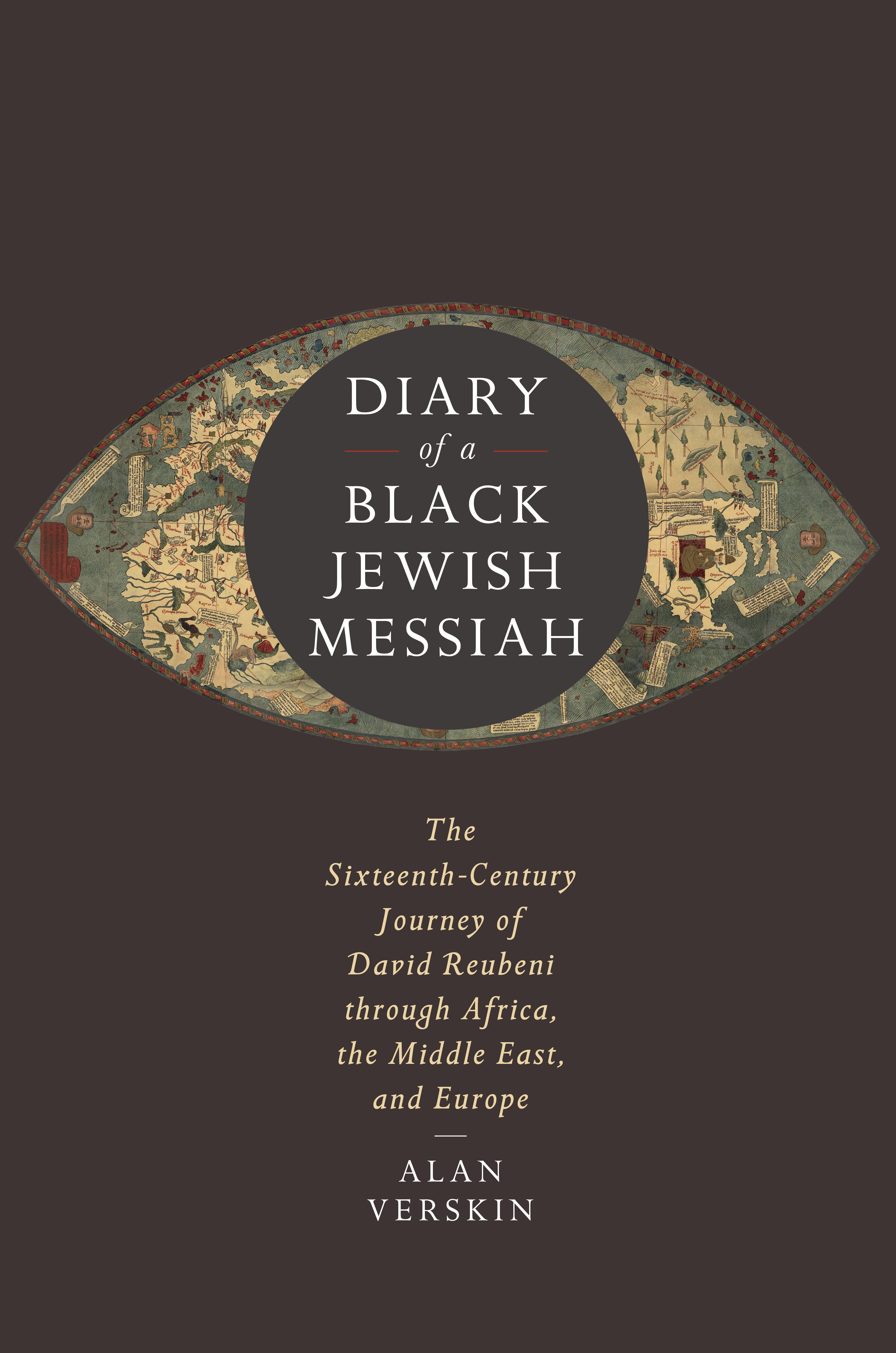
Diary of a Black Jewish Messiah
In 1524, a man named David Reubeni appeared in Venice, claiming to be the ambassador of a powerful Jewish kingdom deep in the heart of Arabia. In this era of fierce rivalry between great powers, voyages of fantastic discovery, and brutal conquest of new lands, people throughout the Mediterranean saw the signs of an impending apocalypse and envisioned a coming war that would end with a decisive Christian or Islamic victory. With his army of hardy desert warriors from lost Israelite tribes, Reubeni pledged to deliver the Jews to the Holy Land by force and restore their pride and autonomy. He would spend a decade shuttling between European rulers in Italy, Portugal, Spain, and France, seeking weaponry in exchange for the support of his hitherto unknown but mighty Jewish kingdom. Many, however, believed him to favor the relatively tolerant Ottomans over the persecutorial Christian regimes. Reubeni was hailed as a messiah by many wealthy Jews and Iberia's oppressed conversos, but his grand ambitions were halted in Regensburg when the Holy Roman Emperor, Charles V, turned him over to the Inquisition and, in 1538, he was likely burned at the stake. Diary of a Black Jewish Messiah is the first English translation of Reubeni's Hebrew-language diary, detailing his travels and personal travails. Written in a Hebrew drawn from everyday speech, entirely unlike other literary works of the period, Reubeni's diary reveals both the dramatic desperation of Renaissance Jewish communities and the struggles of the diplomat, trickster, and dreamer who wanted to save them.
eBook
Los libros de caballerías castellanos en Portugal
El artículo constituye un intento de reconstrucción del proceso de la transferencia de los libros de caballerías hispánicos hacia el mercado portugués en el siglo XVI. Siguiendo el marco metodológico de la transferencia cultural, se indican las circunstancias del proceso, con un énfasis especial en el rol de los posibles mediadores. En este contexto, se ofrecen varias hipótesis: en primer lugar, las obras de los autores de Ciudad Rodrigo mostraban una afinidad especial con los gustos de los lectores portugueses del siglo XVI; en segundo lugar, la presencia de un mensaje de tolerancia hacia los judíos conversos en las primeras ediciones publicadas en 1566 podría haber sido el motivo de su publicación. Además, se sugiere que durante la década de 1560, los libreros portugueses con ascendencia judía o que simpatizaban con las ideas protestantes podrían haberse involucrado en la difusión de la literatura que estuviera en línea con sus creencias o que apoyara su causa.
Journal Article

Maternal Practice and the Chuetas of Mallorca: The Inquisitorial Trials of Pedro Onofre Cortés
In the inquisitorial archive of Pedro Onofre Cortés, alias Moixina, we see fellow practitioner protesting his son’s marriage to Clara Sureda because she was an Old Christian. The poor match was blamed on the breast milk that was ingested as an infant, “andaba con cristianos porque había mamado leche de una mujer cristiana” (he went with Christians because of the milk drunk milk from a Christian woman) (Picazo y Muntaner). In early modern Spain, breastmilk was seen as responsible for transmitting virtues and vices, religious expressions of faith and moral traits. Following Galenic medical understanding equating milk with blood, it was women who were responsible for the transmission of purity, impurity (Alexandre-Bidon 175), for contamination and difference (Martínez 47). This brief citation reflects the hybrid environment and the dual practices that deeply informed the lives of the converso Jews. Moreover, the understanding of the hereditary nature of these traits, and the traditions of Judaism and Christianity, so often mixed in unique combinations are clearly demonstrated in the Inquisition trials of Cortés and his Chueta brethren. As regulation over the mother and the female body became increasingly important in controlling Iberian subjects and its empire, conversos complicate the feminization of impurity. This article explores how the conversos known as the Chuetas of Mallorca understood their religiosity and difference as seen through the lens of hybridity, breast milk and maternal care.
Journal Article

De la expulsión de los judíos a la integración de los conversos: un proyecto fallido de evangelización durante la disputa de Tortosa (Valencia, 1413)
La Disputa de Tortosa (1413-1414) tuvo un impacto profundo en las comunidades judías de la Corona de Aragón. La aprobación de legislaciones locales y conciliares, las campañas de predicación y la presión general ejercida sobre los judíos generaron un alud de bautismos que, especialmente en el reino de Aragón, debilitaron demográficamente la mayoría de las aljamas. Sin embargo, transcurrido casi un cuarto de siglo desde las conversiones forzosas de 1391, numerosas comunidades judías de Cataluña y de los reinos de Valencia y Mallorca se habían transformado en colectivos de conversos cuya cristianización efectiva era epidérmica. En Valencia, donde la residencia de judíos quedó prohibida en 1403, el clima favorable a la evangelización cristalizó en un proyecto pionero: la fallida distribución de los conversos locales entre sus vecinos cristianos viejos. En este artículo, se observará cómo el Consell de la ciudad maniobró durante más de una década para impedir el restablecimiento de una aljama judía en la ciudad, a la vez que integraba a los conversos en su estructuras hacendísticas y políticas. A continuación, se analizarán tanto el proyecto fallido de evangelización efectiva de 1413 como la retórica del gobierno municipal a la hora de justificarlo, de tono marcadamente antijudío. Finalmente, se ponderarán las razones políticas y religiosas que condujeron al Consell de Valencia a plantear un plan ambicioso que, sin embargo, no se esforzó en implementar.
Journal Article

From Agnostic Heathen to Christian Convert: Trust in One’s Own Might and Main in the Viking Age
Four Icelandic narrative texts with historical and thematic ties to the conversion of Norway and the Faroe Islands to Christianity are examined from the vantage-point of converts’ prior statements of their belief only in their own might and main. Disillusionment with the ‘old gods’ is the common reason given for such professed self-reliance, which does not, however, exclude opportunistic assistance from magical objects. Conversion to the Christian religion by an authority figure is largely transactional in nature, with only low-key emotional engagement. The objective of these texts, written some century and a half after their events, is the full discrediting of heathendom and promotion of skepticism of advantage in the existential void of individuality. Life as a Christian appears unchanged for the saga principals and, in a tacit recall of archaic belief, the soul’s redemption does not seems to cancel out the body’s destiny. The clerical authors of sagas of Icelanders occupied an exposed position comparable to the men of might and main, in that they had to negotiate an accommodation between heathen story-telling matter and its conventions, and a Christian world view.
Journal Article

Reading Against the Grain, Readings of Substitution
Forced conversion produced a large number of converts, many or at least some of whom sought to continue to practice their former religion. For many crypto-Jews and cryptoMuslims, polemical literature was actually a source of knowledge about their old religion—sometimes the only source. It was not unusual for Iberian New Christians, lacking access to Jewish or Islamic books, to make use of Catholic works either to gather information about Judaism and Islam or to borrow from their expressions of spirituality and piety. In this essay I explore the unintended readings and reception of polemical works among converts, in particular the Christian books of piety and devotion that persons of converso origin read and used in their own writings. In the end most of these books were included by the Inquisition and Church censors in the Index of Forbidden Books, affecting in this way the perception of these orthodox books by Catholic Church authorities. On the one hand, I am interested in how a heterodox (or Jewish or Muslim) spirituality could be constructed using Catholic books; on the other hand, in how this phenomenon had an impact on orthodox Catholics. I argue that Catholic books were sometimes condemned to the Index simply because they were read by New Christians who the Inquisition considered to be judaizers or crypto-Muslims.
Journal Article