
Catalogue Search | MBRL


Are you sure you want to remove the book from the shelf?

{{itemTitle}}
511
result(s) for
"CUIVRE"
Sort by:

The war below : lithium, copper, and the global battle to power our lives
Tough choices loom if the world wants to go green. The United States and other countries must decide where and how to procure the materials that make our renewable energy economy possible. To build electric vehicles, solar panels, cell phones, and millions of other devices means the world must dig more mines to extract lithium, copper, cobalt, rare earths, and nickel. But mines are deeply unpopular, even as they have a role to play in fighting climate change. These tensions have sparked a worldwide reckoning over the sourcing of these critical minerals, and no one understands the complexities of these issues better than Ernest Scheyder, whose exclusive access has allowed him to report from the front lines on the key players in this global battle to power our future.
Book

Extractive Metallurgy of Copper
This book provides fully updated coverage of the copper production process encompassing topics as diverse as environmental technology for wind and solar energy transmission, treatment of waste byproducts, and recycling of electronic scrap for potential alternative technology implementation. The authors examine industrially-grounded treatments of process fundamentals and the beneficiation of raw materials, smelting and converting, hydrometallurgical processes, and refining technology for a mine-to-market perspective, from primary and secondary raw materials extraction to shipping of rod or billet to customers. The modern coverage of the work includes bath smelting processes such as Ausmelt and Isasmelt which have become state-of-the-art in sulfide concentrate smelting and converting.
eBook


Metals as a cause of oxidative stress in fish: a review
This review summarizes the current knowledge on the contribution of metals to the development of oxidative stress in fish. Metals are important inducers of oxidative stress in aquatic organisms, promoting formation of reactive oxygen species through two mechanisms. Redox active metals generate reactive oxygen species through redox cycling, while metals without redox potential impair antioxidant defences, especially that of thiol-containing antioxidants and enzymes. Elevated levels of reactive oxygen species lead to oxidative damage including lipid peroxidation, protein and DNA oxidation, and enzyme inactivation. Antioxidant defences include the enzyme system and low molecular weight antioxidants. Metal-binding proteins, such as ferritin, ceruloplasmin and metallothioneins, have special functions in the detoxification of toxic metals and also play a role in the metabolism and homeostasis of essential metals. Recent studies of metallothioneins as biomarkers indicate that quantitative analysis of mRNA expression of metallothionein genes can be appropriate in cases with elevated levels of metals and no evidence of oxidative damage in fish tissue. Components of the antioxidant defence are used as biochemical markers of oxidative stress. These markers may be manifested differently in the field than in results found in laboratory studies. A complex approach should be taken in field studies of metal contamination of the aquatic environment.
Journal Article
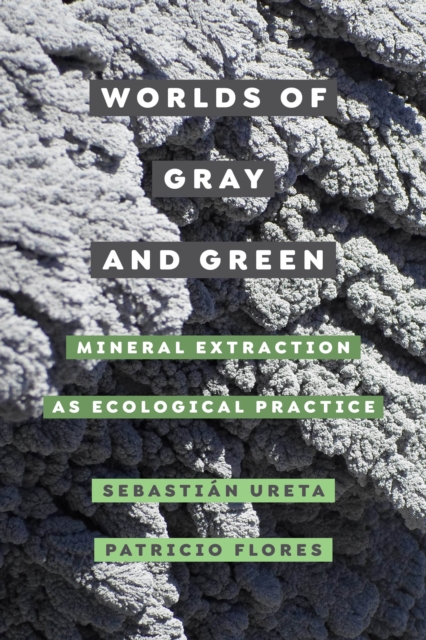
Worlds of Gray and Green
The Anthropocene has arrived riding a wave of pollution. From
\"forever chemicals\" to oceanic garbage patches, human-made chemical
compounds are seemingly everywhere. Concerned about how these
compounds disrupt multiple lives and ecologies, environmental
scholars, activists, and affected communities have sought to curb
the causes of pollution, focusing especially on the extractive
industries. In Worlds of Gray and Green , authors Sebastián
Ureta and Patricio Flores challenge us to rethink extraction as
ecological practice. Adopting an environmental humanities analytic
lens, Ureta and Flores offer a rich ethnographic exploration of the
waste produced by Chile's El Teniente, the world's largest
underground mine. Deposited in a massive dam, the waste-known as
tailings-engages with human and non-human entities in multiple ways
through a process the authors call geosymbiosis. Some of these
geosymbioses result in toxicity and damage, while others become the
basis of lively novel ecologies. A particular kind of power emerges
in the process, one that is radically indifferent to human beings
but that affects them in many ways. Learning to live with
geosymbioses offers a tentative path forward amid ongoing
environmental devastation.
eBook
The wild West of today. Apache stronghold
Join Naelyn Pike and Apache Stronghold in their powerful journey to resist copper mining and protect Oak Flat, a sacred native heritage site.
Streaming Video

Effect of different levels of humic acids on the nutrient content, plant growth, and soil properties under conditions of salinity
In this study, the effects were investigated of salinity, foliar and soil applications of humic substances on the growth and mineral nutrients uptake of Corn (Hagein, Fardy10), and the comparison was carried out of the soil and foliar applications of humic acid treatments at different NaCl levels. Soil organic contents are one of the most important parts that they directly affect the soil fertility and textures with their complex and heterogenous structures although they occupy a minor percentage of the soil weight. Humic acids are an important soil component that can improve nutrient availability and impact on other important chemical, biological, and physical properties of soils. The effects of foliar and soil applications of humic substances on the plant growth and some nutrient elements uptake of Corn (Hagein, Fardy10) grown at various salt concentrations were examined. Sodium chloride was added to the soil to obtain 20 and 60mM saline conditions. Solid humus was applied to the soil one month before planting and liquid humic acids were sprayed on the leaves twice on 20th and 40th day after seedling emergence. The application doses of solid humus were 0, 2 and 4 g/kg and those of liquid humic acids were 0, 0.1 and 0.2%. Salinity negatively affected the growth of corn; it also decreased the dry weight and the uptake of nutrient elements except for Na and Mn. Soil application of humus increased the N uptake of corn while foliar application of humic acids increased the uptake of P, K, Mg,Na,Cu and Zn. Although the effect of interaction between salt and soil humus application was found statistically significant, the interaction effect between salt and foliar humic acids treatment was not found significant. Under salt stress, the first doses of both soil and foliar application of humic substances increased the uptake of nutrients.
Journal Article

Le gisement à étain–cuivre–indium de Charrier (Allier) : un skarnoïde viséen (340 Ma) traceur de la métallogenèse varisque du nord Massif central
Charrier est un petit gisement de cuivre–étain riche en indium de type skarnoïde du Forez (nord du Massif central). Il est encaissé dans une série volcanosédimentaire du Dévono-dinantien au contact du granite viséen des Bois-noirs. Sa genèse comprend une étape précoce oxydée de haute température (vers 550–350 °C) à cassitérite–magnétite, suivie d’une étape réduite sulfurée (vers 350–250 °C) à bornite–chalcopyrite dominantes avec wittichénite, tennantite, sphalérite, bismuthinite et roquesite (CuInS 2 ) qui se déroule en conditions de pH acide et de faible fugacité en soufre. L’apatite hydrothermale fournit un âge U–Pb de 340,7 ± 2,6 Ma identique à celui du granite (341 ± 4 Ma) ; il est confirmé par l’âge U–Pb de 332 ± 12 Ma obtenu sur cassitérite. Le gisement s’est donc formé au début de l’extension tardi-varisque par l’action des fluides magmatiques à Sn–Bi–In issus du granite des Bois-noirs (341 ± 4 Ma) ayant interagi avec la série volcanosédimentaire. Charrier pourrait traduire la superposition d’un district à cuivre sur une vaste ceinture à étain (et tungstène), ce qui suggère la présence d’autres gisements de cuivre/étain dans cette région. Cette superposition est bonifiée par une richesse particulière en indium du nord-Forez, ce métal s’exprimant du Viséen (roquesite de Charrier) jusqu’au Lias (sphalérite à indium des filons plombo–zincifères), illustration du phénomène de permanence métallique. Charrier is a small indium–rich copper–tin deposit of the skarnoid type in Forez (North French Massif central). It is hosted in a Devono-dinantian volcano-sedimentary series at the contact with the Visean Bois-noirs granite. Its genesis includes an early high temperature oxidized stage (around 550–350 °C) with cassiterite–magnetite, followed by a reduced sulphide stage (around 350–250 °C) with bornite–chalcopyrite dominant with wittichenite, tennantite, sphalerite, bismuthinite and roquesite (CuInS 2 ) which takes place under conditions of acidic pH and low sulfur fugacity. Hydrothermal apatite provides a U–Pb age of 340.7 ± 2.6 Ma identical to that of the granite (341 ± 4 Ma); it is confirmed by the U–Pb age of 332 ± 12 Ma measured on cassiterite. The deposit was therefore formed at the beginning of the late-Variscan extension by the action of magmatic Sn–Bi–In fluids issued from the Bois-noirs granite (341 ± 4 Ma) and which reacted with the volcano-sedimentary series. Charrier could reflect the superimposition of a copper district on a vast tin (and tungsten) belt, what suggests the presence of other copper/tin deposits in this region. This superimposition is enhanced by a particular richness in indium in northern Forez, this metal being expressed from the Visean (roquesite of Charrier) to the Lias (indium sphalerite from the lead–zinc veins), an illustration of the phenomenon of metallic permanence.
Journal Article

Identification of a functional homolog of the yeast copper homeostasis gene ATX1 from Arabidopsis
A cDNA clone encoding a homolog of the yeast (Saccharomyces cerevisiae) gene Anti-oxidant 1 (ATX1) has been identified from Arabidopsis. This gene, referred to as Copper CHaperone (CCH), encodes a protein that is 36% identical to the amino acid sequence of ATX1 and has a 48-amino acid extension at the C-terminal end, which is absent from ATX1 homologs identified in animals. ATX1-deficient yeast (atx1) displayed a loss of high-affinity iron uptake. Expression of CCH in the atx1 strain restored high-affinity iron uptake, demonstrating that CCH is a functional homolog of ATX1. When overexpressed in yeast lacking the superoxide dismutase gene SOD1, both ATX1 and CCH protected the cell from the reactive oxygen toxicity that results from superoxide dismutase deficiency. CCH was unable to rescue the sod1 phenotype in the absence of copper, indicating that CCH function is copper dependent. In Arabidopsis CCH mRNA is present in the root, leaf, and inflorescence and is up-regulated 7-fold in leaves undergoing senescence. In plants treated with 800 nL/L ozone for 30 min, CCH mRNA levels increased by 30%. In excised leaves and whole plants treated with high levels of exogenous CuSO4, CCH mRNA levels decreased, indicating that CCH is regulated differently than characterized metallothionein proteins in Arabidopsis
Journal Article

Glutathione metabolic genes coordinately respond to heavy metals and jasmonic acid in Arabidopsis
Glutathione plays a pivotal role in protecting plants from environmental stresses, oxidative stress, xenobiotics, and some heavy metals. Arabidopsis plants treated with cadmium or copper responded by increasing transcription of the genes for glutathione synthesis, gamma-glutamylcysteine synthetase and glutathione synthetase, as well as glutathione reductase. The response was specific for those metals whose toxicity is thought to be migrated through phytochelatins, and other toxic and nontoxic metals did not alter mRNA levels. Feeding experiments suggested that neither oxidative stress, as results from exposure to H2O2, nor oxidized or reduced glutathione levels were responsible for activating transcription of these genes. Jasmonic acid also activated the same suite of genes, which suggests that it might be involved in the signal transduction pathway for copper and cadmium. Jasmonic acid treatment increased mRNA levels and the capacity for glutathione synthesis but did not alter the glutathione content in unstressed plants, which supports the idea that the glutathione concentration is controlled at multiple levels
Journal Article