
Catalogue Search | MBRL


Are you sure you want to remove the book from the shelf?

{{itemTitle}}
9
result(s) for
"Camps de réfugiés Aspect social."
Sort by:


Barriers to safe abortion care in internally displaced persons camps in Ethiopia
This qualitative study examines barriers to safe abortion care among women in Internally Displaced Persons (IDP) camps in Ethiopia using the Social Ecological Model (SEM). Data were collected through in-depth and key informant interviews with displaced women, healthcare providers, community leaders, NGO representatives, and policymakers. The findings reveal multi-level challenges, including personal and structural barriers, where cultural and religious beliefs, financial constraints, and limited education prevent women from access to safe abortion care. Social networks and healthcare providers play a critical role, with unsupportive partners and providers’ moral objections worsening the situation. Community stigma and social norms perpetuate misinformation and isolation, while societal barriers such as inadequate healthcare infrastructure and policy gaps further limit access. Urgent, coordinated action is critical. The Ministry of Health, humanitarian organizations, and local leaders must expand healthcare access, ensure legal protections, combat Sexual and Gender Based violence, and dismantle stigma. Without urgent intervention, displaced women will continue facing life-threatening risks.
Cette étude qualitative examine les obstacles à l'avortement médicalisé chez les femmes vivant dans des camps de personnes déplacées à l'intérieur du pays (PDI) en Éthiopie, à l'aide du Modèle Écologique Social (MES). Les données ont été recueillies lors d'entretiens approfondis avec des informateurs clés auprès de femmes déplacées, de prestataires de soins de santé, de dirigeants communautaires, de représentants d'ONG et de décideurs politiques. Les résultats révèlent des difficultés à plusieurs niveaux, notamment des obstacles personnels et structurels, où les croyances culturelles et religieuses, les contraintes financières et le manque d'éducation empêchent les femmes d'accéder à un avortement médicalisé. Les réseaux sociaux et les prestataires de soins de santé jouent un rôle crucial, le manque de soutien des partenaires et les objections morales des prestataires aggravant la situation. La stigmatisation communautaire et les normes sociales perpétuent la désinformation et l'isolement, tandis que les obstacles sociétaux, tels que l'insuffisance des infrastructures de santé et les lacunes politiques, limitent encore davantage l'accès. Une action urgente et coordonnée est essentielle. Le ministère de la Santé, les organisations humanitaires et les dirigeants locaux doivent élargir l'accès aux soins de santé, garantir une protection juridique, lutter contre les violences sexuelles et sexistes et mettre fin à la stigmatisation. Sans une intervention urgente, les femmes déplacées continueront d'être exposées à des risques mortels.
Journal Article
3 logical exits
A sociological meditation on the different exits that young Palestinians choose, in order to cope with life in the refugee camps.
Streaming Video
The ideal refugees
Refugee camps are typically perceived as militarized and patriarchal spaces, and yet the Sahrawi refugee camps and their inhabitants have consistently been represented as ideal in nature: uniquely secular and democratic spaces and characterized by gender equality. Drawing on extensive research with and about Sahrawi refugees in Algeria, Cuba, Spain, South Africa, and Syria, Fiddian-Qasmiyeh explores how, why, and to what effect such idealized depictions have been projected onto the international arena.
eBook
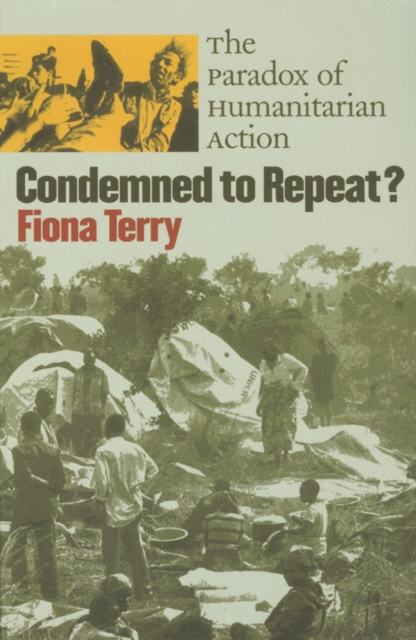
Condemned to Repeat?
Humanitarian groups have failed, Fiona Terry believes, to face up to the core paradox of their activity: humanitarian action aims to alleviate suffering, but by inadvertently sustaining conflict it potentially prolongs suffering. InCondemned to Repeat?, Terry examines the side-effects of intervention by aid organizations and points out the need to acknowledge the political consequences of the choice to give aid. The author makes the controversial claim that aid agencies act as though the initial decision to supply aid satisfies any need for ethical discussion and are often blind to the moral quandaries of aid. Terry focuses on four historically relevant cases: Rwandan camps in Zaire, Afghan camps in Pakistan, Salvadoran and Nicaraguan camps in Honduras, and Cambodian camps in Thailand.
Terry was the head of the French section of Medecins sans frontieres (Doctors Without Borders) when it withdrew from the Rwandan refugee camps in Zaire because aid intended for refugees actually strengthened those responsible for perpetrating genocide. This book contains documents from the former Rwandan army and government that were found in the refugee camps after they were attacked in late 1996. This material illustrates how combatants manipulate humanitarian action to their benefit.Condemned to Repeat?makes clear that the paradox of aid demands immediate attention by organizations and governments around the world. The author stresses that, if international agencies are to meet the needs of populations in crisis, their organizational behavior must adjust to the wider political and socioeconomic contexts in which aid occurs.
eBook
Another kind of girl
17-year-old Khaldiya meditates on how the refugee camp has opened up new horizons and given her a sense of courage that she lacked in Syria.
Streaming Video

Managing Displacement
In this analysis of how refugee relief services work in places such as Kenya and Somalia, Hyndman uses unique insider knowledge both to challenge the political and cultural assumptions of current humanitarian practices and to expose the distancing strategies that characterize present operations.
eBook
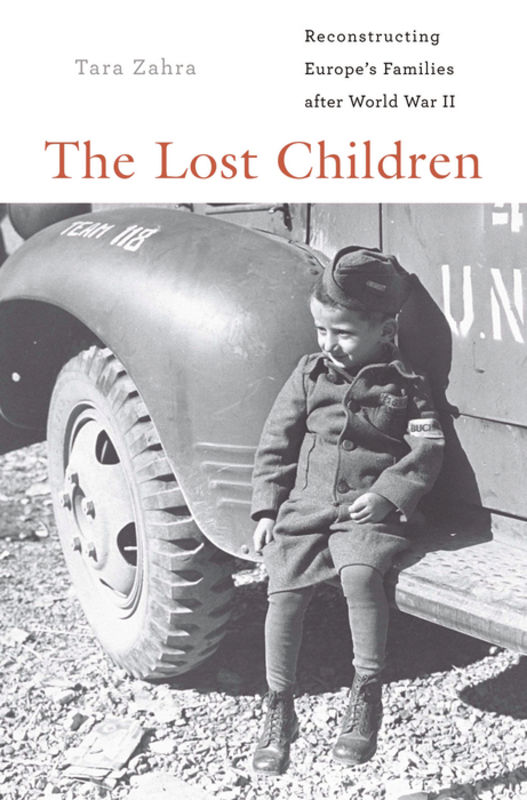
The lost children
During the Second World War, an unprecedented number of families were torn apart. As the Nazi empire crumbled, millions roamed the continent in search of their loved ones. The Lost Children tells the story of these families, and of the struggle to determine their fate. We see how the reconstruction of families quickly became synonymous with the survival of European civilization itself. Even as Allied officials and humanitarian organizations proclaimed a new era of individualist and internationalist values, Tara Zahra demonstrates that they defined the \"best interests\" of children in nationalist terms. Sovereign nations and families were seen as the key to the psychological rehabilitation of traumatized individuals and the peace and stability of Europe. Based on original research in German, French, Czech, Polish, and American archives, The Lost Children is a heartbreaking and mesmerizing story. It brings together the histories of eastern and western Europe, and traces the efforts of everyone—from Jewish Holocaust survivors to German refugees, from Communist officials to American social workers—to rebuild the lives of displaced children. It reveals that many seemingly timeless ideals of the family were actually conceived in the concentration camps, orphanages, and refugee camps of the Second World War, and shows how the process of reconstruction shaped Cold War ideologies and ideas about childhood and national identity. This riveting tale of families destroyed by war reverberates in the lost children of today's wars and in the compelling issues of international adoption, human rights and humanitarianism, and refugee policies.
eBook
