
Catalogue Search | MBRL


Are you sure you want to remove the book from the shelf?

{{itemTitle}}
377
result(s) for
"Canadian Arctic"
Sort by:
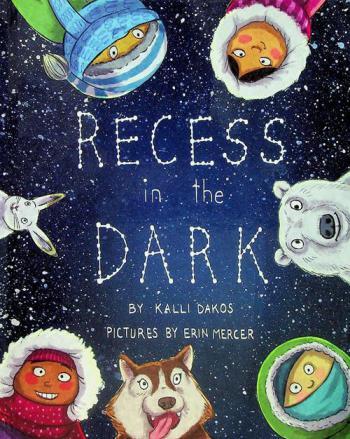
Recess in the dark : poems from the far North
\"This book is a collection of poems about children's fascinating lives above the Arctic Circle. It also introduces all children to the most unique recess of all--recess in the dark.\"-- Provided by publisher.


Against the current : the remarkable life of Agnes Deans Cameron
\"The first biography on Agnes Deans Cameron, BC's first female principal, itinerant traveller, and one of Canada's most famous writers, trailblazer.\"-- Provided by publisher.
Book
Making of an Explorer
Wilkins was originally seconded to Stefansson's Arctic Expedition for a year as its official photographer but circumstances forced him to stay in the Arctic for three years. He spent much of those extra two years in discussion with Stefansson, becoming his life-long friend. \"The Making of an Explorer\" describes Wilkins' successful expedition to Banks Island in 1914 in search of Stefansson and his subsequent relationship with Stefansson, his significant role and contribution as second-in-command of Stefansson's polar explorations over the next two years, his remarkable collection of films and photographs of the little-known Copper Eskimos in the Central Arctic, and his large but virtually unknown original collection of birds and mammals from Banks Island for the National Museum of Canada.
eBook

Where the Wind Blows Us
Where the Wind Blows Usunites critical practice with a community-based approach to archaeology. Author Natasha Lyons describes an inclusive archaeology that rests on a flexible but rigorous approach to research design and demonstrates a responsible, ethical practice. She traces the rise and application of community archaeologies, develops a wide-ranging set of methods for community practice, and maps out a \"localized critical theory\" that is suited to the needs of local and descendant communities as they pursue self-defined heritage goals. Localized critical theory aims to decenter the focus on global processes of capitalism in favor of the local processes of community dynamics.Where the Wind Blows Usemphasizes the role of individuals and the relationships they share with communities of the past and present.Lyons offers an extended case study of her work with the Inuvialuit community of the Canadian Western Arctic. She documents the development of this longstanding research relationship and presents both the theoretical and practical products of the work to date. Integrating knowledge drawn from archaeology, ethnography, oral history, and community interviews, Lyons utilizes a multivocal approach that actively listens to Inuvialuit speak about their rich and textured history.The overall significance of this volume lies in outlining a method of practicing archaeology that embraces local ways of knowing with a critically constructed and evolving methodology that is responsive to community needs. It will serve as a handbook to mine for elements of critical practice, a model of community-based archaeology, and a useful set of concepts and examples for classroom study.
eBook

Regional Variability of Megabenthic Community Structure across the Canadian Arctic
Major climate changes are underway in the Canadian Arctic, but our ability to monitor and predict their impact on faunal community structure is hindered by the lack of baseline diversity data. This study combined megabenthic community data sampled at 78 stations from 2007 to 2011 across the Western and Eastern Canadian Arctic biogeographic units. These large biogeographic units were divided into five geographical regions to provide regional estimates of observed and predicted taxon richness. We did not detect a strong regional difference in benthic community characteristics, observing only a lower richness in the Amundsen Gulf region than in the neighboring Beaufort Sea region. The Amundsen Gulf region had the highest turnover (beta) diversity, coincident with high environmental heterogeneity. The strong and distinctive presence in the Beaufort Sea region of Saduria spp., a euryhaline isopod, demonstrated the particular influence of the Mackenzie River on the community composition ofthat region. Our analysis showed that in various regions, about 34% to 59% of megabenthic taxa in Canadian Arctic waters are still to be documented. This study provides useful baseline data for both national and pan-Arctic evaluations of benthic diversity in the Arctic Ocean. Des changements climatiques majeurs sont en cours dans l'Arctique canadien, mais notre capacité à surveiller et à prévoir leurs impacts sur la structure des communautés est entravée par le manque de données de référence sur la diversité. Cette étude combine des données sur les communautés mégabenthiques échantillonnées à 78 stations de 2007 à 2011 à l'intérieur des unités biogéographiques de l'ouest et de l'est de l'Arctique canadien. Ces grandes unités biogéographiques ont été divisées en cinq régions géographiques afin de fournir des estimations régionales de richesse taxonomique observée et prédite. Nous n'avons pas détecté de fortes différences régionales dans les caractéristiques des communautés, benthiques. Seule la richesse observée est inférieure dans le golfe d'Amundsen par rapport à la région voisine de la mer de Beaufort. La région du golfe d'Amundsen a la diversité bêta la plus élevée, ce qui coïncide avec une grande hétérogénéité de conditions environnementales. La composition taxonomique de la mer de Beaufort est différente de celle des autres régions. La présence distinctive et forte de Saduria spp., un isopode euryhalin, dans la région de la mer de Beaufort illustre l'influence du fleuve Mackenzie sur la composition taxonomique de cette région. Notre analyse démontre que régionalement, environ 34 % à 59 % des taxa mégabenthiques restent à être répertoriés dans les eaux arctiques canadiennes. Cette étude fournit des données de référence utiles pour les évaluations nationales et panarctiques de la diversité benthique de l'océan Arctique.
Journal Article

Inuit Shamanism and Christianity
Using archival material and oral testimony collected during workshops in Nunavut between 1996 and 2008, Frédéric Laugrand and Jarich Oosten provide a nuanced look at Inuit religion, offering a strong counter narrative to the idea that traditional Inuit culture declined post-contact. They show that setting up a dichotomy between a past identified with traditional culture and a present involving Christianity obscures the continuity and dynamics of Inuit society, which has long borrowed and adapted \"outside\" elements. They argue that both Shamanism and Christianity are continually changing in the Arctic and ideas of transformation and transition are necessary to understand both how the ideology of a hunting society shaped Inuit Christian cosmology and how Christianity changed Inuit shamanic traditions.
eBook

History in the Making
The Eastern Subarctic has long been portrayed as a place without history. Challenging this perspective, History in the Making: The Archaeology of the Eastern Subarctic charts the complex and dynamic history of this little known archaeological region of North America. Along the way, the book explores the social processes through which native peoples “made” history in the past and archaeologists and anthropologists later wrote about it. As such, the book offers both a critical history and historiography of the Eastern Subarctic.
eBook
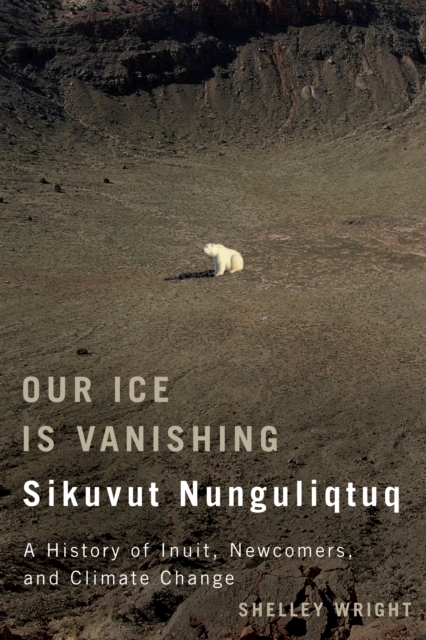
Our Ice Is Vanishing / Sikuvut Nunguliqtuq
The Arctic is ruled by ice. For Inuit, it is a highway, a hunting ground, and the platform on which life is lived. While the international community argues about sovereignty, security, and resource development at the top of the world, the Inuit remind us that they are the original inhabitants of this magnificent place - and that it is undergoing a dangerous transformation. The Arctic ice is melting at an alarming rate and Inuit have become the direct witnesses and messengers of climate change. Through an examination of Inuit history and culture, alongside the experiences of newcomers to the Arctic seeking land, wealth, adventure, and power, Our Ice Is Vanishing describes the legacies of exploration, intervention, and resilience. Combining scientific and legal information with political and individual perspectives, Shelley Wright follows the history of the Canadian presence in the Arctic and shares her own journey in recollections and photographs, presenting the far North as few people have seen it. Climate change is redrawing the boundaries of what Inuit and non-Inuit have learned to expect from our world. Our Ice Is Vanishing demonstrates that we must engage with the knowledge of the Inuit in order to understand and negotiate issues of climate change and sovereignty claims in the region.
eBook

Sir John Franklin's Erebus and Terror Expedition
In 1845, British explorer Sir John Franklin set out on a voyage to find the North-West Passage - the sea route linking the Atlantic Ocean to the Pacific.The expedition was expected to complete its mission within three years and return home in triumph but the two ships, HMS Erebus and HMS Terror , and the 129 men aboard them disappeared.
eBook