
Catalogue Search | MBRL


Are you sure you want to remove the book from the shelf?

{{itemTitle}}
515
result(s) for
"Caregivers Europe."
Sort by:


Care and social integration in European societies
This book provides invaluable descriptions and comparative analyses of the now complex and highly varied arrangements for the care of children, disabled and older people in Europe, set within the context of changing labour markets and welfare systems. It includes analyses of the modernisation of informal care and new forms of informal care, topics often neglected in the literature. Issues of gender, family change, social integration and citizenship are all explored in a series of chapters that report on original empirical, cross-national research. All contributors are high-ranking experts involved in the COST A13 Action Programme, funded by the European Union.Care and social integration in European societies is essential reading for social policy and sociology academics, particularly those who are interested in comparative policy analysis, gender, labour markets and families. It is also recommended reading for graduate level students in these fields and policy makers, for whom the book provides a unique resource on the latest European developments in this critical policy area.
eBook

Irregular migration and invisible welfare
\"This book examines the paradoxical position of irregular migrants in European society, who are often labelled as 'illegal' residents but who in fact provide much needed, essential support to welfare systems. Focusing on care work at home for the elderly, the book argues that increasingly restrictive immigration policies directly contradicts the growing need for care-givers since the majority of those employed are a result of illegal immigration. The book also explores the personal issues faced by these irregular migrants such as their concerns for family members that are left behind and the pressures that migration imposes on these relationships as migrants struggle to improve the daily conditions of their lives\"-- Provided by publisher.
Book
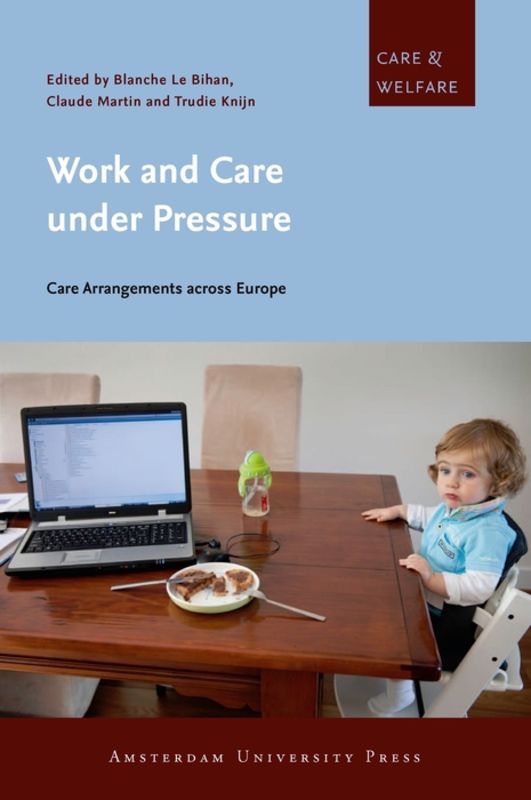
Work and care under pressure
In many European countries tensions have arisen between the demands of the labor market and the caregiving responsibilities workers must fulfill at home. Examining these tensions,Work and Care under Pressurefocuses on two groups of people who must juggle work and caregiving: parents of young children who work nonstandard hours and working adults who care for older parents. Based on empirical evidence from six European countries, this volume sheds light on the social effects of national policies and the choices made by caregivers. It is an essential resource for researchers, scholars, and policy makers interested in social policy.
eBook
Employers, Agencies and Immigration
Exploring the performance by immigrants of domestic and care work in European households, this book places the employer centre-stage, examining the role of the employer and his or her agents in securing the balance between work, family and welfare needs, as well as investigating both who the employers are and the nature of their relationships with migrant workers.
With attention to the dynamics of inequality, as class, ethnicity and gender become intertwined in a location that is at once home and workplace, this volume is organised into sections that deal with the subjectivities of employers and their relationships with their employees in the home; the re-organisation of welfare and care arrangements at state level; and the wider area of migrant domestic and care work, with the transformation of the au pair scheme.
Bringing together the latest empirical work from across Europe, Employers, Agencies and Immigration will appeal to social scientists with interests in migration, ethnic and class relations, immigrant labour and domestic work and the sociology of the family.
eBook

How Many Older Informal Caregivers Are There in Europe? Comparison of Estimates of Their Prevalence from Three European Surveys
Informal caregivers are people providing some type of unpaid, ongoing assistance to a person with a chronic illness or disability. Long-term care measures and policies cannot take place without taking into account the quantitatively crucial role played by informal caregivers. We use the European Health Interview Survey (EHIS), the European Quality of Life Survey (EQLS), and the Study on Health and Ageing in Europe (SHARE) to measure the prevalence of informal caregivers in the European population, and analyze associated socio-demographic factors. This rate ranges between about 13 percent in Portugal and Spain, and more than 22 percent in Luxembourg, Belgium, and Denmark. It declines in older age groups and, on average, is lower in men than in women in all countries studied, and lower among the poorly educated compared to those with higher levels of education. However, large variance was observed in the average share of informal caregivers for most countries between the three surveys. Our findings, estimated through the three surveys, reveal common trends, but also a series of disparities. Additional research will be needed to enable policy makers to access a richer and more harmonized body of data, allowing them to adopt truly evidence-based and targeted policies and interventions in this field.
Journal Article

Prevalence of depression and anxiety in patients with cystic fibrosis and parent caregivers: results of The International Depression Epidemiological Study across nine countries
Individuals with chronic diseases and parent caregivers are at increased risk for symptoms of depression and anxiety. Prevalence of psychological symptoms was evaluated in adolescents and adults with cystic fibrosis (CF) and parent caregivers across nine countries.
Patients with CF, ages 12 years and older, and caregivers of children with CF, birth to18 years of age, completed measures of depression and anxiety across 154 CF centres in Europe and the USA. Psychological symptoms were compared across countries using χ(2). Logistic regression examined extent of comorbid symptoms, predictors of depression and anxiety, and concordance between parent and adolescent symptomatology.
Psychological symptoms were reported by 6088 patients with CF and 4102 parents. Elevated symptoms of depression were found in 10% of adolescents, 19% of adults, 37% of mothers and 31% of fathers. Elevations in anxiety were found in 22% of adolescents, 32% of adults, 48% of mothers and 36% of fathers. Overall, elevations were 2-3 times those of community samples. Participants reporting elevated anxiety were more likely to report depression (ORs: adolescents=14.97, adults=13.64, mothers=15.52, fathers=9.20). Significant differences in reports of depression and anxiety were found by patient age and parent respondent. Concordance between 1122 parent-teen dyads indicated that adolescents whose parents reported depression were more likely to be elevated on depression (OR=2.32). Similarly, adolescents whose parents reported anxiety were more likely to score in the elevated range on the anxiety measure (OR=2.22).
Symptoms of depression and anxiety were elevated in both patients with CF and parents across several European countries and the USA. Annual screening of psychological symptoms is recommended for both patients and parents.
Journal Article

Defining informal caregivers by their characteristics safety roles and training needs in Europe
This research re-examines and broadens the conceptualization of patient safety in home care setting through experts’ perspective, and recent changes in the profiles of informal caregivers across Europe and explores their role in the dynamics of the evolving care economy. It assesses their contributions to home care, their impact on care quality, and their essential role in ensuring care recipient safety. A qualitative study using the consensus conference technique involving sixty-one experts from diverse healthcare and academic institutions across multiple European countries who participated in a two-day conference. The discussions focused on highlighting the characteristics of informal caregivers and identifying critical challenges in home care, recognition and reducing human errors in home care. Eligibility for participation required membership in the BetterCare consortium and expertise in patient safety. This study emphasizes the critical role of informal caregivers in Europe, updates their definition, and examines their contribution to care recipient safety in the home care setting. This finding underscores the urgent need for policymakers and healthcare institutions to support caregivers by providing education and resources to prevent errors and enhance care quality, ultimately improving outcomes for care recipients.
Journal Article

Cross-country variations in the caregiver role: evidence from the ENTWINE-iCohort study
Background
Globally, economically developed countries face similar ageing demographics and the challenge of a ‘care gap’, yet they vary due to different care and formal support systems, and different cultural and societal norms around illness and care. The aim of this exploratory study was to examine cross-country variations in caregiver motivations, willingness, values, meaning in life, illness beliefs, and experiences of wellbeing, gain, health-related quality of life, burden and depression, across 6 European countries and Israel. Cross-country differences in the above-mentioned informal caregiver experiences are rarely described.
Methods
An online survey (ENTWINE-iCohort) was conducted using validated measures wherever possible. This paper utilises data from 879 caregivers and seven countries (Greece, Italy, the Netherlands, Poland, Sweden, the UK, and Israel).
Results
No consistent finding supporting the concurrent relationship between caregiver support policies/country culture and caregiver motivations/willingness was found. Caregivers in countries typically characterised by individualist cultures reported lower familism, higher self-enhancement values, and greater perceived illness threat compared to more collectivist countries. Search for meaning was higher in poorer countries than in wealthier countries. Higher negative caregiver experiences (e.g., burden) and lower positive experiences (e.g., wellbeing) were generally observed in countries with underdeveloped caregiver support as compared to countries with more developed formal support systems.
Conclusions
Cross-country variations can be explained to varying degrees by national policies around care (or their absence) and country cultural contexts. The results emphasise the importance of formal support services for achieving positive caregiver experiences, and help inform the development of policies and measures to support caregivers in Europe and Israel.
Journal Article

Autism in Southeast Europe: A Survey of Caregivers of Children with Autism Spectrum Disorders
The aim of this study was to understand the diagnostic, service and lived experiences of families affected by ASD in Southeast Europe. A total of 758 caregivers from Albania, Bulgaria, Croatia and Turkey were surveyed from 2013 to 2015 about characteristics of the child with ASD; service encounters; and caregiver perceptions. The average age at first concern was 24.4 months (SD 11.8) and at diagnosis, 40.0 months (SD 19.0). Psychiatrists were the most common diagnostician; most children received some ASD-related service, most frequently speech and language therapy. Caregivers endorsed challenges in access to care and perceived stigma. Despite country differences, findings relative to age at first concern, disparities in access and service utilization, and stigma speak to common regional needs.
Journal Article