
Catalogue Search | MBRL


Are you sure you want to remove the book from the shelf?

{{itemTitle}}
28,641
result(s) for
"Carnivals."
Sort by:

Tiltawhirl John
A fifteen-year-old runaway discovers that a carnival's razzle-dazzle doesn't shield it from the cruelties of life.
Book

EL ÑO CARNAVALÓN NO ES UN DIOS, TAMPOCO UN DIABLO. UNA HUACA CONTEMPORÁNEA EN SAN MIGUEL DE AZAPA (CHILE)
[...]I discuss the possibilities of understanding him as a huaca and of relating him to Pachamama. El segundo bloque aborda su participación actual en los carnavales de San Miguel de Azapa, con una breve reseña de la estructura espaciotemporal de los mismos y el rol del Ño. Para cerrar con una interpretación mayor que nos permite asociar ontológicamente al Ño con Pachamama. Al momento de analizar mis anotaciones de campo, junto al material reunido a través de entrevistas, en compañía de la literatura especializada, pude elaborar una historia de vida del Ño Carnavalón.
Journal Article

Carnivalesque
\"Andy walks into Burleigh's Amazing Hall of Mirrors, and then he walks right into the mirror, [becoming] a reflection. Another boy, a boy who is not Andy, goes home with Andy's parents. And the boy who was once Andy is pulled--literally pulled, by the hands, by a girl named Mona--into another world, a carnival world where anything might happen\"--Amazon.com.
Book


The carnivorous carnival
On the run as suspected murderers, the unlucky Baudelaire orphans find themselves trapped in the Caligari Carnival, where they must masquerade as freaks in order to hide from the evil Count Olaf.
Book
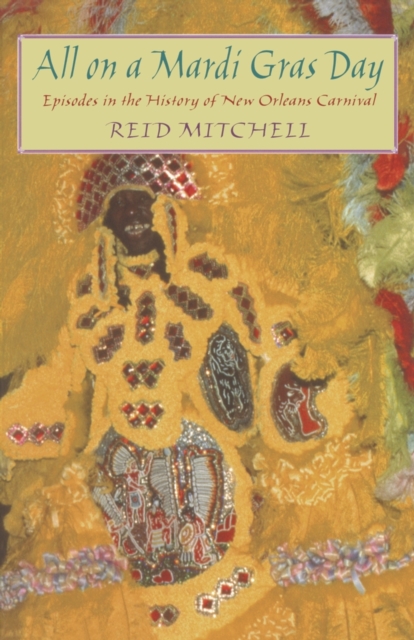
All on a Mardi Gras day: episodes in the history of the New Orleans carnivals
In this study, Reid Mitchell takes the reader to Mardi Gras - a yearly ritual that sweeps the multicultural city of New Orleans into a frenzy of parardes, pageantry, dance, drunkeness, music, sexual display, and social and political bombast.
eBook

The magic misfits
\"Six young magicians and illusionists team up to save their small town from a crooked carnival owner and his goons\"-- Provided by publisher.
Book

Festival and Urban Identity: A Case Study of the Malang Flower Carnival in Yogyakarta
Cultural festivals, often called carnivals, events, or celebrations, have become prominent showcases across Indonesia, particularly in the post-New Order period. These festivals serve two main objectives: promoting tourism and reviving regionalism as well as traditional identities in response to past centralization policies. This study examines the Malang Flower Carnival (MFC) in Malang City, East Java, which has been a key feature of the city's cultural landscape since 2010. In 2022, the MFC deviated from its tradition by participating in the Jogja Fashion Carnival in Yogyakarta instead of holding its own event in Malang. This shift provides a unique opportunity to analyze how Malang's cultural identity is represented to an audience in another city. The findings suggest that while the MFC captivated visitors with its elaborate costumes, it struggled to convey the intended narrative of Malang's cultural identity. This difficulty stems from the complexity of representing Malang's multiple identities—rooted in its historical legacy, contemporary identity as the \"City of Flowers,\" and broader regional narratives. The themes of bravery and heroism, although recognized, were often disconnected from Malang's broader historical and cultural context
Journal Article

Maisy's fairground
\"Join Maisy and friends for lots of noise, rides, and fun! Includes interactive pull tabs and an exciting pop-up scene!\"--P. [4] of cover.
Book