
Catalogue Search | MBRL


Are you sure you want to remove the book from the shelf?

{{itemTitle}}
6,664
result(s) for
"Church fathers"
Sort by:

The emergence of the modern coptic papacy : the popes of Egypt
\"This third and final volume of The Popes of Egypt series spans the five centuries from the arrival of the Ottomans in 1517 to the present era. Hardly any scholarly work has been written about the Copts during the Ottoman period. Using court, financial, and building records, as well as archives from the Coptic Orthodox Patriarchate and monasteries, Magdi Guirguis has reconstructed the authority of the popes and the organization of the Coptic community during this time. He reveals that the popes held complete authority over their flock at the beginning of the Ottoman rule, deciding over questions ranging from marriage and concubines to civil disputes. As the fortunes of Coptic notables rose, they gradually took over the pope's role and it was not until the time of Muhammad Ali that the popes regained their former authority. In the second part of the book, Nelly van Doorn-Harder analyzes how with the dawning of the modern era in the nineteenth century, the leadership style of the Coptic popes necessarily changed drastically. As Egypt's social, political, and religious landscape underwent dramatic changes, the Coptic Church experienced a virtual renaissance, and expanded from a local to a global institution. Furthermore she addresses the political, religious, and cultural issues faced by the patriarchs while leading the Coptic community into the twenty-first century.\"
Book

Religion Against Violence: Insights of Contemporary Philosophy and Eastern Patristics
This article examines the concepts of violence and religion as social phenomena of modernity. Religion and the church are presented not as specific organizations or denominations, but as important social institutions and are reflected in philosophical and anthropological terms. I carry out the idea that religion as a modern social institute in cooperation with other social communities can resist violence, especially its aggressive forms. Based on some philosophical theories, the causes of the emergence of the different forms of social violence, as well as definitions of violence, are explored. In this context, the article presents the ideas of Hanna Arendt, Carl von Clausewitz, Bertrand de Jouvenel, James Mill, and Max Weber. Special attention is paid to the conception of the mimetic origin of aggression and violence in “primitive” or “archaic religions” elaborated by the French philosopher René Girard. He compares the social roots of aggression and violence in these religions with the Biblical ones and prefers the latter for their potential in preventing and overcoming the imitation types of violence. Girard’s anthropological justification of the mentioned historical religious traditions is presented. A significant part of the paper is devoted to the views of the Eastern Church Fathers of Early Christianity, considered in the concurrence of their humanistic ideas with those of noted contemporary philosophers. I see meaningful ideas for preventing extreme forms of violence and aggression in the contemporary world in the doctrines of the Early Eastern and Byzantine Fathers, especially those of the classical patristic period. In this regard, this article presents the anthropological and humanistic teachings of Athanasius the Great, Gregory of Nazianzus, Maximus the Confessor, and John of Damascus. The Early Church Fathers’ ideas are analyzed from a philosophical point of view, as having rational and anthropological grounds which are relevant for the present day’s human existence.
Journal Article
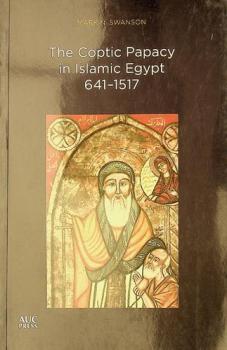
The coptic papacy in Islamic Egypt, 641-1517
\"In Volume 1 of this series, Stephen Davis contended that the themes of \"apostolicity, martyrdom, monastic patronage, and theological resistance\" were determinative for the cultural construction of Egyptian church leadership in late antiquity. Volume 2, The Coptic Papacy in Islamic Egypt, shows that the medieval Coptic popes (641-1517 CE) were regularly portrayed as standing in continuity with their saintly predecessors; however, at the same time, they were active in creating something new, the Coptic Orthodox Church, a community that struggled to preserve a distinctive life and witness within the new Islamic world order. Building on recent advances in the study of sources for Coptic church history, the present volume aims to show how portrayals of the medieval popes provide a window into the religious and social life of their community\"-- Provided by publisher.
Book

The Doctrine of Deification in the Greek Patristic Tradition
Deification in the Greek patristic tradition was the fulfilment of the destiny for which humanity was created — not merely salvation from sin but entry into the fullness of the divine life of the Trinity. This book traces the history of deification, from its birth as a second-century metaphor with biblical roots to its maturity as a doctrine central to the spiritual life of the Byzantine Church. Drawing attention to the richness and diversity of the patristic approaches from Irenaeus to Maximus the Confessor, the book offers a full discussion of the background and context of the doctrine, at the same time highlighting its distinctively Christian character.
eBook

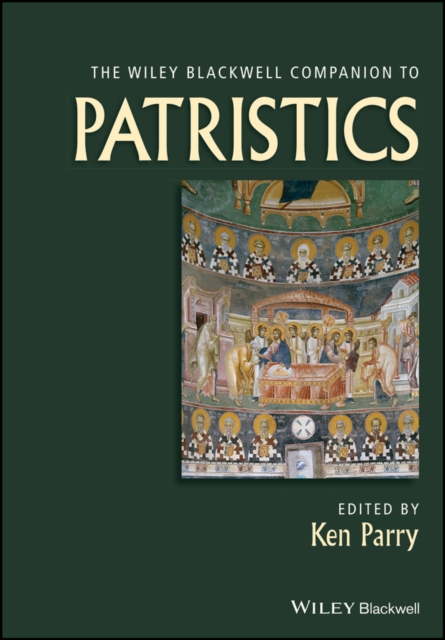
The Wiley Blackwell companion to patristics
This comprehensive volume brings together a team of distinguished scholars to create a wide-ranging introduction to patristic authors and their contributions to not only theology and spirituality, but to philosophy, ecclesiology, linguistics, hagiography, liturgics, homiletics, iconology, and other fields. * Challenges accepted definitions of patristics and the patristic period – in particular questioning the Western framework in which the field has traditionally been constructed * Includes the work of authors who wrote in languages other than Latin and Greek, including those within the Coptic, Armenian, Syriac, and Arabic Christian traditions * Examines the reception history of prominent as well as lesser-known figures, debating the role of each, and exploring why many have undergone periods of revived interest * Offers synthetic accounts of a number of topics central to patristic studies, including scripture, scholasticism, and the Reformation * Demonstrates the continuing role of these writings in enriching and inspiring our understanding of Christianity
eBook

Isidore of Seville and his Reception in the Early Middle Ages
Isidore of Seville (560–636) was a crucial figure in the preservation and sharing of classical and early Christian knowledge. His compilations of the works of earlier authorities formed an essential part of monastic education for centuries. Due to the vast amount[-]of information he gathered and its wide dissemination in the Middle Ages, Pope John Paul II even named Isidore the patron saint of the Internet in 1997. This volume represents a cross section of the various approaches scholars have taken toward Isidore’s writings. The essays explore his sources, how he selected and arranged them for posterity, and how his legacy was reflected in later generations’ work across the early medieval West. Rich in archival detail, this collection provides a wealth of interdisciplinary expertise on one of history’s greatest intellectuals.
eBook

The Whole Mystery of Christ
A thoroughgoing examination of Maximus Confessor's
singular theological vision through the prism of Christ's cosmic
and historical Incarnation.
Jordan Daniel Wood changes the trajectory of patristic
scholarship with this comprehensive historical and systematic study
of one of the most creative and profound thinkers of the patristic
era: Maximus Confessor (560-662 CE). Wood's panoramic vantage on
Maximus's thought emulates the theological depth of Hans Urs von
Balthasar's Cosmic Liturgy while also serving as a
corrective to that classic text.
Maximus's theological vision may be summed up in his enigmatic
assertion that \"the Word of God, very God, wills always and in all
things to actualize the mystery of his Incarnation.\" The Whole
Mystery of Christ sets out to explicate this claim. Attentive
to the various contexts in which Maximus thought and
wrote-including the wisdom of earlier church fathers, conciliar
developments in Christological and Trinitarian doctrine, monastic
and ascetic ways of life, and prominent contemporary philosophical
traditions-the book explores the relations between God's act of
creation and the Word's historical Incarnation, between the analogy
of being and Christology, and between history and the Fall, in
addition to treating such topics as grace, deification, theological
predication, and the ontology of nature versus personhood. Perhaps
uniquely among Christian thinkers, Wood argues, Maximus envisions
creatio ex nihilo as creatio ex Deo in the event
of the Word's kenosis: the mystery of Christ is the revealed
identity of the Word's historical and cosmic Incarnation. This book
will be of interest to scholars and students of patristics,
historical theology, systematic theology, and Byzantine
studies.
eBook
The Tritheist Controversy of the Sixth Century with English Translations of Neglected Syriac Quotations from Works of Earlier Church Fathers, Used by Peter of Callinicus in His Polemic Against Damian of Alexandria (Contra Damianum)
An arrangement of Patristic quoted sources translated from Greek into Syriac were used by Peter of Callinicus in his works against Damian of Alexandria within the sixth-century Tritheist Controversy. Exemplifying one useful role for a translator, the quotations have been extracted and saved from inaccessibility in Peter’s very hefty volumes and presented side-by-side, author-by-author in checked and (where necessary) revised English. This not only better clarifies the argumentative thrust of Peter’s diatribes and how he himself translates Greek into a Semitic tongue, but it will serve Patristic scholarship in showing how the thoughts of well-known Greek Fathers are conveyed in Syriac in the contexts of earlier theological debates. A key theme of this presentation is the Tritheist Controversy which broke out more than a hundred years after the acrimonious controversy over the Council of Chalcedon had cooled down. The focus is mainly on the dispute over the doctrine of the Trinity between the so-named miaphysites, the Syrian Patriarch Peter of Callinicus/um (d. 591) and Coptic Pope Damian of Alexandria (d. 605), which, in turn, led to the schism between Alexandria and Antioch lasting about 30 years. It comprises two parts: (i) A brief outline of the origins, narrative, and postlude of the Tritheist controversy of Peter with Damian and its doctrinal issues; (ii) identifying, enlisting and reproducing numerous seminal quotations in English from the works of earlier Church Fathers contained in Peter’s magnum opus in support and in refutation of (or ‘against’) Damian of Alexandria; and (iii) reflection on issues of translating Patristic texts.
Journal Article
Transitions in Patristic Cosmology: From Cosmophobia to Universe-(Re)Making
The field of Patristics, or early Christian and Mediaeval Studies, traditionally works along the lines of historical and literary criticism. But this method is not always useful, especially when it comes to complex objects and circumstances. No wonder the current trend of replacing it, more often than not, by interdisciplinary frameworks. The article begins accordingly by reviewing three interdisciplinary frameworks, namely, the “socio-historical method”, “Deep Time”, and archaeological theorist Roland Fletcher’s “transitions”, highlighting their suitability for a comprehensive approach to Patristic cosmology. Here, cosmology should not be taken in the narrow sense of contemporary science. It means both a way of representing reality—a worldview—and a way of inhabiting the world. The present article analyses the evolution of the early Christian and mediaeval perception of the environment and the cosmos in Greek sources, pointing to successive transitions from apprehension (cosmophobia) to a keen interest in understanding nature to the thought that holiness represents a universe-(re)making agency. It addresses relevant historical and social circumstances, but proposes that the above transitions were triggered by internal or existential factors as well, and not only external, thus complementing Fletcher’s outline, which focuses upon external catalysts, such as economy and technology.
Journal Article