
Catalogue Search | MBRL


Are you sure you want to remove the book from the shelf?

{{itemTitle}}
47,360
result(s) for
"Circadian rhythms"
Sort by:

Circadian rhythms : a very short introduction
This volume explains how organisms can 'know' the time and reveals what we now understand of the nature and operation of chronobiological processes. Covering variables such as light, the metabolism, human health, and the seasons, Foster and Kreitzman illustrate how jet lag and shift work can impact on human well-being.-- Source other than Library of Congress.
Book

Human circadian variations
Circadian rhythms, present in most phyla across life, are biological oscillations occurring on a daily cycle. Since the discovery of their molecular foundations in model organisms, many inputs that modify this tightly controlled system in humans have been identified. Polygenic variations and environmental factors influence each person's circadian rhythm, contributing to the trait known as chronotype, which manifests as the degree of morning or evening preference in an individual. Despite normal variation in chronotype, much of society operates on a \"one size fits all\" schedule that can be difficult to adjust to, especially for certain individuals whose endogenous circadian phase is extremely advanced or delayed. This is a public health concern, as phase misalignment in humans is associated with a number of adverse health outcomes. Additionally, modern technology (such as electric lights and computer, tablet, and phone screens that emit blue light) and lifestyles (such as shift or irregular work schedules) are disrupting circadian consistency in an increasing number of people. Though medical and lifestyle interventions can alleviate some of these issues, growing research on endogenous circadian variability and sensitivity suggests that broader social changes may be necessary to minimize the impact of circadian misalignment on health.
Journal Article

Rhythmic aspects of behavior
This text provides rich evidence of the relevance of the temporal aspects of behaviour. The generalized areas of learning, memory, operant scheduled behaviour, task performance, vigilance, mood and motivation and their rhythmic components are explored in varying detail. The particularized measures range from on-the-job errors, through reading efficiency to milliseconds of change in reaction time in the laboratory. The subjects range from ants to older persons. Across this range of settings, subjects, and behaviours, the message is clear: there is an interaction between time and behaviour.
Book

Circadian misalignment increases cardiovascular disease risk factors in humans
Shift work is a risk factor for hypertension, inflammation, and cardiovascular disease. This increased risk cannot be fully explained by classic risk factors. One of the key features of shift workers is that their behavioral and environmental cycles are typically misaligned relative to their endogenous circadian system. However, there is little information on the impact of acute circadian misalignment on cardiovascular disease risk in humans. Here we show—by using two 8-d laboratory protocols—that short-term circadian misalignment (12-h inverted behavioral and environmental cycles for three days) adversely affects cardiovascular risk factors in healthy adults. Circadian misalignment increased 24-h systolic blood pressure (SBP) and diastolic blood pressure (DBP) by 3.0 mmHg and 1.5 mmHg, respectively. These results were primarily explained by an increase in blood pressure during sleep opportunities (SBP, +5.6 mmHg; DBP, +1.9 mmHg) and, to a lesser extent, by raised blood pressure during wake periods (SBP, +1.6 mmHg; DBP, +1.4 mmHg). Circadian misalignment decreased wake cardiac vagal modulation by 8–15%, as determined by heart rate variability analysis, and decreased 24-h urinary epinephrine excretion rate by 7%, without a significant effect on 24-h urinary norepinephrine excretion rate. Circadian misalignment increased 24-h serum interleukin-6, C-reactive protein, resistin, and tumor necrosis factor-α levels by 3–29%. We demonstrate that circadian misalignment per se increases blood pressure and inflammatory markers. Our findings may help explain why shift work increases hypertension, inflammation, and cardiovascular disease risk.
Journal Article
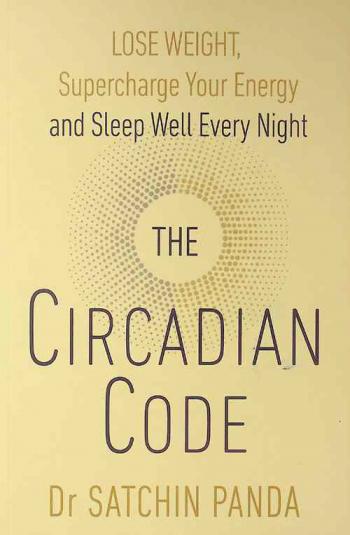
The circadian code : lose weight, supercharge your energy, and sleep well every night
A comprehensive health book and lifestyle plan to help manage the body's natural rhythms offers advice to overcome difficulty sleeping, hunger at odd times, and sudden fatigue.

Rhythms of life: circadian disruption and brain disorders across the lifespan
Many processes in the human body — including brain function — are regulated over the 24-hour cycle, and there are strong associations between disrupted circadian rhythms (for example, sleep–wake cycles) and disorders of the CNS. Brain disorders such as autism, depression and Parkinson disease typically develop at certain stages of life, and circadian rhythms are important during each stage of life for the regulation of processes that may influence the development of these disorders. Here, we describe circadian disruptions observed in various brain disorders throughout the human lifespan and highlight emerging evidence suggesting these disruptions affect the brain. Currently, much of the evidence linking brain disorders and circadian dysfunction is correlational, and so whether and what kind of causal relationships might exist are unclear. We therefore identify remaining questions that may direct future research towards a better understanding of the links between circadian disruption and CNS disorders.
Journal Article

Change your schedule, change your life : how to harness the power of clock genes to lose weight, optimize your workout, and finally get a good night's sleep
\"An eye-opening handbook from a leading Ayurvedic physician that blends cutting-edge science on \"clock genes\" with ancient eastern wisdom to help us understand how to harness the power of chronobiology to effortlessly lose weight, sleep better, exercise stronger, reduce stress, and boost our well being. \"It's not you, it's your schedule.\" Does it sound like magic? It's not. We've all heard of circadian rhythms--those biological processes that give us jet lag and make us night owls or early birds. But few of us know just how profoundly these diurnal patterns affect our overall health. Bad habits like skipping meals, squeezing in workouts when it's convenient, working late into the night to maximize productivity and then trying to \"catch up\" on sleep during the weekend disrupt our natural cycles. A growing body of research on chronobiology reveals just how sensitive the human body is to these rhythms all the way down to the genetic level. Our \"clock genes\" control more than we realize, and small changes can make the difference between battling our bodies, and effortlessly managing weight, sleep, stress, inflammation, and more. Marrying ancient Ayurvedic wisdom with the latest scientific research, Dr. Suhas Kshirsagar's holistic step-by-step 30-day plan gives you the tools--and the schedule--you need to transform your life. With diagnostic quizzes to determine your specific mind-body type, you will learn to adapt you schedule for effortless wellness for life\"-- Provided by publisher.
Book

Circadian rhythms, sleep, and metabolism
The discovery of the genetic basis for circadian rhythms has expanded our knowledge of the temporal organization of behavior and physiology. The observations that the circadian gene network is present in most living organisms from eubacteria to humans, that most cells and tissues express autonomous clocks, and that disruption of clock genes results in metabolic dysregulation have revealed interactions between metabolism and circadian rhythms at neural, molecular, and cellular levels. A major challenge remains in understanding the interplay between brain and peripheral clocks and in determining how these interactions promote energy homeostasis across the sleep-wake cycle. In this Review, we evaluate how investigation of molecular timing may create new opportunities to understand and develop therapies for obesity and diabetes.
Journal Article

Evening-types show highest increase of sleep and mental health problems during the COVID-19 pandemic—multinational study on 19 267 adults
Abstract
Study Objectives
Individual circadian type is a ubiquitous trait defining sleep, with eveningness often associated with poorer sleep and mental health than morningness. However, it is unknown whether COVID-19 pandemic has differentially affected sleep and mental health depending on the circadian type. Here, the differences in sleep and mental health between circadian types are examined globally before and during the COVID-19 pandemic.
Methods
The sample collected between May and August 2020 across 12 countries/regions consisted of 19 267 adults with information on their circadian type. Statistical analyses were performed by using Complex Sample procedures, stratified by country and weighted by the number of inhabitants in the country/area of interest and by the relative number of responders in that country/area.
Results
Evening-types had poorer mental health, well-being, and quality of life or health than other circadian types during the pandemic. Sleep–wake schedules were delayed especially on working days, and evening-types reported an increase in sleep duration. Sleep problems increased in all circadian types, but especially among evening-types, moderated by financial suffering and confinement. Intermediate-types were less vulnerable to sleep changes, although morningness protected from most sleep problems. These findings were confirmed after adjusting for age, sex, duration of the confinement, or socio-economic status during the pandemic.
Conclusions
These findings indicate an alarming increase in sleep and mental health problems, especially among evening-types as compared to other circadian types during the pandemic.
Journal Article

Circadian misalignment increases mood vulnerability in simulated shift work
Night shift work can associate with an increased risk for depression. As night workers experience a ‘misalignment’ between their circadian system and daily sleep–wake behaviors, with negative health consequences, we investigated whether exposure to circadian misalignment underpins mood vulnerability in simulated shift work. We performed randomized within-subject crossover laboratory studies in non-shift workers and shift workers. Simulated night shifts were used to induce a misalignment between the endogenous circadian pacemaker and sleep/wake cycles (circadian misalignment), while environmental conditions and food intake were controlled. Circadian misalignment adversely impacted emotional state, such that mood and well-being levels were significantly decreased throughout 4 days of continuous exposure to circadian misalignment in non-shift workers, as compared to when they were under circadian alignment (interaction of “circadian alignment condition” vs. “day”, mood:
p
< 0.001; well-being:
p
< 0.001; adjusted
p
-values). Similarly, in shift workers, mood and well-being levels were significantly reduced throughout days of misalignment, as compared to circadian alignment (interaction of “circadian alignment condition” vs. “day”, mood:
p
= 0.002; well-being:
p
= 0.002; adjusted
p
-values). Our findings indicate that circadian misalignment is an important biological component for mood vulnerability, and that individuals who engage in shift work are susceptible to its deleterious mood effects.
Journal Article