
Catalogue Search | MBRL


Are you sure you want to remove the book from the shelf?

{{itemTitle}}
8
result(s) for
"Classroom environment-Psychological aspects"
Sort by:

Teaching with vitality : pathways to health and wellness for teachers and schools
\"Perhaps more than any other experience as educators, conflict in schools and workplaces can zap our energy and steal our vigor. If we knew ways to minimize conflict and maximize vitality, would we use them? For junior and seasoned teachers, Teaching with Vitality offers insights into specific attitudes and behaviors that can dilute and dissolve conflicts. Organized into brief topics for busy educators, Teaching with Vitality describes common experiences with practical options for lessening the turmoil that is inevitable in schools. The tips in Teaching with Vitality can elevate day-to-day lives by deconstructing the major and minor conflicts that sap teacher's peace and dampen their power. School wellness is contagious. With this book, educators can choose daily pathways that lead to health, wellness, and vitality.\"--Jacket.-
Book
I'm Listening
Rely on I'm Listening to help you drive deeper, more meaningful learning by integrating relationship building into lesson design. Written by practitioner Beth Pandolpho, this student engagement resource outlines how to foster a sense of belonging while also maintaining the integrity of the content. Using the book's practical strategies will help you empower learners to succeed at all subjects by being proficient readers, writers, speakers, and listeners.
Use this resource to create a caring, engaging classroom that provides students the support they need to develop emotionally:
* Explore the importance and benefits of building strong relationships with students, and discover the direct link to academic performance.
* Study the research and theories that support the assertion that robust teacher-student relationships and social-emotional learning create a better classroom environment.
* Acquire dozens of tools and strategies for building camaraderie with students and developing strong literacy skills in students.
* Learn how to use feedback to bolster students' speaking and listening skills, which are rarely addressed, and see how student-centered learning activities intersect with common standards.
* Read in-depth real-world anecdotes from teachers who share their activities and experiences to create a positive learning environment.
Contents:
Introduction
Chapter 1: Appreciating Why Relationships Matter in School
Chapter 2: Creating Relationships With Students
Chapter 3: Moving Toward Belonging
Chapter 4: Developing Readers
Chapter 5: Developing Writers
Chapter 6: Developing Speakers and Listeners
Epilogue: Listening With an Ear Toward the Future
Appendix: Teachers' Stories
References and Resources
Index
eBook

Children's social and emotional wellbeing in schools : a critical perspective
\"This book challenges the concept of wellbeing as applied to children, particularly in a school-based context. Taking a post-structural approach, it suggests that wellbeing should be understood, and experiences revealed, at the level of the subjective child. This runs counter to contemporary accounts that reduce children's wellbeing to objective lists of things that are needed in order to live well. This book will be useful for academics and practitioners working directly with children, and anyone interested in children's wellbeing.\"--Publisher's website.
Book

Trauma Responsive Educational Practices
Every day, millions of students in the United States go to school weighed down by interpersonal traumas, community traumas, and the traumatic effects of historical and contemporary race-based oppression. A wide range of adverse childhood events--including physical, verbal, emotional, and sexual abuse; chronic bullying; community or domestic violence; and food and housing insecurity--can lead to a host of negative outcomes. However, when schools provide developmentally supportive responses to these challenges, post-traumatic growth becomes possible. In \"Trauma Responsive Educational Practices,\" Micere Keels examines the neurobiology of trauma; presents mindfulness strategies that strengthen student self-regulation and extend professional longevity; and demonstrates how to build pedagogically caring relationships, psychologically safe discipline, and an emotionally safe classroom learning climate. Keels also shows educators how to attend to equity and use trauma as a critical lens through which to plan instruction and respond to challenging situations with coregulation. It's important to understand that trauma is subjective and complex, treatment is not prescriptive, and recovery takes time. This book helps educators support students on that road--not merely to survive trauma but to focus on their strengths and flourish with effective coping skills.
eBook

Identity Economics
Identity Economicsprovides an important and compelling new way to understand human behavior, revealing how our identities--and not just economic incentives--influence our decisions. In 1995, economist Rachel Kranton wrote future Nobel Prize-winner George Akerlof a letter insisting that his most recent paper was wrong. Identity, she argued, was the missing element that would help to explain why people--facing the same economic circumstances--would make different choices. This was the beginning of a fourteen-year collaboration--and ofIdentity Economics.
The authors explain how our conception of who we are and who we want to be may shape our economic lives more than any other factor, affecting how hard we work, and how we learn, spend, and save. Identity economics is a new way to understand people's decisions--at work, at school, and at home. With it, we can better appreciate why incentives like stock options work or don't; why some schools succeed and others don't; why some cities and towns don't invest in their futures--and much, much more.
Identity Economicsbridges a critical gap in the social sciences. It brings identity and norms to economics. People's notions of what is proper, and what is forbidden, and for whom, are fundamental to how hard they work, and how they learn, spend, and save. Thus people's identity--their conception of who they are, and of who they choose to be--may be the most important factor affecting their economic lives. And the limits placed by society on people's identity can also be crucial determinants of their economic well-being.
eBook
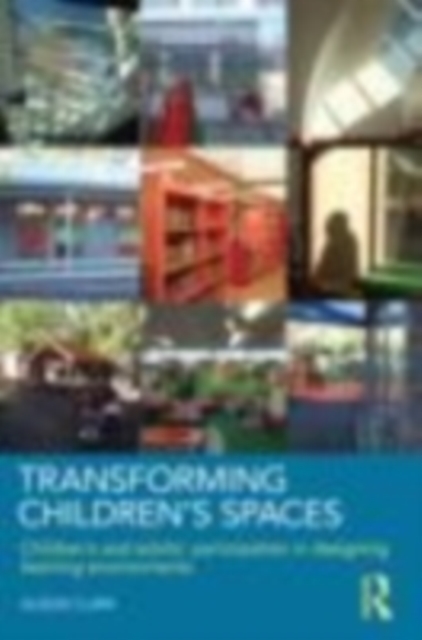
Transforming Children's Spaces
How can young children play an active role in developing the design of learning environments?
What methods can be used to bring together children’s and practitioners’ views about their environment?
What insights can young children offer into good designs for these children’s spaces?
With the expansion of early childhood education and the move to 'extended schools', more young children will spend more time than ever before in institutions. Based on two actual building projects, this book is the first of its kind to demonstrate the possibilities of including young children’s perspectives in the design and review of children’s spaces.
Situated at the heart of the debate about the relationship between the built environment and its impact on children’s learning and wellbeing, Transforming Children’s Spaces
provides insights into how young children see their environment
discusses children’s aspirations for future spaces
develops the 'Mosaic approach' , pioneered by the author, as a method for listening to young children and adults
Emphasising the importance of visual and verbal methods of communication, this fascinating book demonstrates how practitioners and young children can articulate their perspectives, and shows how participatory methods can support new relationships between children, practitioners and architects.
This book is essential reading for those who work in children's spaces and for those who design them as well as being of general interest to those studying education and childhood studies.
@text: Selected Contents: Section One: Finding the tools Introduction 1. Viewfinders 2. Case Studies 3. The Mosaic approach Conclusion Section Two: Gathering children's perspectives Introduction 4. Existing Spaces 5. Possible Spaces 6. New Spaces 7. Temporal Spaces Conclusion Section Three: Facilitating exchange Introduction 8. Working with practitioners and parents 9. Working with architects Conclusion Section Four: Ways Forward - narratives of learning spaces Introduction 10. Narratives in the Design process 11. Narratives and learning Communities 12. Narratives and narrators: the role of researchers Conclusion Epilogue
Alison Clark is Senior Lecturer at the Centre for Childhood, Development and Learning at The Open University, UK.
eBook

The Relationships among Teacher Psychological Support, Situational Interest, Individual Interest, and the Academic Engagement of Vocational High School Students
The present study aimed to examine the path model for the relationships among teacher psychological support, situational interest, individual interest, and the academic engagement of vocational high school students in Taiwan. One thousand three hundred and sixty-seven tenth-grade students from thirty classrooms participated in this study. A self-report inventory measuring students' perception of Teachers' Psychological Support, Situational Interest, Individual Interest, and Academic Engagement was administered. The data were analyzed by Pearson's correlation and structure equation modeling. The results indicated that: (1) Teacher psychological support had direct effects on situational interest, personal interest, and academic engagement; situational interest had direct effects on both personal interest and learning engagement; personal interest had a direct effect on academic engagement. (2) Situational interest was a mediator between teacher psychological support and individual interest; situational interest
Journal Article

Contexts for Learning
This work presents landmark research concerning the vital dynamics of childhood psychological development. It’s origin can be traced to the late 1970s, when several psychologists began to challenge existing notions of cognitive development by suggesting that such functioning is bound to specific contexts and that cognitive development is based on the mastery of culturally defined ways of speaking, thinking, and acting. About the same time, several translations were made available in this country of the seminal work of Vygotsky, the noted theoretician, offering a conceptual base on which these workers could build. This volume, with contributions from many of the scholars who pioneered this area and translated the work of Vygotsky, looks at the complex mechanisms by which children acquire the cultural and linguistic tools to carry out cognitive activities and explores the implications of this research for education. The book is organized around three main parts: Discourse and Learning in Classroom Practice, Interpersonal Relations in Formal and Informal Education, and The Sociocultural Institutions of Formal and Informal Education. An afterword by Jacqueline Goodnow suggests new directions for sociocultural research and education. The intended audience is composed of developmental, educational, and cognitive psychologists, along with advanced students in developmental and educational psychology.
eBook