
Catalogue Search | MBRL


Are you sure you want to remove the book from the shelf?

{{itemTitle}}
4
result(s) for
"Computer-aided design Popular works."
Sort by:

A beginner's guide to 3D modeling : a guide to Autodesk Fusion 360
\"A practical guide to 3D CAD modeling. Begins with the principles of parametric modeling and assembly methods, and then moves on to advanced modeling concepts such as 3D sketching and splines, helixes and ribs, technical drawing, and rendering.\" -- Provided by publisher.
Book
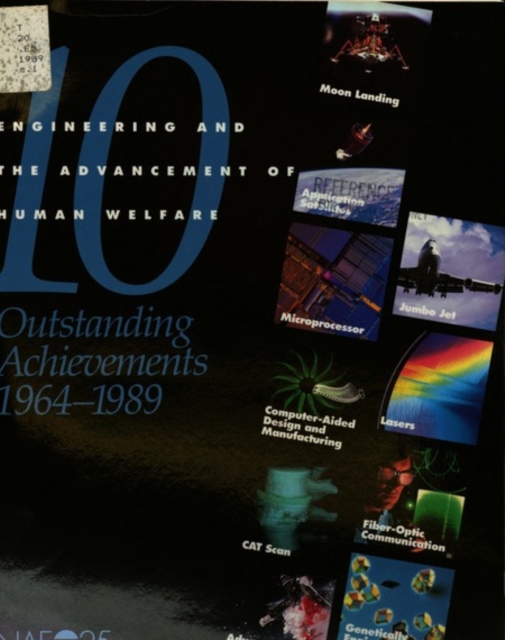
Engineering and the Advancement of Human Welfare
This popularly written booklet contains nontechnical descriptions of 10 major engineering achievements selected by the National Academy of Engineering on the occasion of its 25th anniversary, December 5, 1989. The achievements are the moon landing, application satellites, the microprocessor, computer-aided design and manufacturing, computer-assisted tomography, advanced composite materials, the jumbo jet, lasers, fiber-optic communication, and genetically engineered products.
eBook
Time Bomb
Time Bomb throws light on poor urban planning, workplace laws and practices, care obligations and other issues that rob us of time and put our households under pressure. And it looks at how work affects our response to the greatest concern of our time our environmental challenges.
eBook

Workplace Relations, Skills-Training and Technological Change at Plant-Level
This paper critically looks at workplace relations, skills training and technological change and asks whether they are necessarily linked together in an inflexible way, particularly where microelectronics applications are concerned. It then goes on to argue that 'automation' can lead to the re-assembly of skills where mass-markets become differentiated at saturated levels of demand, with important implications for training-strategies.
Journal Article