
Catalogue Search | MBRL


Are you sure you want to remove the book from the shelf?

{{itemTitle}}
462
result(s) for
"Creative teaching United States."
Sort by:


Feminist Rhetorical Practices
From two leading scholars in the field comes this landmark assessment of the shifting terrain of feminist rhetorical practices in recent decades. Jacqueline Jones Royster and Gesa E. Kirsch contend the field of rhetorical studies is being transformed through the work of feminist rhetoricians who have brought about notable changes in who the subjects of rhetorical study can be, how their practices can be critiqued, and how the effectiveness and value of the inquiry frameworks can be articulated. To contextualize a new and changed landscape for narratives in the history of rhetoric, Royster and Kirsch present four critical terms of engagement—critical imagination, strategic contemplation, social circulation, and globalization—as the foundation for a new analytical model for understanding, interpreting, and evaluating feminist rhetorical inquiry and the study and teaching of rhetoric in general. This model draws directly on the wealth of knowledge and understanding gained from feminist rhetorical practices, especially sensitivity toward meaningfully and respectfully rendering the work, lives, cultures, and traditions of historical and contemporary women in rhetorical scholarship. Proposing ambitious new standards for viewing and valuing excellence in feminist rhetorical practice, Royster and Kirsch advocate an ethos of respect and humility in the analysis of communities and specific rhetorical performances neglected in rhetorical history, recasting rhetorical studies as a global phenomenon rather than a western one. They also reflect on their own personal and professional development as researchers as they highlight innovative feminist research over the past thirty years to articulate how feminist work is changing the field and pointing to the active participation of women in various discourse arenas and to the practices and genres they use. Valuable to new and established scholars of rhetoric, Feminist Rhetorical Practice: New Horizons for Rhetoric, Composition, and Literacy Studies is essential for understanding the theoretical, methodological, and ethical impacts of feminist rhetorical studies on the wider field.
eBook

The insider's guide to graduate degrees in creative writing
\"There are so many different creative writing degrees out there! How do I find the right school for me? Bringing together data on creative writing schools and interviews with MFA applicants, creative writing students and faculty, this is a complete practical guide to choosing a creative writing school and putting together a successful application. The Insider's Guide to Graduate Degrees in Creative Writing answers frequently asked questions on such topics as: Creative writing curricula, Student demographics, Acceptance rates, Cost of living, Funding, Postgraduate job placements. The book also includes comprehensive and up-to-date data on creative writing programs available throughout the US, UK and internationally, making this an essential read for anyone planning to pursue a creative writing degree\"-- Provided by publisher.
Book

Writing Centers and the New Racism
Noting a lack of sustained and productive dialogue about race in university writing center scholarship, the editors of this volume have created a rich resource for writing center tutors, administrators, and scholars. Motivated by a scholarly interest in race and whiteness studies, and by an ethical commitment to anti-racism work, contributors address a series of related questions: How does institutionalized racism in American education shape the culture of literacy and language education in the writing center? How does racism operate in the discourses of writing center scholarship/lore, and how may writing centers be unwittingly complicit in racist practices? How can they meaningfully operationalize anti-racist work? How do they persevere through the difficulty and messiness of negotiating race and racism in their daily practice? The conscientious, nuanced attention to race in this volume is meant to model what it means to be bold in engagement with these hard questions and to spur the kind of sustained, productive, multi-vocal, and challenging dialogue that, with a few significant exceptions, has been absent from the field.
eBook

Literacy behind bars : successful reading and writing strategies for use with incarcerated youth and adults
\"A practical resource for teachers, librarians, administrators, and community stakeholders who work with incarcerated youth and adults. This book includes examples of literacy practices that have been successfully used with those incarcerated around the nation, including creating graphic novels, starting book clubs, writing about gang life, having reading buddies, reading urban literature, developing a writing workshop, [and] establishing a school library\"-- Provided by publisher.
Book

Changing Creative Writing in America
In this compelling collection of essays contributors critically examine Creative Writing in American Higher Education. Considering Creative Writing teaching, learning and knowledge, the book recognizes historical strengths and weaknesses. Most of all it explores the possibilities for the future of Creative Writing as an academic subject in America.
eBook

Teaching Harry Potter : the power of imagination in multicultural classrooms
\"Given the current educational climate of high stakes testing, standardized curriculum, and \"approved\" reading lists, incorporating unauthorized, often controversial, popular literature into the classroom becomes a political choice. The authors examine why teachers choose to read Harry Potter, how they use the books and incorporate new media, and the resulting teacher-student interactions. The book encourages a critical discussion regarding the state of our educational system and the increasing lack of space allowed for imagination and complexity. Its unique research methodology is part ethnographic, part practitioner research, and serves as an analytical commentary on current school culture and policy\"-- Provided by publisher.
Book

Going North Thinking West
A long-time writing program administrator and well-respected iconoclast, Irvin Peckham is strongly identified with progressive ideologies in education. However, inGoing North Thinking West, Peckham mounts a serious critique of what is called critical pedagogy-primarily a project of the academic left-in spite of his own sympathies there.
College composition is fundamentally a middle-class enterprise, and is conducted by middle-class professionals, while student demographics show increasing presence of the working class. In spite of best intentions to ameliorate inequitable social class relationships, says Peckham, critical pedagogies can actually contribute to reproducing those relationships in traditional forms-not only perpetuating social inequities, but pushing working class students toward self-alienation, as well.
Peckham argues for more clarity on the history of critical thinking, social class structures and teacher identity (especially as these are theorized by Pierre Bourdieu), while he undertakes a critical inquiry of the teaching practices with which even he identifies.
Going North Thinking Westfocuses especially on writing teachers who claim a necessary linkage between critical thinking and writing skills; these would include both teachers who promote the fairly a-political position that argumentation is the obvious and necessary form of academic discourse, and more controversial teachers who advocate turning a classroom into a productive site of social transformation.
Ultimately, Peckham argues for a rereading of Freire (an icon of transformational pedagogy), and for a collaborative investigation of students' worlds as the first step in a successful writing pedagogy. It is an argument for a pedagogy based on service to students rather than on transforming them.
eBook

Reframing the subject : postwar instructional film and class-conscious literacies
\"Ritter offers an extensive theoretical analysis of the alliance of the value systems inherent in postwar mental hygiene films (class-based ideals, democracy, patriotism) with writing education--an alliance that continues today by way of the mass digital technologies used in teaching online. She further details the larger material and cultural forces at work in the production of these films behind the scenes and their effects on education trends\"-- Provided by publisher.
Book
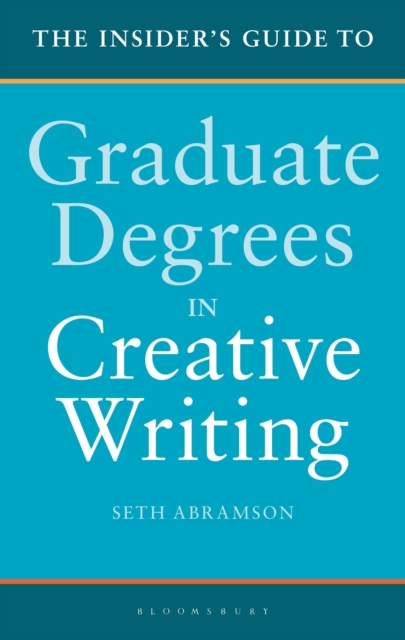
The Insider's Guide to Graduate Degrees in Creative Writing
There are so many different graduate creative writing programs out there!How do I find the right one for me?Bringing together data from both Master's and doctoral creative writing programs and interviews with program applicants, students, and faculty, this is a complete practical guide to choosing a graduate creative writing program and putting.
eBook