
Catalogue Search | MBRL


Are you sure you want to remove the book from the shelf?

{{itemTitle}}
190,364
result(s) for
"Cultural Anthropology"
Sort by:


Thinking Like a River
The Kemi River is the major watercourse in the Finnish province of Lapland and the »stream of life« for the inhabitants of its banks. Franz Krause examines fishing, transport and hydropower on the Kemi River and analyses the profoundly rhythmic patterns in the river dwellers' activities and the river's dynamics. The course of the seasons and weekly and daily rhythms of discharge, temperature, work and other patterns make the river dwellers' world an ever-transforming phenomenon. The flows of life and the frictions of everyday encounters continually remake the river and its inhabitants, negotiating national strategies, economic power, people's ingenuity, and the currents of the Kemi River.
eBook

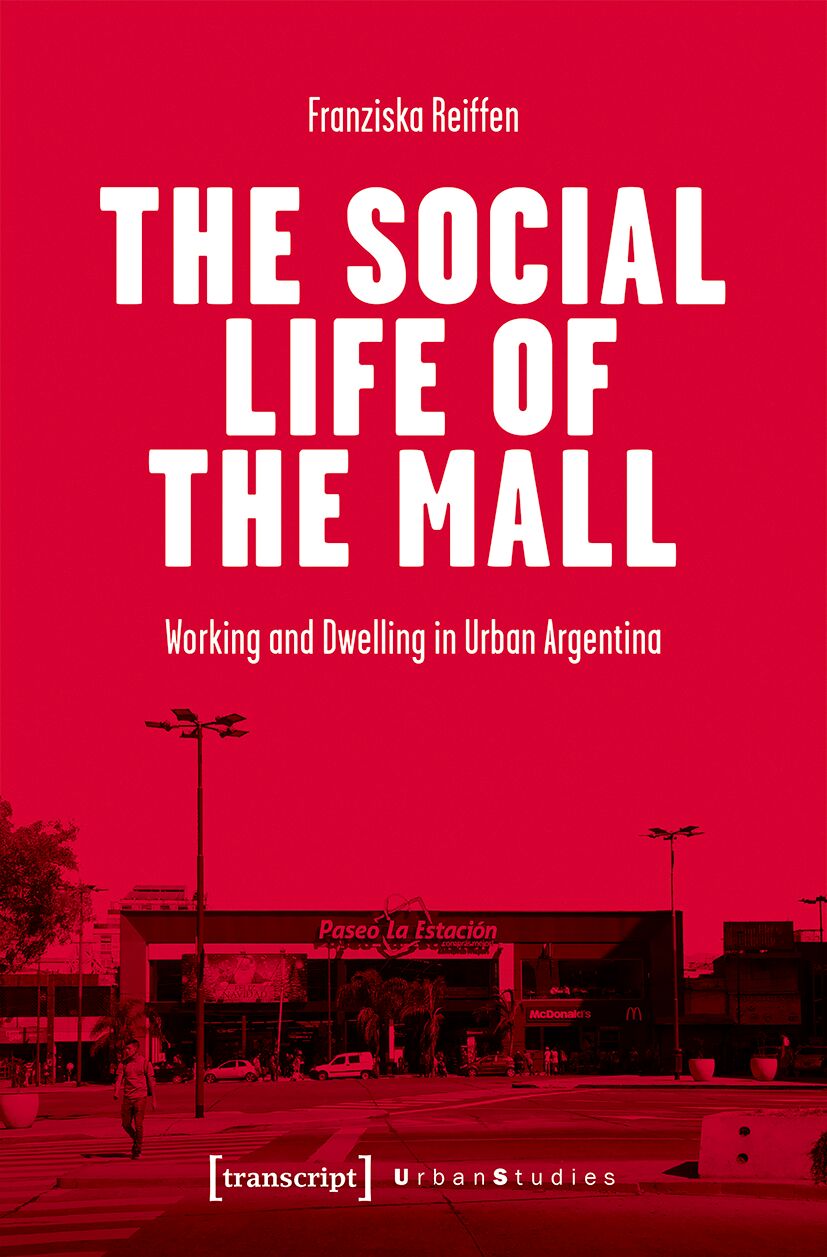
The Social Life of the Mall
Paseo La Estación, a mall in Buenos Aires, is as much a place of transit as a place of encounter, where long-term residents and newcomers, people with and without jobs, homeowners and those without housing meet.
eBook

Tracking anthropological engagements
\"Histories of Anthropology Annual series presents diverse perspectives on the discipline's history within a global context, with a goal of increasing awareness and use of historical approaches in teaching, learning, and conducting anthropology. The series includes critical, comparative, analytical, and narrative studies involving all aspects and subfields of anthropology. Volume 12, Tracking Anthropological Engagements, examines the work and influence of Hans Sidonius Becker, Franz Boas, Sigmund Freud, Margaret Mead, Karl Popper, and Anthony F.C. Wallace, as well as anthropological perspectives on the 1964 Project Camelot, Latin American cultures at the 1892 Madrid International Expositions, sixteenth-century cosmography and topography in Amazonia, the launch of the Great War Centenary Association website, and community-produced wartime narratives in Ontario, Canada.\"-- Provided by publisher.
Book
Ethnography and Folklore in Print
Throughout the nineteenth century, social expressions and
dynamics have been reflected in the surge of various printed
products. The contributors analyze a diverse range of sources,
such as caricatures, journalistic reports, travelogues,
scholarly volumes, social novels, and fairytale collections,
viewing them as early manifestations of social knowledge and
ethnographic representation situated at the confluence of
›popular‹ and ›scientific‹ publishing.
Their comprehensive exploration unveils alternative contexts
and dimensions of early ethnographic knowledge production,
providing insights into a history of social knowledge that
surpasses disciplinary, national, and genre-related
boundaries.
eBook

Life : a critical user's manual
\"How can we think of life in its dual expression, matter and experience, the living and the lived? Philosophers and, more recently, social scientists have offered multiple answers to this question, often privileging one expression or the other; the biological or the biographical. But is it possible to conceive of them together and thus reconcile naturalist and humanist approaches? Using research conducted on three continents and drawing on the ideas of Wittgenstein, Benjamin and Foucault, Didier Fassin attempts to do so by developing three concepts: forms of life, ethics of life and politics of life. In the conditions of refugees and asylum-seekers, through humanitarian gestures and sacrifices for a cause, in light of mortality statistics and death benefits, and via a genealogical and ethnographical inquiry, the moral economy of life reveals troubling tensions in the way contemporary societies treat human beings. Once the pieces of this anthropological composition are assembled, like in Georges Perec's jigsaw puzzle, an image appears: that of unequal lives. Emerging from the prestigious Adorno Lectures delivered by Fassin in 2016, this profound investigation of life in contemporary societies, enriched by ethnographic fieldwork and written by one of the most distinguished anthropologists today, will be of great interest to readers across the humanities and social sciences\"-- Provided by publisher.
Book

A methodological systematic review of meta-ethnography conduct to articulate the complex analytical phases
Background
Decision making in health and social care requires robust syntheses of both quantitative and qualitative evidence. Meta-ethnography is a seven-phase methodology for synthesising qualitative studies. Developed in 1988 by sociologists in education Noblit and Hare, meta-ethnography has evolved since its inception; it is now widely used in healthcare research and is gaining popularity in education research. The aim of this article is to provide up-to-date, in-depth guidance on conducting the complex analytic synthesis phases 4 to 6 of meta-ethnography through analysis of the latest methodological evidence.
Methods
We report findings from a methodological systematic review conducted from 2015 to 2016. Fourteen databases and five other online resources were searched. Expansive searches were also conducted resulting in inclusion of 57 publications on meta-ethnography conduct and reporting from a range of academic disciplines published from 1988 to 2016.
Results
Current guidance on applying meta-ethnography originates from a small group of researchers using the methodology in a health context. We identified that researchers have operationalised the analysis and synthesis methods of meta-ethnography – determining how studies are related (phase 4), translating studies into one another (phase 5), synthesising translations (phase 6) and line of argument synthesis - to suit their own syntheses resulting in variation in methods and their application. Empirical research is required to compare the impact of different methods of translation and synthesis. Some methods are potentially better at preserving links with the context and meaning of primary studies, a key principle of meta-ethnography. A meta-ethnography can and should include reciprocal and refutational translation and line of argument synthesis, rather than only one of these, to maximise the impact of its outputs.
Conclusion
The current work is the first to articulate and differentiate the methodological variations and their application for different purposes and represents a significant advance in the understanding of the methodological application of meta-ethnography.
Journal Article

Anthropology of the brain : consciousness, culture, and free will
\"Anthropology of the Brain In this unique exploration of the mysteries of the human brain, Roger Bartra shows that consciousness is a phenomenon that occurs not only in the mind but also in an external network, a symbolic system. He argues that the symbolic systems created by humans in art, language, in cooking or in dress, are the key to understanding human consciousness\"-- Provided by publisher.
Book

Stories from a migrant city
Taking a biographical approach, the book explores the causes and consequences of moving or staying put in the context of class inequality and racisms, and looks for commonalities between people often seen as irredeemably divided.
eBook