
Catalogue Search | MBRL


Are you sure you want to remove the book from the shelf?

{{itemTitle}}
3,771
result(s) for
"Dance Drama"
Sort by:

Figurative Language and Aesthetic Value in the Dance Drama The Search for Sita
The Search for Sita is an English-language dance drama adapted from the Ramayana epic, specifically the Aranya Kanda section, which tells the story of Dewi Sita’s abduction by Rahwana. This study aims to analyze and describe the figurative language and aesthetic values contained in the dance drama. The approach used is descriptive qualitative, with data obtained through observation of audio-visual recordings of performances and analysis of dance drama scripts, then analyzed using language style theory and aesthetic theory. The results of this study show that the figurative language contained in the dance drama The Search for Sita includes metaphors, similes, personification, and hyperbole. Meanwhile, aesthetic values are manifested through unity, complexity, and intensity between the elements of choreography, accompanying music, costumes, and narration. The integration of figurative language and aesthetic values not only strengthens artistic appeal but also presents moral messages and religious values relevant to character education.
Journal Article
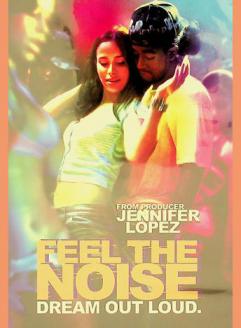
Feel the noise
After a run-in with local thugs, an aspiring Harlem rapper flees to a place and father he never knew, and finds his salvation in Reggaeton, a spicy blend of hip-hop, reggae and Latin beats. Puerto Rico, the spiritual home of Reggaeton, inspires Rob and his half-brother to pursue their dream of becoming Reggaeton stars.
DVD

I Want to Be Ready: Improvised Dance as a Practice of Freedom
I Want To Be Ready draws on original archival research, careful readings of individual performances, and a thorough knowledge of dance scholarship to offer an understanding of the \"freedom\" of improvisational dance. While scholars often celebrate the freedom of improvised performances, they are generally focusing on freedom from formal constraints. Drawing on the work of Michel Foucault and Houston Baker, among others, Danielle Goldman argues that this negative idea of freedom elides improvisation's greatest power. Far from representing an escape from the necessities of genre, gender, class, and race, the most skillful improvisations negotiate an ever shifting landscape of constraints. This work will appeal to those interested in dance history and criticism and also interdisciplinary audiences in the fields of American and cultural studies.
eBook

Dramatic dance : an actor's approach to dance as a dramatic art
\"Dance is part of the art of theatre, a part which connects to movement, to communication, to improvisation, and to performance. It cannot exist on its own in the context of dramatic performance, but works in conjunction with other elements to enable meanings to be created in performance. Dramatic Dance sets a programme for actors to perform dance as part of the drama, offering several approaches which can contribute to developing this understanding, to training this skill, and always ensuring that the whole active and thinking body and mind are fully engaged with the task of making dance an integral and vital part of theatre. Author Darren Royston shows that to study dance in this way allows students to develop further their understanding of logic and structure in a dramatic text.Many books deal with one aspect of dance or another: some on dance training, some on history and dance history, some on Rudolf Laban's ideas, some as dance manuals, and some as academic papers. Darren Royston's Dramatic Dance is the first book to act as a comprehensive guide for theatre practice, which brings these different disciplines together\"-- Provided by publisher.
Book

A Revolution for the Screen
Abel Gance's silent masterpiece, Napoleon, was given a limited run on its debut in 1927, but soon afterwards distributors in France and America, unwilling to deal with its nine-hour running time, subjected it to savage cuts - with devastating results for the movie and for film history. The struggle across ensuing decades to restore and reintegrate Gance's film has formed a backdrop to an array of formal, contextual, and ideological battles. In this book, Paul Cuff takes account of those battles and challenges received opinion on Gance's view of both his film and its subject.|Paul Cuff takes account of the struggle across decades to restore and reintegrate Gance's film Napoleon and challenges received opinion on this work.
eBook


European Cinema
In the face of renewed competition from Hollywood since the early 1980s and the challenges posed to Europe's national cinemas by the fall of the Wall in 1989, independent filmmaking in Europe has begun to re-invent itself. European Cinema: Face to Face with Hollywood re-assesses the different debates and presents a broader framework for understanding the forces at work since the 1960s. These include the interface of \"world cinema\" and the rise of Asian cinemas, the importance of the international film festival circuit, the role of television, as well as the changing aesthetics of auteur cinema. New audiences have different allegiances, and new technologies enable networks to reshape identities, but European cinema still has an important function in setting critical and creative agendas, even as its economic and institutional bases are in transition.
Onder invloed van de rivaliteit met Hollywood en de val van de muur in 1989 vond er in de jaren '90 in veel West-Europese landen een levendig debat plaats over de toekomst van de nationale filmtradities. Van het bestaan van zich onderscheidende 'nationale' stijlen, zoals bijvoorbeeld neo-realisme, zou niet langer kunnen worden uitgegaan. Film zou een benepen kunstvorm geworden zijn, die redding zoekt in het bewaren van de 'nationale' erfenis of hoopt op artistieke vernieuwing van televisie en door de overheid gesubsidieerde prestigeprojecten. In European Cinema blikt Thomas Elsaesser terug op het debat en geeft een genuanceerder beeld van verschillende factoren die sinds de jaren zestig een rol speelden. Er is o.m. aandacht voor de raakvlakken met de 'world cinema' en de opkomst van de Aziatische film, de invloed van het internationale film festival circuit, de rol van televisie en de veranderende esthetiek in auteur-cinema. Nieuwe toeschouwers hebben andere voorkeuren, en nieuwe technologieën bieden de mogelijkheid om bestaande identiteiten te hervormen, maar de Europese cinema heeft nog steeds een belangrijke functie in het vaststellen van kritische en creatieve agenda's, ook al is haar economische en institutionele basis in beweging.
eBook


The West in Early Cinema
Verhoeff investigates the emergence of the western genre, made in the first two decades of cinema (1895-1915). By analyzing many unknown and forgotten films from international archives she traces the relationships between films about the American West, their surrounding films, and other popular media such as photography, painting, (pulp) literature, Wild West Shows and popular ethnography. Through this exploration of archival material she raises new questions of historiography and provides a model for historical analysis. These first traces of the Western film reveal a preoccupation with presence and actuality that informs us about the way in which film, as new medium, took shape within the context of its contemporary visual culture.
In The West in Early Cinema gaat Nanna Verhoeff op zoek naar de nog onbekende beginjaren van het westerngenre tijdens de eerste twee decennia van het medium film 1895-1915). Aan de hand van onbekende en vergeten films uit internationale filmarchieven traceert zij de relaties tussen films over het Westen, omringende filmgenres uit deze periode, en andere populaire media als fotografie, schilderkunst, (pulp)literatuur, Wild West Shows en populaire etnografie. Deze sporen van het genre tonen een grote actualiteit en variatie, die laat zien op welke manier de film als nieuw medium een vorm vond binnen de toenmalige visuele cultuur.
eBook