
Catalogue Search | MBRL


Are you sure you want to remove the book from the shelf?

{{itemTitle}}
1,505
result(s) for
"Dance technique"
Sort by:


Giving Life to Movement: The Silvestre Dance Technique
What does it mean to give life to movement? Tamara Williams answers this question through an ethnographic study and historical mapping of the Silvestre Dance Technique created by Brazilian master teacher, dancer, and choreographer, Rosangela Silvestre. In the first book solely dedicated to Silvestre Technique, Williams illustrates how the applied theory of the triangles of inspiration, expression and balance of training can lead to self-actualization through implementation in daily life practice. From the Brazilian arts movements of the 1970s, to the sociopolitical themes of the Blocos Afros, to the global practice of Silvestre Technique presently, the author explores the impact of the Body Universe in understanding self-capacity and capability. Williams investigates the functionality of the technique through a series of interviews, physical practice, and training.
eBook

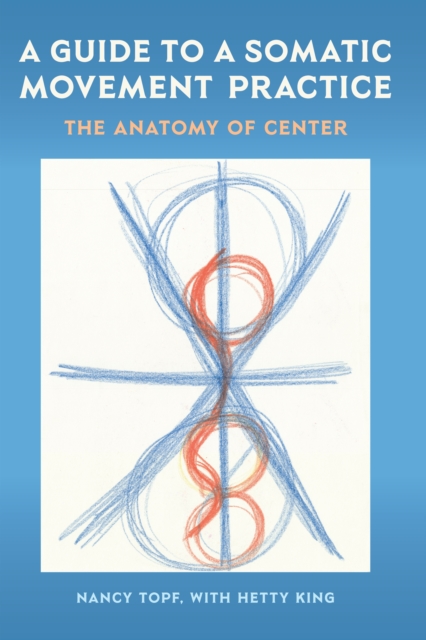
A Guide to a Somatic Movement Practice
An introduction to embodied movement through the work of
a dance education pioneer
In this introduction to the work of somatic dance education
pioneer Nancy Topf (1942-1998), readers are ushered on a journey to
explore the movement of the body through a close awareness of
anatomical form and function. Making available the full text of
Topf's The Anatomy of Center for the first time in print,
this guide helps professionals, teachers, and students of all
levels integrate embodied, somatic practices within contexts of
dance, physical education and therapy, health, and mental
well-being.
Hetty King, a movement educator certified in the Topf Technique®,
explains how the ideas in this work grew out of Topf's involvement
in developing Anatomical Release Technique-an important concept in
contemporary dance-and the influence of earlier innovators Barbara
Clark and Mabel Elsworth Todd, founder of the approach to movement
known as \"ideokinesis.\" Featuring lessons written as a dialogue
between teacher, student, and elements of the body, Topf's material
is accompanied by twenty-one activities that allow readers to use
the book as a self-guided manual. A Guide to a Somatic Movement
Practice is a widely applicable entry point into the tradition
of experiential anatomy and its mindful centering of the living,
breathing body.
eBook

Dance and the Alexander technique : exploring the missing link
\"In Dance and the Alexander Technique, Rebecca Nettl-Fiol and Luc Vanier utilize their ten years of research on developmental movement and dance training to explore the relationship between a specific movement technique and the basic principles of support and coordination. The Alexander Technique, developed in the early twentieth century by F. M. Alexander, can be used to enhance dexterity in all types of activities, from everyday actions as mundane as tooth-brushing to highly demanding dance movements. Applying the tenets of this technique through the lens of a specific subset of principles called the Dart Procedures, the authors offer a unique approach for using the Alexander Technique in dance and other activities. The principles of this technique are used by people in all walks of life and have proven to be effective for enhancing performance and improving overall health and well-being. Amply illustrated and supplemented with a DVD that demonstrates the concepts and applications of the Alexander Technique, this book will be highly instrumental for dancers, teachers of dance, and anyone interested in giving everyday movements more efficiency, dexterity, and elegance\"--Provided by publisher.
Book
Dance Magazine, Vol. 98, no. 5, May/June, 2024
Dance Magazine is a trade publication for dance
eBook


Popular Dance and Music in Modern Egypt
This book is an exploration into the history, aesthetics, social reality, regulation, and transformation of dance and dance music in Egypt. It covers Oriental dance, known as belly dance or danse du ventre, regional or group-specific dances and rituals, sha‘bi (lower-class urban music and dance style), mulid (drawing on Sufi tradition and saints’ day festivals) and mahraganat (youth-created, primarily electronic music with lively rhythms and biting lyrics). The chapters discuss genres and sub-genres and their evolution, the demeanor of dancers, trends old and new, and social and political criticism that use the imagery of dance or a dancer. Also considered are the globalization of Egyptian dance, the replication or fantasies of raqs sharqi outside of Egypt, as well as the dance as a hobby, competitive dance form, and focus of international dance festivals.
eBook


I Want to Be Ready: Improvised Dance as a Practice of Freedom
I Want To Be Ready draws on original archival research, careful readings of individual performances, and a thorough knowledge of dance scholarship to offer an understanding of the \"freedom\" of improvisational dance. While scholars often celebrate the freedom of improvised performances, they are generally focusing on freedom from formal constraints. Drawing on the work of Michel Foucault and Houston Baker, among others, Danielle Goldman argues that this negative idea of freedom elides improvisation's greatest power. Far from representing an escape from the necessities of genre, gender, class, and race, the most skillful improvisations negotiate an ever shifting landscape of constraints. This work will appeal to those interested in dance history and criticism and also interdisciplinary audiences in the fields of American and cultural studies.
eBook