
Catalogue Search | MBRL


Are you sure you want to remove the book from the shelf?

{{itemTitle}}
11,124
result(s) for
"Dietary Guidelines"
Sort by:

Balancing Nutritional and Environmental Sustainability Through the Evaluation of the Water Footprint of the Recommended Italian, Spanish, and American Diets
Background/Objectives: The water footprint (WF) provides information on the impact of individual foods on water consumption, but to better direct food production toward water saving, we need to understand how to reduce the WF of our diets while keeping it healthy. In this study, we compared the WF of healthy diets based on national food-based dietary guidelines with the aim of highlighting changes in dietary patterns that could reduce water requirements without compromising nutritional adequacy. Methods: Three 2000 kcal/day dietary patterns were elaborated following the Italian, Spanish, and American dietary guidelines, and their total, green, blue, and grey WFs were calculated. Results: The Italian dietary pattern showed the lowest total WF (2806 L per capita/day), with the American and Spanish patterns being 8% and 10.5% higher, respectively. The food groups contributed differently to the total WF. In the USA, animal foods were the main contributor (56% versus 41% in Spain and 38% in Italy). The contribution of plant foods was higher in Italy (61%) than in Spain (54%) and the USA (38%). The distribution of the total WF between WFgreen, WFblue, and WFgrey was similar across the dietary patterns. Within each food group, and mainly in the animal-origin food group, the type of product significantly modulated the WF. Conclusions: Different diets can be equally nutritionally sustainable but have different impacts on environmental sustainability. The comparison of their WFs can be the starting point to promote dialogue between nutritionists, operators in the environmental sector, and the agri-food industry to ensure a healthy and balanced approach.
Journal Article

Food politics
We all witness, in advertising and on supermarket shelves, the fierce competition for our food dollars. In this engrossing exposé, Marion Nestle goes behind the scenes to reveal how the competition really works and how it affects our health. The abundance of food in the United States--enough calories to meet the needs of every man, woman, and child twice over--has a downside. Our over-efficient food industry must do everything possible to persuade people to eat more--more food, more often, and in larger portions--no matter what it does to waistlines or well-being. Like manufacturing cigarettes or building weapons, making food is big business. Food companies in 2000 generated nearly
eBook

Development and evaluation of a diet quality screener to assess adherence to the Dutch food-based dietary guidelines
The Eetscore FFQ was developed to score the Dutch Healthy Diet index 2015 (DHD2015-index) representing the Dutch food-based dietary guidelines of 2015. This paper describes the development of the Eetscore FFQ, a short screener assessing diet quality, examines associations between diet quality and participants’ characteristics, and evaluates the relative validity and reproducibility of the Eetscore FFQ in a cross-sectional study with Dutch adults. The study sample consisted of 751 participants, aged 19–91 years, recruited from the EetMeetWeet research panel. The mean DHD2015-index score based on the Eetscore FFQ of the total sample was 111 (sd 17·5) out of a maximum score of 160 points and was significantly higher in women than in men, positively associated with age and education level, and inversely associated with BMI. The Kendall’s tau-b coefficient of the DHD2015-index between the Eetscore FFQ and the full-length FFQ (on average 1·7-month interval, n 565) was 0·51 (95 % CI 0·47, 0·55), indicating an acceptable ranking ability. The intraclass correlation coefficient between DHD2015-index scores derived from two repeated Eetscore FFQ (on average 3·8-month interval, n 343) was 0·91 (95 % CI 0·89, 0·93) suggesting a very good reproducibility. In conclusion, the Eetscore FFQ was considered acceptable in ranking participants according to their diet quality compared with the full-length FFQ and showed good to excellent reproducibility.
Journal Article
A review of consumer awareness, understanding and use of food-based dietary guidelines
Food-based dietary guidelines (FBDG) have primarily been designed for the consumer to encourage healthy, habitual food choices, decrease chronic disease risk and improve public health. However, minimal research has been conducted to evaluate whether FBDG are utilised by the public. The present review used a framework of three concepts, awareness, understanding and use, to summarise consumer evidence related to national FBDG and food guides. Searches of nine electronic databases, reference lists and Internet grey literature elicited 939 articles. Predetermined exclusion criteria selected twenty-eight studies for review. These consisted of qualitative, quantitative and mixed study designs, non-clinical participants, related to official FBDG for the general public, and involved measures of consumer awareness, understanding or use of FBDG. The three concepts of awareness, understanding and use were often discussed interchangeably. Nevertheless, a greater amount of evidence for consumer awareness and understanding was reported than consumer use of FBDG. The twenty-eight studies varied in terms of aim, design and method. Study quality also varied with raw qualitative data, and quantitative method details were often omitted. Thus, the reliability and validity of these review findings may be limited. Further research is required to evaluate the efficacy of FBDG as a public health promotion tool. If the purpose of FBDG is to evoke consumer behaviour change, then the framework of consumer awareness, understanding and use of FBDG may be useful to categorise consumer behaviour studies and complement the dietary survey and health outcome data in the process of FBDG evaluation and revision.
Journal Article
Food-Based Dietary Guidelines around the World: A Comparative Analysis to Update AESAN Scientific Committee Dietary Recommendations
Food-Based Dietary Guidelines (FBDG) include dietary recommendations based on food groups according to the general and accepted nutrition principles and current scientific evidence. Adoption of FBDG contributes to the prevention of malnutrition in all its forms, promotes human health, and reduces environmental impact. The present review aims to perform an international comparative analysis of the FBDG adopted in different countries from three different continents (America, Asia, and Europe), with particular reference to the Spanish Food Safety and Nutrition Agency (AESAN, Agencia Española de Seguridad Alimentaria y Nutrición) Scientific Committee dietary recommendations. A total of twelve countries with the most updated FBDG and/or closest to the traditional and cultural preferences of Spain were finally selected. All the reviewed FBDG provided recommendations for fruits, vegetables, cereals, legumes, nuts, milk and dairy products, meat and derivatives, fish, eggs, water, and oil; however, remarkable differences regarding recommended amounts were found among countries.
Journal Article
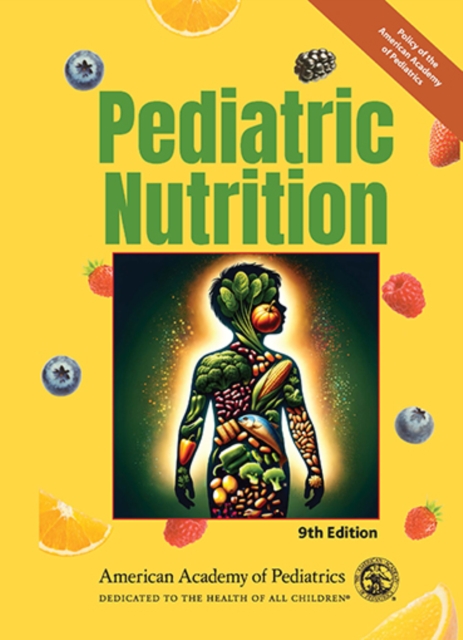
Pediatric nutrition
Significantly revised and updated by more than 100 contributors, the ninth edition provides the latest evidence-based guidance on the full spectrum of nutrition issues for newborns, infants, children and adolescents. Constituting the authoritative AAP policy on pediatric nutrition, topics covered include nutritional guidance for all pediatric age groups; micronutrients and macronutrients; nutrient delivery systems; nutrition issues relating to a wide rang of acute and chronic illnesses; and public health issues such as food insecurity, federal regulation, and food safety. New in the 9th Edition Sustainability Organic Foods GMOs Revamped guidance on obesity, reflecting the latest AAP policy statement Topics include: Nutrient-Gene Intreractions Feeding the Infant Feeding the Child and Adolescent Micronutrients and Macronutrients Nutrient Delivery Systems Nutrition in Acute and Chronic Illness Nutrition and Public Health
eBook
Food-Based Dietary Guidelines – development of a conceptual framework for future Food-Based Dietary Guidelines in Europe: report of a Federation of European Nutrition Societies Task-Force Workshop in Copenhagen, 12–13 March 2018
Identifying a need for developing a conceptual framework for the future development of Food-Based Dietary Guidelines (FBDG) in Europe, The Federation of European Nutrition Sciences established a Task Force for this purpose. A workshop was held with the specific objective to discuss the various dimensions considered as particularly relevant. Existing frameworks for FBDG were discussed, and presentations from various countries illustrated not only several commonalities but also a high degree of heterogeneity in the guidelines from different countries. Environmental aspects were considered in several countries, and dimensions like food safety, dietary habits and preparation were included in others. The workshop provided an overview of the use of FBDG – both in developing front-of-pack nutrition labels and for reformulation and innovation. The European FBDG dimensions were described with examples from the close connection between FBDG and European Union (EU) policies and activities and from the compilation of a database of national FBDG. Also, the challenges with communication of FBDG were discussed. Considering the current scientific basis and the experiences from several countries, the Task Force discussed the various dimensions of developing FBDG and concluded that environmental aspects should be included in the future conceptual framework for FBDG. A change in terminology to sustainable FDBG (SFBDG) could reflect this. The Task Force concluded that further work needs to be done exploring current practice, existing methodologies and the future prospects for incorporating other relevant dimensions into a future Federation of European Nutrition Societies conceptual framework for SFBDG in Europe and working groups were formed to address that.
Journal Article
Testing the Predictive Validity of the Healthy Eating Index-2015 in the Multiethnic Cohort: Is the Score Associated with a Reduced Risk of All-Cause and Cause-Specific Mortality?
The Healthy Eating Index-2015 (HEI-2015) was created to assess conformance of dietary intake with the Dietary Guidelines for Americans (DGA) 2015–2020. We assessed the association between the HEI-2015 and mortality from all-cause, cardiovascular disease (CVD), and cancer in the Multiethnic Cohort (MEC). White, African American, Native Hawaiian, Japanese American, and Latino adults (n > 215,000) from Hawaii and California completed a quantitative food-frequency questionnaire at study enrollment. HEI-2015 scores were divided into quintiles for men and women. Radar graphs were used to demonstrate how dietary components contributed to HEI-2015 scores. Mortality was documented over 17–22 years of follow-up. Hazard ratios (HRs) and 95% confidence intervals (CIs) were computed using Cox proportional hazards models. High HEI-2015 scores were inversely associated with risk of mortality from all-cause, CVD, and cancer for men and women (p-trend <0.0001 for all models). For men, the HRs (CIs) for all-cause, CVD, and cancer comparing the highest to the lowest quintile were 0.79 (0.76, 0.82), 0.76 (0.71, 0.82), and 0.80 (0.75, 0.87), respectively. For women, the HRs were 0.79 (0.76, 0.82), 0.75 (0.70, 0.81), and 0.84 (0.78, 0.91), respectively. These results, in a multiethnic population, demonstrate that following a diet aligned with the DGAs 2015–2020 recommendations is associated with lower risk of mortality from all-cause, CVD, and cancer.
Journal Article

Dietary Guidelines for Chinese Residents (2016): comments and comparisons
A high quality diet is believed to play a functional role in promoting the healthy growth of mankind and preventing many kinds of chronic degenerative diseases, including cancer, cardiovascular disease, diabetes, and obesity. Adherence to a high quality diet has been strongly associated with a lower risk of mortality. To help promote healthy lifestyles and physical strength, the Chinese government has produced a new revised version of the Dietary Guidelines for Chinese Residents (2016) and the Chinese Food Pagoda, as guidance for dietary intake among its population. Similarly, the Japanese government has produced the Japanese Food Guide Spinning Top Model, and the US government has recently published revised dietary recommendations in its 2015–2020 eighth edition of Dietary Guidelines for Americans. The evidence from all respective cohort studies involved in producing these guidelines shows a reduced risk of many chronic diseases and mortality if the guidelines are followed. All scientific findings support encouraging the general population to consume a broad variety of food on the basis of nutrient and food intakes in order to prevent deficiency diseases and a surplus of energy and nutrients, and recommend daily physical activity for health promotion.
Journal Article

Towards healthier and more sustainable diets in the Australian context: comparison of current diets with the Australian Dietary Guidelines and the EAT-Lancet Planetary Health Diet
Background
There is increasing focus on moving populations towards healthier and more environmentally sustainable dietary patterns. The Australian Dietary Guidelines provide dietary patterns that promote health and wellbeing. It is unclear how these guidelines align with the more recently published global recommendations of the EAT-Lancet Planetary Health Reference Diet, and how Australian diets compare to both sets of recommendations.
Methods
Data from one 24-h recall collected for the 2011–13 National Nutrition and Physical Activity Survey were analysed for 5,920 adults aged 19–50 years. Subgroups of this population were identified by diet quality and lower or higher consumption of foods often considered to be environmentally intensive (higher animal meat and dairy foods) or associated with healthiness (higher vegetables and lower discretionary choices). Food group and nutrient composition of Australian diets were compared to diets modelled on the Australian Dietary Guidelines and Planetary Health Reference Diet. The environmental impacts of diets were estimated using an index of combined metrics.
Results
Compared with the Planetary Health Reference Diet, the Australian Dietary Guidelines contained more servings of the vegetable, dairy and alternatives, fruit, and discretionary choices. The amount of meat and alternatives was higher in the Planetary Health Reference Diet than Australian Dietary Guidelines due to the inclusion of more plant-based meat alternatives. The average Australian diet contained two to almost four times the Australian Dietary Guidelines and Planetary Health Reference Diet maximum recommended intake of discretionary choices, and provided inadequate amounts of the vegetables, cereals, unsaturated fats and meats and alternatives food groups, primarily due to lower intakes of plant-based alternatives. The average Australian diet also contained less dairy and alternatives than the Australian Dietary Guidelines. In the average Australian diet, red meat and poultry contributed 73% to the total servings of meat and alternatives compared to 33% and 10% for the Australian Dietary Guidelines and Planetary Health Reference Diet respectively. The modelled Australian Dietary Guidelines diet met the relevant nutrient reference value for all 22 nutrients examined, whereas the Planetary Health Reference Diet contained an inadequate amount of calcium. The environmental impact scores of the Australian Dietary Guidelines and Planetary Health Reference Diet were 31% and 46% lower than the average Australian diet.
Conclusions
Significant changes are required for Australians’ dietary intake to align more closely with national and global dietary recommendations for health and environmental sustainability.
Journal Article